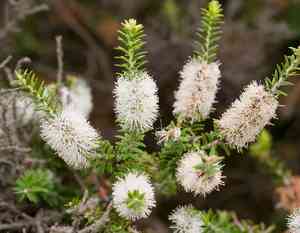
Moonah (Melaleuca lanceolata)
Also known as: Black paperbark
The moonah tree (Melaleuca lanceolata) stands out for its resilience in Australian landscapes due to several distinctive features:
1. **Adaptability:** It flourishes in a variety of environments, from sandy coastal soils to inland areas, showcasing its versatility.
2. **Drought Resistance:** Equipped with a deep root system, it efficiently taps into underground water sources, making it highly drought-tolerant.
3. **Soil Tolerance:** The moonah can grow in nutrient-poor soils, highlighting its ability to adapt to less fertile conditions.
4. **Salt Resilience:** It thrives in salty environments, an essential trait for coastal survival.
5. **Wind Durability:** Its robust structure allows it to endure strong winds characteristic of coastal regions.
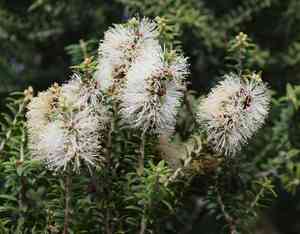
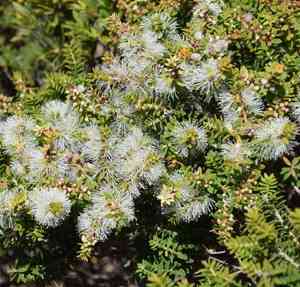
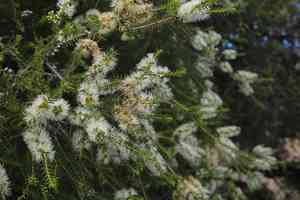
6. **Aesthetic Appeal:** The tree features narrow, lance-shaped leaves and produces fluffy yellow or creamy flower spikes that attract pollinators, adding ecological value.
These characteristics collectively make the moonah a tough and adaptable tree, capable of thriving in diverse and challenging Australian landscapes.
Attributes of Moonah
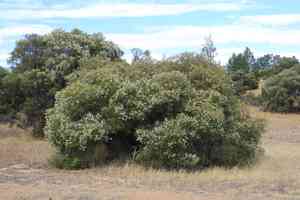
Images of Moonah
 How to Water Moonah?
  What Are the Sunlight Requirements for Moonah?
  What Is the Ideal Temperature Range for Moonah?
  What Soil is Best for Moonah?
  How to Fertilize Moonah?
  How to Prune Moonah?
  How to Propagate Moonah plant?
 How to Repot Moonah plant?



