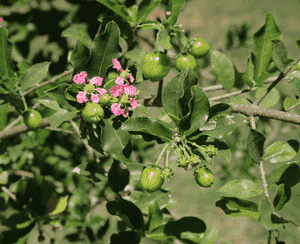
Acerola cherry (Malpighia emarginata)
Also known as: West Indian cherry, Guarani cherry
The Barbados cherry (Malpighia emarginata), also known as the West Indian cherry, is an evergreen shrub originating from southern Mexico, Central America, and South America. It produces fruit that is exceptionally high in vitamin C. Additionally, this species is suitable for cultivation as a decorative bonsai.
In This Article
Attributes of Acerola cherry
Lifespan
Perennial
Plant Type
Tree, Shrub
Plant Height
2 m to 6 m
Spread
4 m
Leaf Color
Green
Flower Size
1 cm to 2 cm
Flower Color
Pink
Images of Acerola cherry
Quickly Identify Acerola cherry
1
The plant can be identified by its small, shiny green leaves, delicate pink flowers, and bright red, cherry-like fruit. The shrubs are generally compact, and the leaves are oval-shaped with a slight notch at the tip.
Scientific Classification of Acerola cherry
Phylum
Vascular plants
Class
Dicotyledons
Order
Malpighiales
Family
Barbados cherry
Genus
Malpighia
Species
Acerola cherry
Planting and Growing of Acerola cherry
Care Difficulty
Easy
Watering Schedule
Every 8 days
Sunlight Requirements
Full sun
Sunshine Duration
6-10 hours
Ideal Temperature
75-85℉
Soil Type
Potting Mix, Peat Mix
Soil pH
6.5-7.5
Fertilizer Type
Balanced
Pruning Season
Spring, Summer
Pruning Area
Branches, Leaves
Pruning Frequency
2 times a year
Repotting Season
Spring
Pot Type
Plastic, Ceramic
 How to Water Acerola cherry?
When watering Malpighia emarginata, aim to provide about 500 ml of water per session. Ensure that the water is evenly distributed across the soil to avoid dry patches. The key is to maintain a balance where the soil is consistently moist but not waterlogged. Water until you see excess draining out from the bottom of the pot, which ensures that the root zone is thoroughly hydrated.
More About Watering Techniques→
What are the symptoms of an underwatered Acerola cherry?
›
What should I do if my Acerola cherry is not getting enough water?
›
What are the symptoms of an overwatered Acerola cherry?
›
How to save an overwatered Acerola cherry?
›
 What Are the Sunlight Requirements for Acerola cherry?
Malpighia emarginata benefits from full to partial sun. Ideal light exposure boosts photosynthesis, leading to optimal energy production, which supports vibrant growth, robust health, and abundant fruit yield.
More About Sunlight Requirements Techniques→
What is the optimal sunlight for Malpighia emarginata?
›
How do I ensure Malpighia emarginata gets enough light indoors?
›
Why is adequate light important for Malpighia emarginata?
›
 What Is the Ideal Temperature Range for Acerola cherry?
The ideal temperature range for Malpighia emarginata, commonly known as acerola, is between 75°F and 85°F. This range allows the plant to maintain healthy growth, ensuring optimal metabolic activities are not hindered. Within this range, the plant can efficiently photosynthesize, thereby producing the energy required for fruit development and overall vitality.
 What Soil is Best for Acerola cherry?
Acerola, or Malpighia emarginata, thrives in well-draining soil to prevent root rot. This plant does best when water doesn't linger, making loam and sandy loam ideal. These soil types allow excess water to drain away, reducing the likelihood of fungal diseases. While well-draining, the soil should also maintain adequate moisture to support Acerola's growth. Balanced moisture levels are key for nutrient absorption. A sandy loam with organic matter effectively retains moisture while allowing for drainage. This tropical plant demands nutrient-rich soil to support its fruit production. A blend of organic fertilizers or compost enriches the soil with essential nutrients like nitrogen, phosphorus, and potassium, which nourish the plant for vigorous growth and fruiting.
More About Soil→
 How to Fertilize Acerola cherry?
For Malpighia emarginata, a balanced 10-10-10 fertilizer is ideal. Use about 1/2 teaspoon of liquid fertilizer mixed with water per gallon, applied at the base of the plant. This ensures the roots absorb nutrients efficiently without risking root burn.
More About Fertilizing Techniques→
 How to Prune Acerola cherry?
Begin by sterilizing your pruning shears to prevent spreading disease. Focus on removing dead or diseased branches first. Then, move on to any branches that are crossing or rubbing against each other. Always cut at a 45-degree angle, just above a leaf node, to promote new growth. When aiming for a symmetrical and full-bodied appearance, step back and assess the overall structure of the Malpighia emarginata. Trim excess branches that disrupt the natural shape, ensuring you leave interior branches to maintain airflow and sunlight penetration. To boost fruit yield, focus on thinning dense clusters of branches. This ensures sunlight reaches the innermost sections, vital for burgeoning blooms. Target pruning towards the outer branches to keep the center ventilated and thriving.
More About Pruning Techniques→
 How to Propagate Acerola cherry plant?
1
Select a well-drained soil mix enriched with organic matter. Fill the plant pots and water them properly before planting the seeds. This pre-watering step ensures the soil is adequately moist to support seed germination.
2
Choose healthy, non-flowering shoots and cut them to about 4-6 inches in length. Remove lower leaves carefully and dip the cut ends in rooting hormone, which encourages root development.
3
Select a low branch that can be bent to the ground. Remove bark off a section and bury it under soil while leaving the tip exposed. Secure it down with pins to ensure it remains in contact with the soil.
 How to Repot Acerola cherry plant?
1
Malpighia emarginata needs repotting when roots are visible through drainage holes or if growth has significantly slowed. Repotting is best done during early spring to stimulate new growth and prevent stress.
2
Select a pot that is one to two sizes larger than the current one, with adequate drainage holes. This allows room for root expansion and prevents waterlogging, promoting healthier growth and less risk of root rot.
3
Opt for a well-draining soil mix, ideally with components like peat, perlite, and sand. This mix ensures proper aeration and water retention, keeping the roots healthy by preventing excess moisture build-up.
Learn More About Acerola cherry Diseases
Anthracnose
Bacterial Leaf Spot
Bacterial Soft Rot
Bacterial Wilt
Chemical Injury
Crown Gall
Cyst Nematode
Damping-off
Downy Mildew
Drought Stress
Fusarium Wilt
Gray Mold
Leaf Curl
Leaf Spot
Mosaic
Nutrient Deficiency
Nutrient Toxicity
Powdery Mildew
Root Rot
Root-knot Nematode
Rusts
Sooty Mold
Spider Mites
Temperature Stress
Thrips Damage
White Mold



