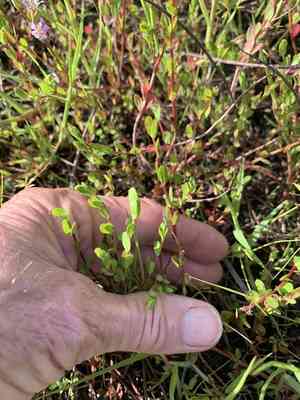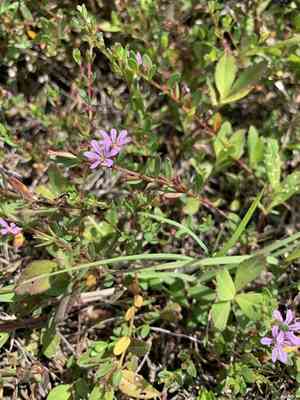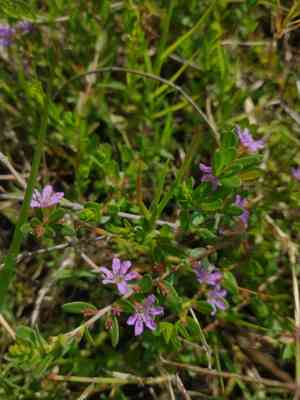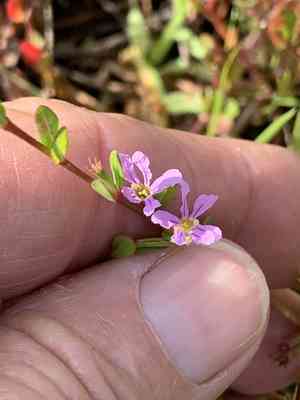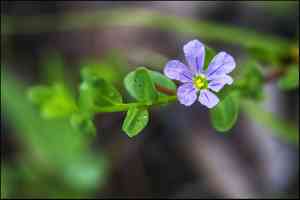
Florida loosestrife(Lythrum flagellare)

Florida loosestrife (Lythrum flagellare)

Also known as: none

Florida loosestrife (Lythrum alatum var. lanceolatum) is a distinctive herbaceous perennial that thrives in wetland habitats. Here are its key characteristics and ecological roles:

### Key Characteristics:
1. **Form**: It has a slender, upright growth habit with square stems.
2. **Flowers**: Displays small, pink to purple flowers in terminal clusters, blooming from late spring to early fall.
3. **Leaves**: Features lance-shaped, opposite leaves that are adapted to moist environments.
4. **Height**: Grows to about 1 to 3 feet tall, creating a graceful appearance.

### Ecological Roles:
1. **Pollinator Support**: Attracts bees, butterflies, and other pollinators, thereby promoting biodiversity.
2. **Erosion Prevention**: Its root system helps stabilize soil and reduces erosion in wetland areas.
3. **Water Quality Improvement**: Contributes to the filtration of pollutants and offers habitat for microorganisms that aid in nutrient cycling.
4. **Habitat Provision**: Serves as a food source and shelter for various wetland species, playing a crucial role in the ecosystem's food web.

Florida loosestrife is an indicator of a healthy wetland ecosystem and plays a vital role in maintaining ecological balance.

Attributes of Florida loosestrife

Lifespan
Perennial
Plant Type
Herb
Plant Height
0.5 to 1 meter
Spread
approx. 0.3 meters
Leaf Color
green
Flower Size
1 to 1.5 cm
Flower Color
pink to light lavender

ForwardPlant - Identify plants with a snap

Identify and diagnose plants, get toxicity alerts, and explore safety guides for all types of fungi.

Try for Free

Images of Florida loosestrife

Florida loosestrife(Lythrum flagellare)

Quickly Identify Florida loosestrife

1
To identify Lythrum flagellare, look for its distinctive opposite leaf arrangement, quadrangular stems, and pink to light lavender flowers with 6 petals. It typically grows in wetland habitats.

Scientific Classification of Florida loosestrife

Phylum
Vascular plants
Class
Dicotyledons
Order
Myrtales
Family
Loosestrife
Genus
Loosestrifes
Species
Florida loosestrife

Planting and Growing of Florida loosestrife

Care Difficulty
Easy
Watering Schedule
Every 2 days
Sunlight Requirements
Full sun
Sunshine Duration
4-8 hours
Ideal Temperature
68-77℉
Soil Type
Potting Mix, Peat Mix
Soil pH
6.5-7.5
Fertilizer Type
Balanced
Pruning Season
Spring, Summer
Pruning Area
Branches, Leaves
Pruning Frequency
2 times a year
Repotting Season
Spring
Pot Type
Plastic, Terracotta

water icon How to Water Florida loosestrife?

For Lythrum flagellare, it's important to water until the soil is evenly moist. Aim to provide about 500 milliliters per watering session to ensure the water reaches the root system, but avoid waterlogging the soil.
What are the symptoms of an underwatered Florida loosestrife? ›
What should I do if my Florida loosestrife is not getting enough water? ›
What are the symptoms of an overwatered Florida loosestrife? ›
How to save an overwatered Florida loosestrife? ›

sunlight icon What Are the Sunlight Requirements for Florida loosestrife?

Sunlight Requirements: Full sun, Partial sun
Duration of light: 6 to 8 hours daily
Lythrum flagellare ideally requires full sun of 6 to 8 hours. Under these light conditions, the plant blooms profusely and maintains robust growth, benefiting from enhanced photosynthetic activity.
What is the best sunlight condition for Lythrum flagellare? ›
How can I achieve the ideal light conditions? ›
What are the benefits of ideal lighting conditions? ›

temperature icon What Is the Ideal Temperature Range for Florida loosestrife?

Ideal Temperature: 68 ~ 77℉
The ideal temperature range for cultivating Lythrum flagellare is between 68 and 77 degrees Fahrenheit. This range ensures optimal growth by providing the necessary warmth while avoiding heat stress. Temperatures within this range promote photosynthesis and nutrient absorption efficiently, resulting in healthy and robust plants.

soil icon What Soil is Best for Florida loosestrife?

Soil type: Loam, Sandy loam, Acidic soil
Soil PH: 6.5 ~ 7.5
Lythrum flagellare thrives best in well-drained soil, preventing root rot and other waterlogging issues that can stunt growth. Good drainage allows for the necessary air exchange to the roots. Soil rich in organic matter provides essential nutrients and retains moisture, which is crucial for Lythrum flagellare’s vigorous growth and flowering potential. While the soil needs to be well-drained, moderate moisture retention is also important. This keeps the plant hydrated but not oversaturated, promoting healthy root and foliage development.

fertilize icon How to Fertilize Florida loosestrife?

Fertilizer type: Balanced
For Lythrum flagellare, apply a balanced liquid fertilizer diluted to half strength approximately every two weeks during the growing season. For solid slow-release fertilizer, use about 30 grams per plant, applied around the root zone at the beginning of the growing season.

prune icon How to Prune Florida loosestrife?

Pruning Time: Spring, Summer, Autumn
Begin by observing the overall structure of your Lythrum flagellare to identify dead, damaged, or crossing branches that need removal. This assessment will guide the pruning process for optimal plant health and shape. Cut at a 45-degree angle above a leaf node to promote new growth. This technique ensures that water runs off the cut surface, reducing the risk of rot and fostering a healthy regrowth environment. Trim the outer branches to maintain a compact shape and remove any growth that disrupts the natural, balanced form of the plant. This promotes better air circulation and light penetration, contributing to a vigorous and robust plant. More About Pruning Techniques→

propagate icon How to Propagate Florida loosestrife plant?

Propagate Time: Early spring,Spring,Early summer
1
Harvest seeds from mature Lythrum flagellare plants when the seed heads turn brown. Make sure to dry the seeds before storage to enhance germination rates in the future.
2
Select healthy stems and cut sections about 10 cm long just below a node. Remove lower leaves to prevent rot and dip the ends in rooting hormone before planting in moist soil.
3
Carefully dig up the parent plant in early spring. Use a sharp, sterile knife to divide the root ball into sections, ensuring each division has shoots and roots. Replant divisions immediately.
More About Propagating Techniques→

repot icon How to Repot Florida loosestrife plant?

Repotting frequency: Every 2-3 years
1
Repot your Lythrum flagellare when you notice the roots filling up the pot to the extent that they start to swirl around its interior. Another indicator is a slow growth rate and yellowing leaves, symptoms often stemming from root congestion. You should also consider repotting if the potting mix has degraded due to excess watering or age.
2
Choose a pot that is one to two inches wider in diameter than the current container. Opt for a pot with good drainage holes to prevent water accumulation, which could lead to root rot. Using a slightly larger pot allows room for the roots to expand without overwhelming the plant with too much soil, which can retain water excessively.
3
Use well-drained sandy soil as Lythrum flagellare prefers conditions that mimic its natural habitat. This soil type ensures that water circulates efficiently, preventing root rot and ensuring ample moisture and nutrient availability for vibrant plant growth.

ForwardPlant - Identify plants with a snap

Find the best spots for them to optimize their health, simply using your phone.

Try for Free