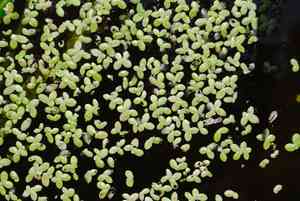
Minute duckweed (Lemna perpusilla)
Also known as: Tropical duckweed
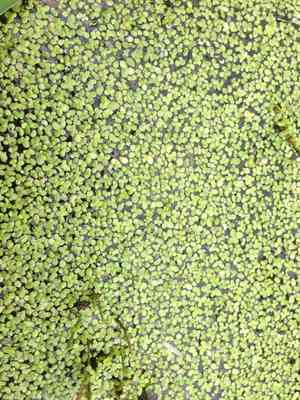
Duckweed is a small aquatic plant that often creates green mats on the surfaces of still waters. This floating plant has tiny, flat, oval leaves that group together, forming a dense, green layer. Duckweed flourishes in nutrient-rich freshwater environments, growing quickly and supporting the ecosystem by offering food for aquatic creatures and a habitat for microorganisms.
In This Article
Attributes of Minute duckweed
Lifespan
Perennial
Plant Type
Herb
Plant Height
1-5 mm
Spread
Not applicable
Leaf Color
Bright Green
Flower Size
Tiny, around 0.5 mm
Flower Color
Inconspicuous, pale green to white
Images of Minute duckweed
Quickly Identify Minute duckweed
1
Tiny green oval fronds under 0.1 inches (2.5 mm) cluster at water surface.
2
Enclosed inflorescence with two male and one female flowers, less than 0.06 inches (1.5 mm).
3
Small utricle fruit, 0.7 to 1 mm long (0.03 to 0.04 inches), released in late summer.
4
Ovate to obovate leaves, 1 to 4 mm long (0.04 to 0.16 inches), smooth texture.
5
Distinct papules at node and convex flat surface on both sides of leaves.
Scientific Classification of Minute duckweed
Phylum
Vascular plants
Class
Monocotyledons
Order
Alismatales
Family
Arum
Genus
Duckweeds
Species
Minute duckweed
Planting and Growing of Minute duckweed
Care Difficulty
Easy
Watering Schedule
Every 15 days
Sunlight Requirements
Full sun
Sunshine Duration
4-6 hours
Ideal Temperature
68-86℉
Soil Type
Potting Mix, Peat Mix
Soil pH
6.5-7.5
Fertilizer Type
Balanced
Pruning Season
Spring, Summer
Pruning Area
Branches, Leaves
Pruning Frequency
2 times a year
Repotting Season
Spring
Pot Type
Plastic, Ceramic
 How to Water Minute duckweed?
For Lemna perpusilla, ensure the water covers the plant without drowning it. A recommended amount of 500 milliliters should be sufficient, providing a gentle soak to keep the plant aquatic without becoming waterlogged. The key is consistent coverage without flooding.
What are the symptoms of an underwatered Minute duckweed?
›
What should I do if my Minute duckweed is not getting enough water?
›
What are the symptoms of an overwatered Minute duckweed?
›
How to save an overwatered Minute duckweed?
›
 What Are the Sunlight Requirements for Minute duckweed?
Lemna perpusilla ideally thrives in full sun with partial sun conditions; this enhances photosynthesis efficiency and supports optimal growth.
What is the best light condition for Lemna perpusilla?
›
How can you achieve ideal lighting for Lemna perpusilla?
›
What benefits does Lemna perpusilla experience with ideal lighting?
›
 What Is the Ideal Temperature Range for Minute duckweed?
The ideal temperature range for growth of Lemna perpusilla is between 68°F and 86°F. This range ensures optimal metabolic rates and enzymatic activities, promoting healthy proliferation. A temperature close to the higher end of the spectrum typically boosts growth rates significantly.
 What Soil is Best for Minute duckweed?
Lemna perpusilla thrives in saturated soils, which are essential for optimal growth. Ensuring constant moisture mimics their natural aquatic habitat. Rich in organic matter, the soil should support Lemna's fast growth. Nutrient-dense substrates result in lush, green coverage. A neutral to slightly acidic pH ensures essential minerals remain accessible to Lemna, enhancing its resilience and growth speed.
 How to Fertilize Minute duckweed?
For Lemna perpusilla, it is important to provide a balanced nutrient source. Use a water-soluble fertilizer diluted to one-quarter of the recommended strength to prevent nutrient burn. Maintain even coverage to ensure all plants receive adequate amounts. As a guide, approximately 5 ml per liter of water is often sufficient.
 How to Prune Minute duckweed?
To prune Lemna perpusilla, use a small net or a skimmer to carefully remove the excess plant material from the water surface. Ensure that you scoop evenly to maintain a healthy coverage of the water's surface. Avoid using sharp tools, as they can damage the delicate leaves. This type of gentle removal helps the plant to continue photosynthesizing without overshadowing too much of the water for other aquatic life.
More About Pruning Techniques→
 How to Propagate Minute duckweed plant?
1
Choose a thriving Lemna perpusilla plant with no signs of disease or malnutrition. Healthy plants have bright green leaves and are actively growing. This ensures that the divisions will grow into strong and healthy new plants.
2
Using sterile scissors, gently separate the Lemna perpusilla into smaller sections. Each section should have at least a few leaves and roots attached. Avoid damaging the roots excessively during this process to ensure better survival rates.
3
Submerge the divided sections in a container of water in a location that receives indirect sunlight. It is important to change the water regularly to prevent the growth of algae and to keep conditions ideal for new growth.
 How to Repot Minute duckweed plant?
1
Lemna perpusilla, or tiny duckweed, needs repotting when it becomes densely packed and the roots are visible. This usually happens every couple of years. Unlike typical plants, the growth of Lemna perpusilla is more evident on the water's surface, so when the plant covers the water surface extensively, it's a sign that repotting could be beneficial to stimulate better growth.
2
Select a shallow, wide-mouthed container that allows for ample surface area since Lemna perpusilla thrives best when it has plenty of space to float on the water. Using a wide container not only supports the growth of each individual plant but also maximizes light exposure, promoting healthy photosynthesis and keeping the plant vibrant and green.
3
Opt for rich, loamy soil with a neutral pH level. This type of soil provides essential nutrients that duckweed needs to thrive. It ensures that the plant can absorb moisture efficiently while remaining light enough to prevent compacting, which can obstruct growth. Nutrient-rich soil creates an ideal environment for rapid reproduction and vibrant health.



