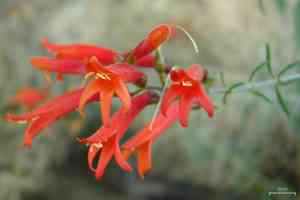
Scarlet keckiella (Keckiella ternata)
Also known as: Blue-stemmed keckiella
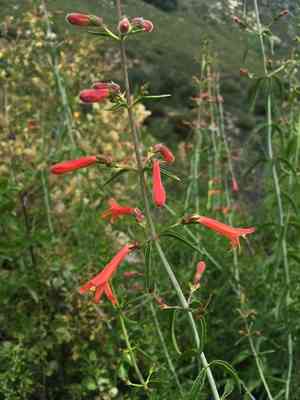
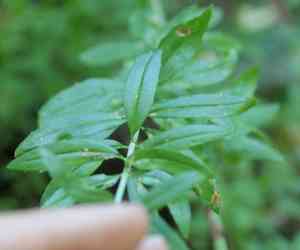
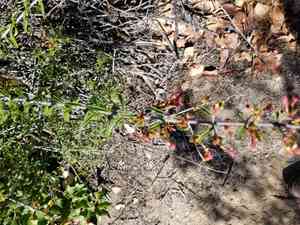
Keckiella ternata is a shrub that can grow over two meters tall and tends to spread moderately with its slender, waxy branches. The branches are characterized by having leaves arranged in whorls of three or in opposite pairs.
In This Article
Attributes of Scarlet keckiella
Lifespan
Perennial
Plant Height
30 to 60 cm (1 to 2 feet)
Spread
20 to 30 cm (8 to 12 inches)
Leaf Color
Green
Flower Size
About 1 inch (2.5 cm)
Flower Color
Blue, Purple
Images of Scarlet keckiella
Quickly Identify Scarlet keckiella
1
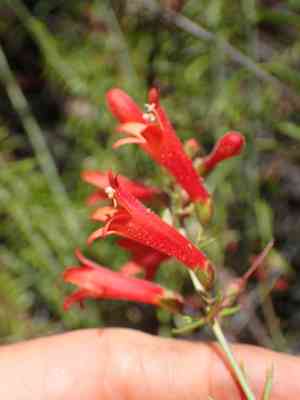
Identify this plant by its characteristic clusters of tube-shaped flowers and serrated leaves. The flowers often have a two-lipped structure and come in shades ranging from blue to purplish hues.
Scientific Classification of Scarlet keckiella
Phylum
Vascular plants
Class
Dicotyledons
Order
Lamiales
Family
Plantain
Genus
Keckiellas
Species
Scarlet keckiella
Planting and Growing of Scarlet keckiella
Care Difficulty
Moderate
Watering Schedule
Every 2 days
Sunlight Requirements
Full sun
Sunshine Duration
4-8 hours
Ideal Temperature
60-78℉
Soil Type
Potting Mix, Peat Mix
Soil pH
6-8
Fertilizer Type
Balanced
Pruning Season
Spring, Summer
Pruning Area
Branches, Leaves
Pruning Frequency
2 times a year
Repotting Season
Spring
Pot Type
Terracotta, Plastic
 How to Water Scarlet keckiella?
For Keckiella ternata, aim to water deeply but infrequently. Use approximately 500 milliliters of water per session to ensure that moisture reaches the roots but does not lead to waterlogging.
What are the symptoms of an underwatered Scarlet keckiella?
›
What should I do if my Scarlet keckiella is not getting enough water?
›
What are the symptoms of an overwatered Scarlet keckiella?
›
How to save an overwatered Scarlet keckiella?
›
 What Are the Sunlight Requirements for Scarlet keckiella?
Keckiella ternata prefers partial to full sun, with ideal light promoting vibrant growth, strong branching, and prolific flowering, enhancing its ornamental beauty and ecological benefits.
What is the best spot for Keckiella ternata?
›
How can I ensure continuous optimal lighting?
›
What happens when Keckiella ternata receives ideal sunlight?
›
 What Is the Ideal Temperature Range for Scarlet keckiella?
The ideal temperature range for Keckiella ternata lies between 60 and 78 degrees Fahrenheit. This range supports optimal growth and flowering, as it mimics the warm, temperate climates these plants naturally thrive in. Ensuring these temperatures can help maintain vibrant foliage and healthy blooms.
 What Soil is Best for Scarlet keckiella?
Keckiella ternata thrives in well-drained soil conditions that prevent waterlogging. Ensuring proper drainage is crucial as it helps maintain the root health and prevents root rot, allowing the plant to flourish. The plant prefers soil that is not overly rich in nutrients. Moderate fertility helps in promoting balanced growth and flowering, providing a natural habitat similar to its native environment. While the soil should be well-drained, it must also retain some moisture to support growth. Proper moisture levels enable the plant to absorb essential nutrients without the stress of drought conditions.
 How to Fertilize Scarlet keckiella?
For Keckiella ternata, employ a moderate approach to fertilization. Use a water-soluble liquid fertilizer diluted to half the recommended strength. For slow-release fertilizers, a light sprinkling around the base once every four months should suffice.
 How to Prune Scarlet keckiella?
When pruning, check for signs of pest infestation. Pruning infested branches not only enhances shape but also helps control pest spread. Always dispose of infected cuttings carefully to prevent reinfection. After pruning, Keckiella ternata should be watered adequately to support healing. Avoid fertilizing immediately after pruning as the plant needs time to recover and establish new growth without excess nutrient stress.
More About Pruning Techniques→
 How to Propagate Scarlet keckiella plant?
1
Harvest seeds from mature Keckiella ternata plants when the seed pods are dry and brown. Carefully open the pods to collect the seeds, ensuring they are free from any mold or pests.
2
Select healthy, non-flowering stems and cut a section around 10 cm long. Remove the lower leaves and dip the cut end in rooting hormone to promote root growth.
3
Insert the prepared cuttings into a well-draining potting mix. Firm the soil around the base and water lightly. Maintain high humidity by covering the container with a plastic bag.
 How to Repot Scarlet keckiella plant?
1
Signal time for repotting Keckiella ternata is when roots start peeking out of the drainage holes. If growth appears stunted or the soil is drying out too quickly, it's also a sign that your plant needs more space. Spring and summer are ideal seasons because the plant is in its active growth phase, allowing it to quickly recover from the stress of repotting.
2
Select a pot with drainage holes to allow excess water to escape, preventing root rot. The new pot should only be slightly larger than the current one to avoid water retention issues. This ensures the roots have sufficient space to expand without being overwhelmed by too much soil, which could retain excess moisture.
3
Use a well-draining sandy mix that mimics Keckiella ternata's natural environment. This type of soil allows water and air to move freely, preventing root rot and promoting healthy root growth. A good balance ensures the plant's roots are neither too dry nor too waterlogged.



