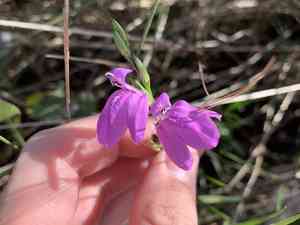
Pineland water-willow (Justicia angusta)
Also known as: Willowy Justicia
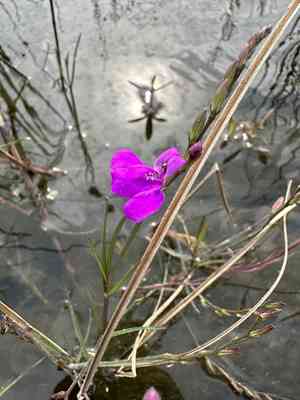
Pineland water-willow is a slender perennial herb known for its narrow, pointed leaves. Its small clusters of tubular flowers, usually in shades of purple or pink, attract various pollinators. This plant flourishes in warm, humid environments typical of the southeastern United States. It prefers moist, sandy soils and is often found in pinelands, wetlands, and swamp edges. While it can tolerate some shade, it typically requires plenty of sunlight and benefits from periodic flooding to maintain its ideal growth conditions.
In This Article
Attributes of Pineland water-willow
Lifespan
Perennial
Plant Type
Herb
Plant Height
1 to 2 meters
Spread
0.5 to 1 meter
Leaf Color
Green
Flower Size
1 to 2 centimeters
Flower Color
Red, Pink
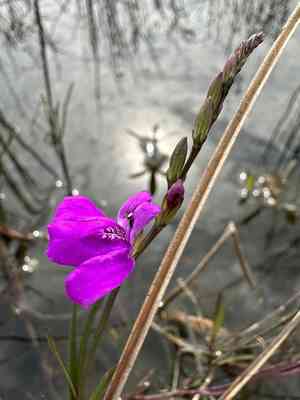
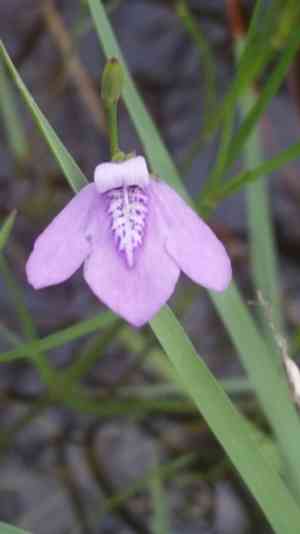
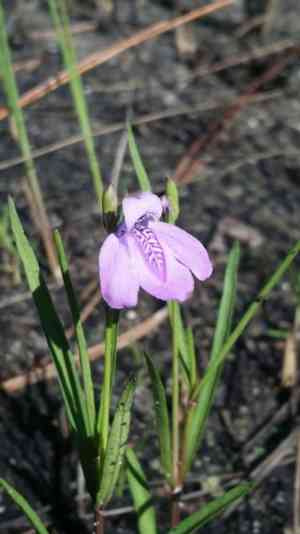
Images of Pineland water-willow
Quickly Identify Pineland water-willow
1
Justicia angusta can be identified by its slender stems, lanceolate leaves, and tubular flowers that are usually red or pink. The leaves are opposite and the flowers grow in clusters, making them easy to spot.
Scientific Classification of Pineland water-willow
Phylum
Vascular plants
Class
Dicotyledons
Order
Lamiales
Family
Acanthus
Genus
Water-willows
Species
Pineland water-willow
Planting and Growing of Pineland water-willow
Care Difficulty
Moderate
Watering Schedule
Every 3 days
Sunlight Requirements
Partial sun
Sunshine Duration
4-8 hours
Ideal Temperature
65-75℉
Soil Type
Potting Mix, Peat Mix
Soil pH
6.5-7.5
Fertilizer Type
Balanced
Pruning Season
Spring, Summer
Pruning Area
Branches, Leaves
Pruning Frequency
2 times a year
Repotting Season
Spring
Pot Type
Plastic, Ceramic
 How to Water Pineland water-willow?
For Justicia angusta, the watering amount is crucial; aim for 200 ml each time. Ensure the soil is moist but not waterlogged. Proper drainage is essential to allow excess water to exit, preventing root rot. The top layer of the soil should slightly dry out before the next watering session.
What are the symptoms of an underwatered Pineland water-willow?
›
What should I do if my Pineland water-willow is not getting enough water?
›
What are the symptoms of an overwatered Pineland water-willow?
›
How to save an overwatered Pineland water-willow?
›
 What Are the Sunlight Requirements for Pineland water-willow?
Partial sun for Justicia angusta means finding balance in light intensity. Optimal conditions foster lush greenery and steady growth, enhancing the plant's aesthetic appeal and ensuring resilience against pests and diseases.
Optimal sunlight exposure
›
Placement in the home
›
Seasonal adjustments
›
 What Is the Ideal Temperature Range for Pineland water-willow?
For optimal growth, Justicia angusta thrives best within a temperature range of 65°F to 75°F. This range supports the plant's metabolic processes and encourages robust foliage. Temperatures in this range promote balanced moisture levels in the soil, enhancing nutrient uptake and reducing stress on the plant.
 What Soil is Best for Pineland water-willow?
Justicia angusta thrives in well-drained soil that prevents waterlogging and root rot. Ensuring good drainage helps maintain healthy roots, crucial for optimal growth and flowering. A nutrient-rich substrate packed with organic matter ensures Justicia angusta receives ample nutrition for vigorous growth, enhancing its vibrant green foliage and blooming capability. Maintaining consistent moisture levels in the soil is necessary for Justicia angusta. This helps to avoid stress on the plant, promoting continual and healthy growth.
 How to Fertilize Pineland water-willow?
For Justicia angusta, it is crucial to use a balanced fertilizer with a ratio such as 10-10-10. The recommended amount is 1 tablespoon per gallon of water for liquid fertilizers. For slow-release granules, apply around 2 teaspoons per plant.
 How to Prune Pineland water-willow?
Begin by assessing the plant for dead or diseased branches and remove them first. 2. Look for crossing branches and trim them to prevent damage. 3. Trim back leggy stems by cutting above a leaf node to encourage bushy new growth. 4. Step back occasionally to evaluate the symmetry and balance of the plant. 5. Continue pruning until the desired shape and size are achieved.
More About Pruning Techniques→
 How to Propagate Pineland water-willow plant?
1
Select a healthy branch from a mature Justicia angusta plant. Use sterile pruning shears to cut a 4-6 inch piece below a leaf node. Remove the lower leaves, leaving a few at the top, and dip the cut end in rooting hormone to encourage root development.
2
Harvest seeds from a mature Justicia angusta flower when they're fully ripe. Gently press the seeds into a well-draining potting mix in a seed tray. Cover them lightly with soil, water gently, and place the tray in a location with indirect sunlight.
3
Plant the cutting or seeds in a pot with potting mix. Place the pot in a warm and humid location with bright but indirect light. Ensure the soil remains moist but not soggy, and cover the pot with a plastic bag to maintain humidity and warmth.
 How to Repot Pineland water-willow plant?
1
Repotting Justicia angusta should be done when you notice roots starting to emerge from the drainage holes or when the plant appears to have slowed down in growth, which often indicates it is root-bound. Another sign is when water takes longer to be absorbed, suggesting compacted soil.
2
Select a pot that is one size larger than the current one, with at least one good drainage hole to prevent waterlogging. A slightly larger pot gives the roots room to expand but prevents excess soil from holding too much moisture, reducing the risk of root rot.
3
Opt for a well-draining potting mix with organic matter, which ensures the soil retains enough moisture without becoming waterlogged. A sandy or loamy soil blend is ideal, allowing for proper aeration and nutrient distribution, leading to healthier root development.
Learn More About Pineland water-willow Diseases
Anthracnose
Bacterial Leaf Spot
Bacterial Soft Rot
Bacterial Wilt
Black Spot
Chemical Injury
Crown Gall
Damping-off
Downy Mildew
Drought Stress
Fusarium Wilt
Gray Mold
Leaf Curl
Leaf Spot
Mosaic
Nutrient Deficiency
Nutrient Toxicity
Powdery Mildew
Root Rot
Root-knot Nematode
Rusts
Sooty Mold
Spider Mites
Temperature Stress
Thrips Damage
White Mold



