
Torrey's rush (Juncus torreyi)
Also known as: Torrey's Rush, Torrey Rush
Torrey's rush (Juncus torreyi) is a perennial plant native to North America, particularly flourishing in the United States and Canada. It prefers habitats with moist soils, such as wetlands, marshes, and areas along streams.
In This Article
Attributes of Torrey's rush
Lifespan
Perennial
Plant Type
Herb
Plant Height
30 cm to 1 m
Spread
30 cm to 45 cm
Leaf Color
Dark green
Flower Size
9 cm
Flower Color
Yellow Green Red Brown
Images of Torrey's rush



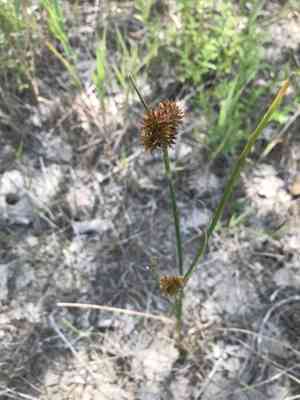
Quickly Identify Torrey's rush
1
The plant can be identified by its cylindrical, erect stems that are ridged and clumped. The flowers are small, greenish-brown and appear in clusters. The plant often has a dense, tufted growth habit.
Scientific Classification of Torrey's rush
Phylum
Vascular plants
Class
Monocotyledons
Order
Poales
Family
Rush
Genus
Rushes
Species
Torrey's rush
Planting and Growing of Torrey's rush
Care Difficulty
Easy
Watering Schedule
Every 3 days
Sunlight Requirements
Full sun
Sunshine Duration
6-10 hours
Ideal Temperature
50-77℉
Soil Type
Potting Mix, Peat Mix
Soil pH
5.5-7.5
Fertilizer Type
Balanced
Pruning Season
Spring, Summer
Pruning Area
Branches, Leaves
Pruning Frequency
2 times a year
Repotting Season
Spring
Pot Type
Plastic, Ceramic
 How to Water Torrey's rush?
Juncus torreyi prefers consistently moist soil, but it does not require being waterlogged. A good rule of thumb is to water thoroughly until the water begins to drain from the bottom of the pot. This means around 250 ml of water should suffice for an average-sized pot.
What are the symptoms of an underwatered Torrey's rush?
›
What should I do if my Torrey's rush is not getting enough water?
›
What are the symptoms of an overwatered Torrey's rush?
›
How to save an overwatered Torrey's rush?
›
 What Are the Sunlight Requirements for Torrey's rush?
Partial to full sun is perfect, as it allows Juncus torreyi to photosynthesize efficiently, leading to a lush, flourishing appearance.
More About Sunlight Requirements Techniques→
How much sunlight is ideal for Juncus torreyi?
›
What can I do if my Juncus torreyi isn't getting enough sunlight?
›
What are the benefits of providing ideal sunlight conditions?
›
 What Is the Ideal Temperature Range for Torrey's rush?
The ideal temperature range for Juncus torreyi growth is between 50°F and 77°F. Maintaining temperatures within this range facilitates optimal physiological processes, including photosynthesis and nutrient uptake. Temperatures below or above this range can hinder these processes.
 What Soil is Best for Torrey's rush?
Juncus torreyi thrives in moist soil, which is essential for its growth. Retaining moisture ensures the soil remains conducive to its roots and supports its semi-aquatic nature. This plant benefits from nutrient-rich soil that supports its rapid growth. Loamy soil often provides an ideal balance of nutrients necessary for healthy development. Good soil aeration allows for proper exchange of gases which is crucial for root health. Well-aerated soils prevent root rot and promote healthy growth.
 How to Fertilize Torrey's rush?
Juncus torreyi benefits from a balanced application of fertilizer. For liquid fertilizer, use a diluted solution at half strength to prevent nutrient overload. Typically, 1 tablespoon of a 10-10-10 liquid fertilizer per gallon of water works well. For slow-release granules, apply 2-3 pounds per 100 square feet in spring and mid-summer.
 How to Prune Torrey's rush?
Identify any dead, brown, or damaged stems and cut them back to the base. This not only tidies up the plant's appearance but also prevents potential disease spread from decaying material. After removing dead growth, trim the plant to maintain its natural shape. Cut back any overly long or misshapen stems to ensure the plant looks balanced and compact. This will help create a symmetrical and tidy appearance. If certain areas of the plant are too dense, thin them out by removing select stems. This allows more light and air to penetrate, which promotes healthy growth throughout the plant.
More About Pruning Techniques→
 How to Propagate Torrey's rush plant?
1
Collect seeds from mature Juncus torreyi plants in early spring. Prepare seed trays with a mix of sand and peat moss. Sow seeds lightly onto the surface and gently press them into the substrate without covering them completely, as they require light for germination.
2
After sowing, lightly mist the seeds with water, ensuring the substrate is consistently moist but not waterlogged. Place the trays in a location with indirect sunlight and maintain a stable temperature around 18-22°C (64-72°F) for optimal germination.
3
For division propagation, dig up established clumps in early spring. Use a sharp spade to divide the clump into sections, ensuring each section has a good amount of roots and shoots. Replant each division at the same depth they were growing initially to minimize transplant shock.
 How to Repot Torrey's rush plant?
1
The ideal time to repot Juncus torreyi is when the plant shows signs of being root-bound, such as roots growing out of the drainage holes or reduced growth. It’s best to target this task during Spring or Summer when the plant is naturally more resilient and able to recover quickly from the transplant shock.
2
Select a pot that is 1-2 inches larger in diameter than the current one to give Juncus torreyi ample space to grow. A pot with sufficient drainage holes is essential to prevent waterlogging. This ensures the root system is not saturated and reduces the risk of root rot, promoting healthier growth.
3
Opt for a well-draining, sandy soil mix rich in organic matter. This mixture mimics its natural habitat and provides adequate aeration while retaining necessary moisture. Using such soil prevents the roots from sitting in water, which helps in preventing root rot and encourages vigorous root development.



