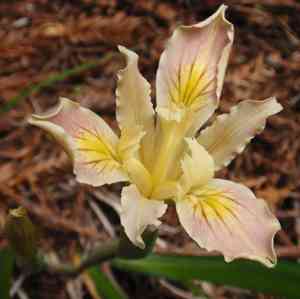
Purdy's iris (Iris purdyi)
Also known as: Purdy's iris
Iris purdyi, commonly known as Purdy's iris, is named in honor of Carl Purdy, a notable botanist from the late 19th and early 20th centuries who focused on California's native flora. This iris species thrives in the redwood forests of California and Oregon, earning it the nickname redwood iris.
In This Article
Attributes of Purdy's iris
Lifespan
Perennial
Plant Type
Herb
Plant Height
30 cm to 41 cm
Spread
30 cm
Leaf Color
Green
Flower Size
7 cm to 10 cm
Flower Color
White Yellow Purple
Images of Purdy's iris
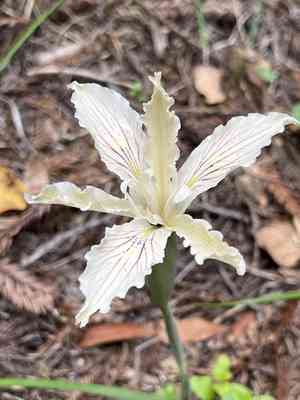
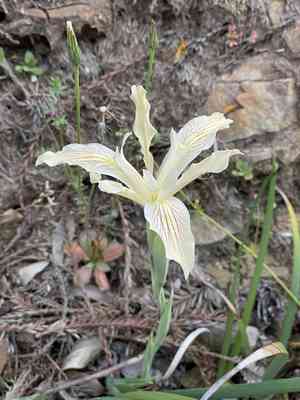
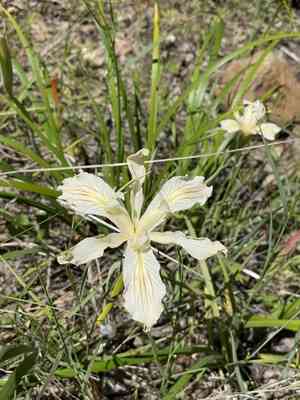
Quickly Identify Purdy's iris
1
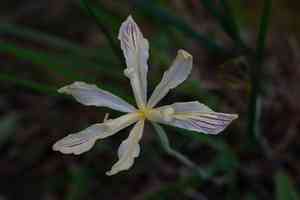
Iris purdyi can be identified by its thin, grass-like leaves and stalks that bear typically one to three flowers. The flowers have a distinct purple or violet hue with intricate markings.
Scientific Classification of Purdy's iris
Phylum
Vascular plants
Class
Monocotyledons
Order
Asparagales
Family
Iris
Genus
Irises
Species
Purdy's iris
Planting and Growing of Purdy's iris
Care Difficulty
Moderate
Watering Schedule
Every 3 days
Sunlight Requirements
Full sun
Sunshine Duration
6-10 hours
Ideal Temperature
60-70℉
Soil Type
Potting Mix, Peat Mix
Soil pH
6.5-7.5
Fertilizer Type
Balanced
Pruning Season
Spring, Summer
Pruning Area
Branches, Leaves
Pruning Frequency
2 times a year
Repotting Season
Spring
Pot Type
Plastic, Ceramic
 How to Water Purdy's iris?
Iris purdyi requires moderate watering. Ensure the soil is consistently moist but not waterlogged. It's best to water until the top 2 inches of soil feel adequately moist. In intense heat or during dry spells, a slight increase may be beneficial.
What are the symptoms of an underwatered Purdy's iris?
›
What should I do if my Purdy's iris is not getting enough water?
›
What are the symptoms of an overwatered Purdy's iris?
›
How to save an overwatered Purdy's iris?
›
 What Are the Sunlight Requirements for Purdy's iris?
Iris purdyi flourishes best under full sun to partial sun conditions. Efficient photosynthesis and vibrant bloom displays are likely to occur when light access is within this range.
More About Sunlight Requirements Techniques→
How much light does Iris purdyi need?
›
Solutions to achieve ideal lighting
›
Benefits of ideal lighting
›
 What Is the Ideal Temperature Range for Purdy's iris?
The ideal temperature range for growing Iris purdyi is between 60°F and 70°F. Within this range, the plant can thrive and grow vigorously. This is because moderate temperatures provide the necessary warmth without causing heat stress or cold damage. Ensuring that temperatures remain consistent within this range can help promote healthy growth and flowering.
 What Soil is Best for Purdy's iris?
Iris purdyi thrives best in well-drained soil that prevents waterlogging, which can lead to root rot. A well-drained soil ensures the roots receive sufficient oxygen and reduce fungal disease risks. The plant benefits from fertile soil rich in organic matter. High nutrient levels support robust growth, vibrant blooms, and overall plant health, providing essential nutrients for vigorous development. While mainly well-drained, the soil should retain enough moisture to nourish the plant during dry periods. This balance helps maintain turgor pressure, keeping leaves firm and avoiding stress.
 How to Fertilize Purdy's iris?
Iris purdyi, like many other irises, requires balanced fertilization for optimal growth. A general guideline is to apply liquid fertilizer at half the manufacturer's recommended strength, as they are sensitive to over-fertilization.
 How to Prune Purdy's iris?
Start by removing any dead or damaged leaves at the base. Use sharp, clean scissors to cut away old flower stalks close to the base after the blooming season. Remove any leaves that show signs of disease to prevent further spread. Always aim to keep the center of the plant open to allow better air circulation. After flowering, about once a year or as needed, cut back any overgrown or wayward stems to encourage fresh growth. Be sure to prune in the spring when new growth starts to emerge. This practice will help direct energy towards developing healthier and more vibrant flowers in the next bloom cycle.
More About Pruning Techniques→
 How to Propagate Purdy's iris plant?
1
Begin by collecting fresh seeds and sowing them in a well-draining potting mix. Lightly cover them with soil, ensuring they are not buried too deep, as this can hinder germination.
2
Carefully dig up the parent plant and gently separate the rhizomes with a clean cut. Ensure each section has a healthy fan of leaves and a portion of the root.
3
Plant the divided rhizomes a few inches deep, with the tops exposed to the surface. Space them adequately to promote healthy growth and avoid overcrowding.
 How to Repot Purdy's iris plant?
1
Iris purdyi should be repotted when you notice the pot becoming congested or root-bound. Look for roots growing out of drainage holes or the plant showing stunted growth. These signs indicate it’s time to change the pot to give the plant more space and nutrients.
2
Select a pot that is slightly larger than the current one, with adequate drainage holes. A clay pot is ideal owing to its porous nature, which allows for air exchange and moisture control, reducing the risk of root rot.
3
Opt for a sandy, well-draining soil mix. This type of soil helps prevent waterlogging while providing good aeration, ensuring the roots have access to the necessary amount of air, which is vital for healthy growth.
Toxicity
Ingestion, Skin contact
WARNING
The judgment on toxicity and danger is for reference only. We DO NOT GUARANTEE any accuracy of such judgment. Therefore, you SHALL NOT rely on such judgment. It is IMPORTANT TO SEEK PROFESSIONAL ADVICE in advance when necessary.
Learn More About Purdy's iris Diseases
Anthracnose
Bacterial Leaf Spot
Bacterial Soft Rot
Bacterial Wilt
Chemical Injury
Crown Gall
Cyst Nematode
Damping-off
Downy Mildew
Drought Stress
Fusarium Wilt
Gray Mold
Leaf Spot
Mosaic
Nutrient Deficiency
Nutrient Toxicity
Powdery Mildew
Root Rot
Root-knot Nematode
Rusts
Sooty Mold
Spider Mites
Temperature Stress
Thrips Damage
White Mold



