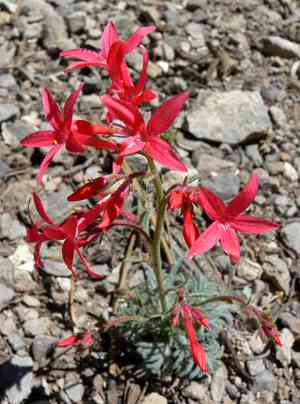
Arizona ipomopsis (Ipomopsis arizonica)
Also known as: Arizona firecracker, Firecracker plant
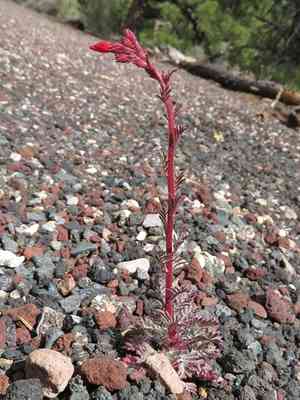
Arizona ipomopsis (Ipomopsis arizonica) is a captivating perennial that features slender stems adorned with vivid red or pink trumpet-shaped flowers, which are particularly attractive to hummingbirds. This plant is native to the southwestern United States, particularly Arizona and New Mexico. It favors rocky, well-drained soils and is typically found at elevations ranging from 5,000 to 10,000 feet. Arizona ipomopsis thrives in open, sunny areas such as slopes, meadows, and forest clearings, where its finely divided, fern-like green leaves provide a delicate contrast to its bright blooms.
In This Article
Attributes of Arizona ipomopsis
Lifespan
Perennial
Plant Type
Herb
Plant Height
Up to 60 cm (24 inches)
Spread
Approximately 30 cm (12 inches)
Leaf Color
Green
Flower Size
Around 2 cm (0.8 inches)
Flower Color
Bright red
Images of Arizona ipomopsis
Quickly Identify Arizona ipomopsis
1
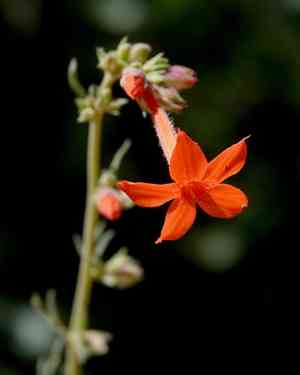
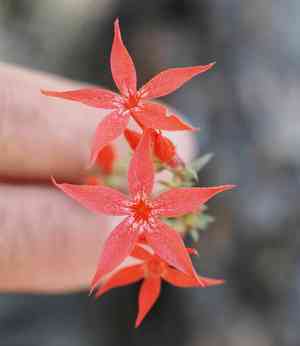
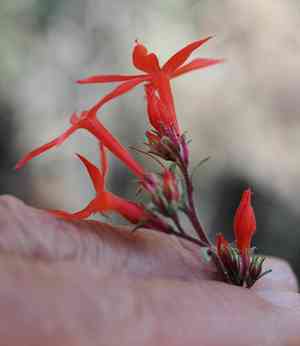
To identify Ipomopsis arizonica, look for its bright red tubular flowers, finely divided leaves, and its erect growth habit. The plant usually grows in dry, rocky, or sandy soils.
Scientific Classification of Arizona ipomopsis
Phylum
Vascular plants
Class
Dicotyledons
Order
Ericales
Family
Phlox
Genus
ipomopsis
Species
Arizona ipomopsis
Planting and Growing of Arizona ipomopsis
Care Difficulty
Moderate
Watering Schedule
Every 2 days
Sunlight Requirements
Full sun
Sunshine Duration
6-10 hours
Ideal Temperature
50-75℉
Soil Type
Potting Mix, Peat Mix
Soil pH
6.5-7.5
Fertilizer Type
Balanced
Pruning Season
Spring, Summer
Pruning Area
Branches, Leaves
Pruning Frequency
2 times a year
Repotting Season
Spring
Pot Type
Plastic, Terracotta
 How to Water Arizona ipomopsis?
Water Ipomopsis arizonica with about 250 ml per session, ensuring the soil is evenly moist but not waterlogged. The goal is to mimic the plant's native environment, where periodic, moderate rainfall occurs.
What are the symptoms of an underwatered Arizona ipomopsis?
›
What should I do if my Arizona ipomopsis is not getting enough water?
›
What are the symptoms of an overwatered Arizona ipomopsis?
›
How to save an overwatered Arizona ipomopsis?
›
 What Are the Sunlight Requirements for Arizona ipomopsis?
Ipomopsis arizonica prefers full sun exposure. Ideal lighting encourages vibrant flowering and robust growth, supporting its natural adaptation to sunny, arid environments.
What is the best lighting condition for Ipomopsis arizonica?
›
How can I ensure my plant receives ideal sunlight?
›
What benefits does ideal sunlight provide?
›
 What Is the Ideal Temperature Range for Arizona ipomopsis?
Ipomopsis arizonica thrives best within a temperature range of 50°F to 75°F. This range supports optimal growth and blooming, as it closely mimics the plant's native high desert environment. Maintaining consistent temperatures within this range allows the plant to perform photosynthesis efficiently and supports healthy stem and leaf development.
 What Soil is Best for Arizona ipomopsis?
Ipomopsis arizonica thrives in well-drained soils as they prevent water from pooling around the roots. This reduces the risk of root rot and provides the plant with the optimal environment to absorb nutrients efficiently. The plant requires soils with moderate levels of nutrients. Excessive nutrients can lead to lush foliage at the expense of blooms, while too few nutrients might stifle growth. Ipomopsis arizonica can tolerate slightly to moderately acidic soils, which help in maintaining an appropriate pH balance for nutrient uptake, optimizing growth and flower production.
 How to Fertilize Arizona ipomopsis?
For Ipomopsis arizonica, use a balanced 10-10-10 liquid fertilizer. Apply about 1/4 cup per plant during the growing season to support its vibrant growth. Ensure not to overdo it to prevent nutrient burn.
 How to Prune Arizona ipomopsis?
Begin by removing dead, diseased, or damaged stems at the base. Next, trim back about one-third of each stem to encourage fuller growth. Always make cuts at a 45-degree angle and just above a healthy outward-facing bud to guide the direction of new growth. Pruning in spring encourages vigorous growth as the plant enters its active growth phase. A light summer trim helps maintain form and size, but avoid heavy pruning close to the blooming period to not impact flowering.
More About Pruning Techniques→
 How to Propagate Arizona ipomopsis plant?
1
Collect seeds from mature Ipomopsis arizonica plants when the seed pods have dried. Wait for a dry, wind-free day to gather the seeds to prevent loss and ensure high viability.
2
Sow the seeds on the surface of the potting mix without covering them, as they require light for germination. Gently press them into the mix to ensure good contact with the soil.
3
Water the seeds gently using a mist to avoid displacing them. Ensure they receive plenty of light, either through natural sunlight or grow lights, for at least 12 hours a day.
 How to Repot Arizona ipomopsis plant?
1
For Ipomopsis arizonica, consider repotting when you notice roots coming out of the drainage holes, or if the plant's growth has noticeably slowed down. The ideal time to repot this plant is during its active growing phase in spring or summer, ensuring that it has enough energy to recover and thrive in its new pot.
2
Select a pot that is slightly larger than the current one, offering just enough space for root expansion without waterlogging. Opting for a pot with ample drainage holes ensures excess water escapes, preventing root rot and allowing the soil to dry out properly between waterings, which is crucial for a healthy Ipomopsis arizonica.
3
A well-draining sandy or gritty soil mix mimics the plant’s natural habitat and is ideal for Ipomopsis arizonica. This type of soil ensures excellent aeration and prevents water retention, reducing the risks of root diseases and providing the roots with necessary nutrients and anchorage.
Learn More About Arizona ipomopsis Diseases
Anthracnose
Bacterial Leaf Spot
Bacterial Wilt
Chemical Injury
Crown Gall
Cyst Nematode
Damping-off
Downy Mildew
Drought Stress
Fusarium Wilt
Gray Mold
Leaf Curl
Leaf Spot
Mosaic
Nutrient Deficiency
Nutrient Toxicity
Powdery Mildew
Root Rot
Root-knot Nematode
Rusts
Sooty Mold
Spider Mites
Temperature Stress
Thrips Damage
White Mold



