Mate (Ilex paraguariensis)
Also known as: Paraguay tea
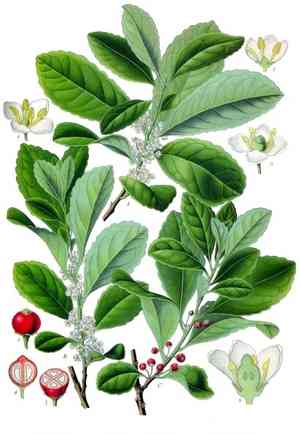
Yerba mate (Ilex paraguariensis) starts as a shrub before maturing into a tree, potentially reaching up to 15 meters in height. The evergreen leaves are typically 7-11 cm in length and 3-6 cm in width, featuring a serrated edge. Commonly referred to as "yerba" in Spanish and "erva" in Portuguese, both terms translate to "herb."
In This Article
Attributes of Mate
Lifespan
Perennial
Plant Type
Tree, Shrub
Plant Height
3-8 meters
Spread
Up to 4 meters
Leaf Color
Green
Flower Size
Small, typically less than 1 cm
Flower Color
White Green
Images of Mate



Quickly Identify Mate
1
Ilex paraguariensis can be identified by its small evergreen leaves with serrated edges, white to greenish flowers, and red drupe fruits.
Scientific Classification of Mate
Phylum
Vascular plants
Class
Dicotyledons
Order
Aquifoliales
Family
Holly
Genus
Ilex
Species
Mate
Planting and Growing of Mate
Care Difficulty
Hard
Watering Schedule
Every 4 days
Sunlight Requirements
Partial sun
Sunshine Duration
6-10 hours
Ideal Temperature
64-77℉
Soil Type
Potting Mix, Peat Mix
Soil pH
6.5-7.5
Fertilizer Type
Balanced
Pruning Season
Spring, Summer
Pruning Area
Branches, Leaves
Pruning Frequency
2 times a year
Repotting Season
Spring
Pot Type
Plastic, Ceramic
 How to Water Mate?
For Ilex paraguariensis, or yerba mate, it's crucial to ensure that the root zone is well-hydrated but not waterlogged. The ideal amount is approximately 300 milliliters per watering session. This quantity is just enough to moisten the root area thoroughly, allowing excess water to drain away to prevent root rot.
What are the symptoms of an underwatered Mate?
›
What should I do if my Mate is not getting enough water?
›
What are the symptoms of an overwatered Mate?
›
How to save an overwatered Mate?
›
 What Are the Sunlight Requirements for Mate?
Partial to full sun exposure is ideal, translating to about 4 to 6 hours of sunlight daily. Adequate light ensures improved photosynthesis, robust growth, and healthier leaves conducive to its natural dietary and herbal uses.
What is the best lighting level for Ilex paraguariensis?
›
How can you ensure the plant gets the right amount of light?
›
What benefits does ideal lighting provide for Ilex paraguariensis?
›
 What Is the Ideal Temperature Range for Mate?
The ideal temperature range of 64°F to 77°F is crucial for Ilex paraguariensis as it ensures optimal physiological processes such as photosynthesis and nutrient uptake, promoting healthy growth and maximizing foliage production.
 What Soil is Best for Mate?
Ilex paraguariensis thrives in nutrient-rich soil, which provides essential elements for healthy growth. Rich soil supports robust leaf and stem development, contributing to vigorous plant health and abundant yield. Good drainage is crucial for Ilex paraguariensis, as it prevents root rot. Well-drained soil ensures that excess water does not accumulate around the roots, protecting the plant from diseases and promoting optimal health. This plant prefers a consistently moist soil environment that retains adequate moisture. Moist conditions facilitate proper nutrient absorption and support the plant's overall vitality and productivity.
 How to Fertilize Mate?
The recommended amount of fertilizer for Ilex paraguariensis depends on its growth stage and environment. For liquid fertilizers, use approximately 1 tablespoon per gallon of water. When using slow-release fertilizers, apply 200-300 grams per plant. This should be adjusted based on plant response and soil test results.
 How to Prune Mate?
Begin by removing any dead, damaged, or diseased branches using clean, sharp pruners. This will improve the plant's overall health. Trim back stems to maintain the desired shape, ideally just above a node or lateral leaf. Always cut at a slight angle to prevent water from pooling on the cut surface, which could lead to rot. For shaping, select a calm day to avoid wind interference. Gently snip the tips of branches to encourage a fuller and more dense growth pattern. For Ilex paraguariensis, focus on creating an open structure to allow sunlight and air to penetrate through the plant, facilitating even growth and minimizing pest issues.
More About Pruning Techniques→
 How to Propagate Mate plant?
1
Before sowing, seeds need to be scarified due to their hard outer shell. This can be done by soaking them in warm water for 12 to 24 hours. This step is critical for improving germination rates.
2
Use clean, sharp tools to cut healthy, non-flowering stems about 10-15 cm long. Remove the lower leaves to expose the nodes, which will help in the rooting process.
3
Choose a low-growing branch and bend it gently to the ground. Bury a portion of the stem in soil, leaving the tip exposed. Secure with a pin if needed to hold it in place while it roots.
 How to Repot Mate plant?
1
Keep an eye on the pot size and root growth. If roots are bursting out of the pot or the plant appears cramped and growth is stunted, it's time to repot. Another hint is if the soil dries out too quickly post-watering. These signs indicate that your Ilex paraguariensis is ready for a new home.
2
Choose a pot that is one size larger than the current one. Ensure it has adequate drainage holes to prevent waterlogging, as excess moisture can lead to root rot. A slightly larger pot allows roots room to grow, promoting better nutrient absorption and overall plant health.
3
Opt for a well-draining, rich soil mix, preferably one that mirrors the natural habitat of the plant. Such soil provides essential nutrients while preventing water accumulation around roots, balancing moisture and nourishment effectively for healthier plant growth.
Learn More About Mate Diseases
Anthracnose
Bacterial Leaf Spot
Black Spot
Chemical Injury
Damping-off
Downy Mildew
Drought Stress
Fusarium Wilt
Gray Mold
Leaf Curl
Leaf Spot
Mosaic
Nutrient Deficiency
Nutrient Toxicity
Powdery Mildew
Root Rot
Root-knot Nematode
Rusts
Sooty Mold
Spider Mites
Temperature Stress
Thrips Damage
White Mold



