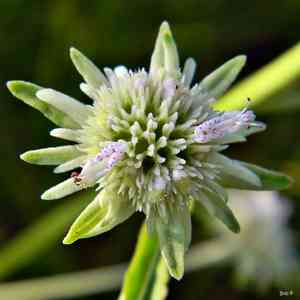
Clustered bushmint (Hyptis alata)
Also known as: Musky mint
The shrub known as Hyptis alata, or clustered bushmint, is indigenous to the Americas, encompassing regions like the southeastern United States, Cuba, Argentina, and southern Brazil. It predominantly thrives in moist environments.
In This Article
Attributes of Clustered bushmint
Lifespan
Perennial
Plant Type
Shrub
Plant Height
61 cm to 2.5 m
Spread
0.5 to 0.75 meters
Leaf Color
Green
Flower Size
2.5 cm
Flower Color
White Green
Images of Clustered bushmint
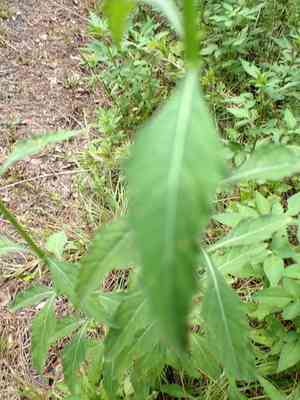
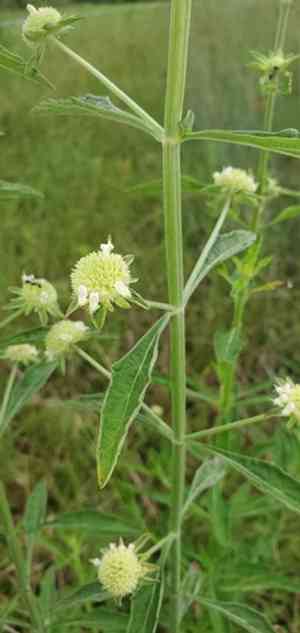
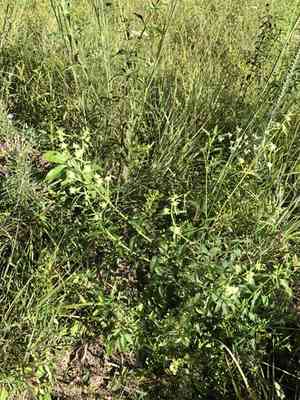
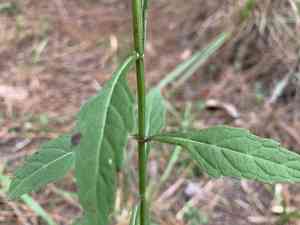
Quickly Identify Clustered bushmint
1
Look for a herbaceous plant with square stems, aromatic leaves, and clusters of small lavender flowers. The leaves are typically opposite and can have a minty fragrance when crushed.
Scientific Classification of Clustered bushmint
Phylum
Vascular plants
Class
Dicotyledons
Order
Lamiales
Family
Mint
Genus
Bushmints
Species
Clustered bushmint
Planting and Growing of Clustered bushmint
Care Difficulty
Easy
Watering Schedule
Every 4 days
Sunlight Requirements
Full sun
Sunshine Duration
4-8 hours
Ideal Temperature
70-85℉
Soil Type
Potting Mix, Peat Mix
Soil pH
6-7.5
Fertilizer Type
Balanced
Pruning Season
Spring, Summer
Pruning Area
Branches, Leaves
Pruning Frequency
2 times a year
Repotting Season
Spring
Pot Type
Plastic, Ceramic
 How to Water Clustered bushmint?
When watering Hyptis alata, aim to moisten the soil evenly. The general rule is to supply enough water to wet the soil evenly without waterlogging it. Usually, about 250 milliliters is sufficient to moisten the soil deeply, allowing the roots to absorb the required moisture without drowning them.
What are the symptoms of an underwatered Clustered bushmint?
›
What should I do if my Clustered bushmint is not getting enough water?
›
What are the symptoms of an overwatered Clustered bushmint?
›
How to save an overwatered Clustered bushmint?
›
 What Are the Sunlight Requirements for Clustered bushmint?
Hyptis alata prefers full to partial sunlight for vibrant growth. Adequate lighting promotes healthier leaves and greater bloom capacity.
More About Sunlight Requirements Techniques→
What is the best light condition for Hyptis alata?
›
How can I ensure Hyptis alata gets its ideal light conditions?
›
What are the benefits of providing ideal light to Hyptis alata?
›
 What Is the Ideal Temperature Range for Clustered bushmint?
Hyptis alata thrives best in temperatures ranging from 70°F to 85°F. Within this range, the plant can maximize its growth potential and exhibit optimal health. Maintaining consistent temperatures within this range ensures that metabolic processes such as photosynthesis and respiration occur at optimal rates. Deviation from these temperatures can result in stunted growth or unnecessary stress on the plant.
 What Soil is Best for Clustered bushmint?
Hyptis alata thrives in well-draining soils that prevent water from pooling around its roots. This is essential for preventing root rot, a common issue when the plant is overwatered or in poorly draining environments. Adequate drainage supports healthy root growth and sustenance. A nutrient-rich soil blend facilitates the optimal growth of Hyptis alata. Utilizing organic matter such as compost or manure can enhance the soil's nutrient content. Nutrients support the plant's robust leaf production and overall health, providing resilience against pests. Hyptis alata prefers soil with a neutral to slightly acidic pH, from 6.0 to 7.5. This pH range ensures that essential nutrients are readily available for uptake, which is vital for the plant’s metabolic functions and vibrant growth.
 How to Fertilize Clustered bushmint?
For Hyptis alata, it's important to administer fertilizer at a moderate rate. Use about 1/4 to 1/2 strength of a balanced liquid fertilizer solution to avoid saturating the soil and overwhelming the plant's roots with excess nutrients.
 How to Prune Clustered bushmint?
Always use clean and sharp pruning shears to make precise cuts. This will minimize damage to the plant tissues and promote quicker healing, preventing disease entry points. When pruning, locate a healthy node and make your cut just above it. This encourages new growth to sprout from that node, ensuring that the plant continues to thrive and fill out. First, identify and remove any dead, damaged, or diseased branches. This will not only improve the appearance of the plant but also redirect energy towards healthy growth.
More About Pruning Techniques→
 How to Propagate Clustered bushmint plant?
1
Begin by filling seed trays with a well-balanced potting mix. Sow the seeds evenly and cover them lightly with soil. Water gently to moisten the surface and place the trays in a warm, sunny spot for optimal germination.
2
Select healthy stems from the mother plant and cut 4-6 inch sections just below a node. Remove the lower leaves and dip the cut end in a rooting hormone before planting it in a mix of sand and potting soil for root development.
3
Cover the seed trays or cuttings with a plastic dome or use a humidity tent. This helps in creating a mini greenhouse effect, retaining moisture levels which are crucial for young seedling and cutting development.
 How to Repot Clustered bushmint plant?
1
Hyptis alata, also known as bush mint, signals its need for repotting when you notice roots coming out of the drainage holes or the plant appears stunted. These are clear indicators that the plant has outgrown its current home. Repotting during its active growing seasons, spring and summer, ensures minimal stress and optimizes recovery.
2
Opt for a pot that's one size larger with proper drainage holes. This ensures the roots have more space to grow, preventing root bound conditions. A well-draining pot also avoids water retention at the base, reducing the risk of root rot common in species like Hyptis alata.
3
The ideal soil for Hyptis alata is a well-draining potting mix. This type of soil maintains optimal moisture levels, avoiding waterlogging while still retaining necessary nutrients. This balance is crucial as it provides a stable environment conducive to the health and growth of the plant.
Toxicity
Ingestion, Skin contact
WARNING
The judgment on toxicity and danger is for reference only. We DO NOT GUARANTEE any accuracy of such judgment. Therefore, you SHALL NOT rely on such judgment. It is IMPORTANT TO SEEK PROFESSIONAL ADVICE in advance when necessary.
Learn More About Clustered bushmint Diseases
Anthracnose
Bacterial Leaf Spot
Bacterial Wilt
Crown Gall
Cyst Nematode
Damping-off
Downy Mildew
Drought Stress
Fusarium Wilt
Gray Mold
Leaf Curl
Leaf Spot
Mosaic
Nutrient Deficiency
Nutrient Toxicity
Powdery Mildew
Root Rot
Root-knot Nematode
Rusts
Sooty Mold
Spider Mites
Temperature Stress
Thrips Damage
White Mold



