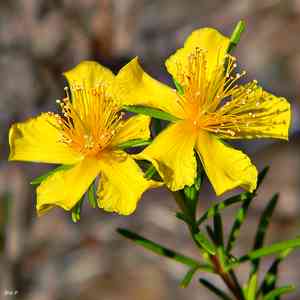
Peelbark St. John's wort (Hypericum fasciculatum)
Also known as: St. Peter's Wort, Pineweed
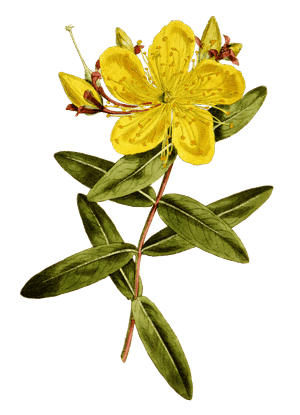
Peelbark St. John's wort, scientifically known as *Hypericum fasciculatum*, is a perennial shrub that thrives in wetland ecosystems. This hardy plant is characterized by its peeling, reddish-brown bark and clusters of vibrant yellow flowers that bloom in late spring and summer. It typically reaches heights of 1-2 meters and has narrow, needle-like leaves arranged in whorls, which help reduce water loss.
### Distinctive Traits:
1. **Height and Structure:** Grows to about 1-2 meters tall with slender, woody branches.
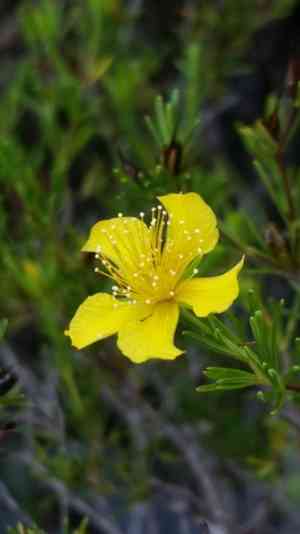
2. **Leaves:** Needle-like and arranged in whorls to minimize water evaporation.
3. **Flowers:** Bright yellow, five-petaled blooms that appear in clusters.
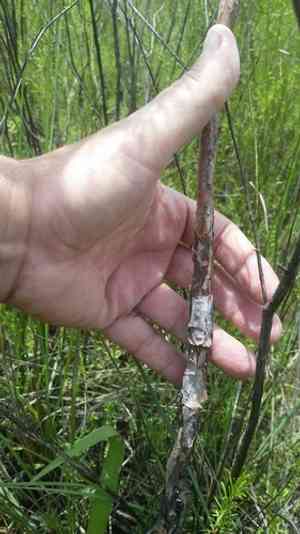
4. **Bark:** Peels in strips, revealing a reddish layer beneath.
5. **Fruit:** Produces small, capsule-like fruits containing numerous seeds.
### Ecological Adaptations:
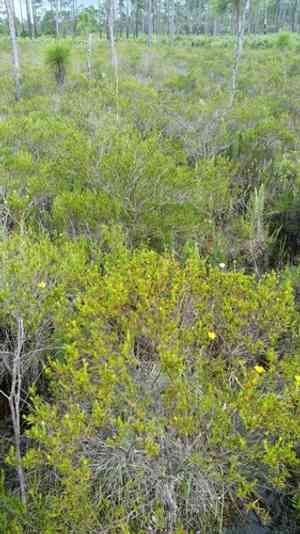
1. **Wetland Preference:** Flourishes in wet, acidic soils typical of marshes and stream banks.
2. **Sunlight Needs:** Prefers full sun but can also grow in partial shade.
3. **Moisture Adaptability:** Tolerates periodic flooding and consistently moist environments.
4. **Soil Acidity:** Well-suited to acidic soil conditions found in wetlands.
These features and adaptations enable Peelbark St. John's wort to be a resilient and enduring part of wetland habitats, where it contributes to the biodiversity and stability of these ecosystems.
Attributes of Peelbark St. John's wort
Images of Peelbark St. John's wort
 How to Water Peelbark St. John's wort?
  What Are the Sunlight Requirements for Peelbark St. John's wort?
  What Is the Ideal Temperature Range for Peelbark St. John's wort?
  What Soil is Best for Peelbark St. John's wort?
  How to Fertilize Peelbark St. John's wort?
  How to Prune Peelbark St. John's wort?
  How to Propagate Peelbark St. John's wort plant?
 How to Repot Peelbark St. John's wort plant?



