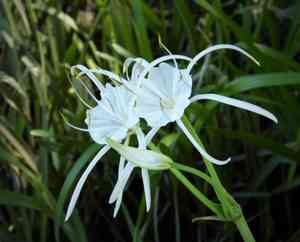
Northern spider-lily (Hymenocallis occidentalis)
Also known as: Woodland spider-lily
The Northern spider-lily is commonly located in moist, wooded areas, on slopes, and near rivers and streams in the southeastern United States. Its striking, fragrant flowers are characterized by their large size and spider-like petals.
In This Article
Attributes of Northern spider-lily
Lifespan
Perennial
Plant Type
Herb
Plant Height
2-3 feet
Spread
1-2 feet
Leaf Color
Bright green
Flower Size
8 cm to 15 cm
Flower Color
White
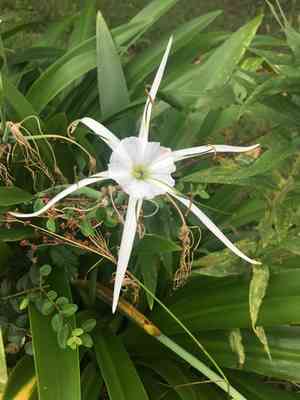
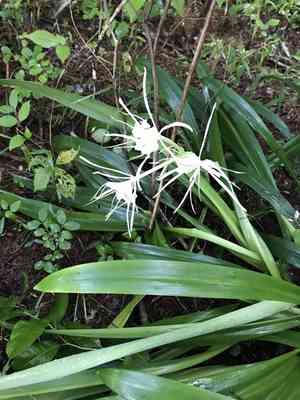
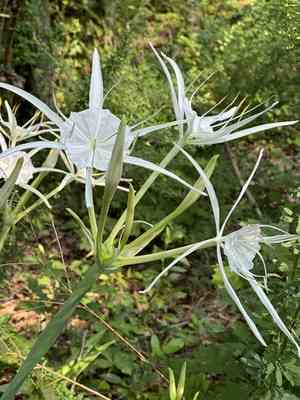
Images of Northern spider-lily
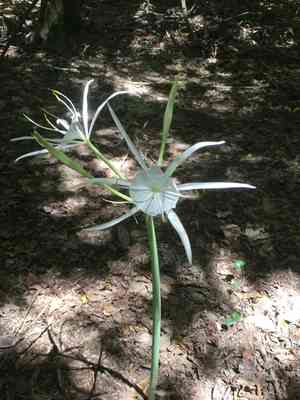
Quickly Identify Northern spider-lily
1
Star-like white flowers with central membrane
2
Elongated tri-lobed leathery fruit with fleshy seeds
3
Basal strap-like leaves up to 2 feet long
4
Erect unbranched stem with smooth texture
Scientific Classification of Northern spider-lily
Phylum
Vascular plants
Class
Monocotyledons
Order
Asparagales
Family
Amaryllis
Genus
insmene
Species
Northern spider-lily
Planting and Growing of Northern spider-lily
Care Difficulty
Moderate
Watering Schedule
Every 2 days
Sunlight Requirements
Full sun
Sunshine Duration
6-12 hours
Ideal Temperature
60-75℉
Soil Type
Potting Mix, Peat Mix
Soil pH
6.5-7.5
Fertilizer Type
Balanced
Pruning Season
Spring, Summer
Pruning Area
Branches, Leaves
Pruning Frequency
2 times a year
Repotting Season
Spring
Pot Type
Plastic, Ceramic
 How to Water Northern spider-lily?
Hymenocallis occidentalis prefers moderate watering, where the soil is kept evenly moist but not waterlogged. Watering with about 250 ml each time ensures the roots receive sufficient moisture without risking root rot. Always check the soil before watering; it should feel just slightly dry to the touch.
What are the symptoms of an underwatered Northern spider-lily?
›
What should I do if my Northern spider-lily is not getting enough water?
›
What are the symptoms of an overwatered Northern spider-lily?
›
How to save an overwatered Northern spider-lily?
›
 What Are the Sunlight Requirements for Northern spider-lily?
Partial sun, ensuring 4 to 6 hours of sunlight. Ideal lighting promotes healthy growth, vibrant blooms, and sturdy foliage, enhancing the plant's natural beauty and longevity.
Does Hymenocallis occidentalis prefer full sun or partial shade?
›
How can I achieve the ideal light conditions for Hymenocallis occidentalis?
›
What are the benefits of providing ideal light conditions for this plant?
›
 What Is the Ideal Temperature Range for Northern spider-lily?
The ideal temperature range for Hymenocallis occidentalis lies between 60 and 75 degrees Fahrenheit. This range provides optimal conditions for growth, as these temperatures emulate the plant's native subtropical habitat. In this range, metabolic processes occur efficiently, supporting healthy leaf and flower development. It is crucial to maintain this temperature indoors, especially in temperate regions.
 What Soil is Best for Northern spider-lily?
Hymenocallis occidentalis thrives in nutrient-rich environments where the soil is fertile. Providing ample organic matter not only supports robust growth but also enhances the plant's flowering potential. Well-draining soil is crucial for the health of Hymenocallis occidentalis. Soils that can quickly evacuate excess water help to prevent root rot and other water-related diseases, promoting healthy root development. While good drainage is essential, the soil should also be capable of retaining some moisture. This helps in maintaining adequate hydration during dry periods without causing waterlogging.
 How to Fertilize Northern spider-lily?
For Hymenocallis occidentalis, the fertilizer amount should be moderate. Use approximately 1/4 cup of liquid fertilizer diluted to half strength per application to prevent root burn and ensure optimal nutrient uptake.
 How to Prune Northern spider-lily?
Start by examining your Hymenocallis occidentalis for any dead, yellowing, or damaged leaves. Gently remove these leaves by cutting them near the base with pruning shears. This encourages new growth and helps the plant dedicate energy to producing healthy leaves. Once the flowers have faded, remove the spent flower stalks by cutting them at the base. This not only improves the plant's appearance but also prevents it from using resources to develop seeds, thus encouraging more lush foliage and future flowering. Carefully trim back any overgrown or misaligned leaves to help shape your Hymenocallis occidentalis. Maintain a natural, balanced appearance that allows light to reach all parts of the plant. Shaping also increases air circulation around the leaves, minimizing the risk of fungal diseases.
More About Pruning Techniques→
 How to Propagate Northern spider-lily plant?
1
Collect seeds from mature plants after the flowering season. Ensure the seeds are dry and free from mold or pest damage before storage.
2
Prepare a seedbed with well-draining soil. Use a seed tray filled with a mixture of sand and organic matter to support healthy germination.
3
Plant seeds at a depth of 1.5 times their size and water lightly. Maintain consistent moisture without waterlogging, as this can lead to seed rot.
 How to Repot Northern spider-lily plant?
1
Hymenocallis occidentalis signals its need for repotting when you see slowed growth, roots emerging from drainage holes, or a compacted root system. The best time to act is when the plant begins active growth, typically in spring or early summer, ensuring minimal stress.
2
Choose a pot that is one size larger than the current one with drainage holes. This allows ample space for the roots to grow and prevents waterlogging, which can cause root rot. A slightly larger pot ensures the plant continues its robust development without becoming root-bound too soon.
3
A well-draining potting mix enriched with organic matter is ideal for Hymenocallis occidentalis. This mix ensures that moisture doesn't stagnate, reducing root rot risk while still providing necessary nutrients, enhancing the plant's overall vitality and bloom potential.
Toxicity
Ingestion
WARNING
The judgment on toxicity and danger is for reference only. We DO NOT GUARANTEE any accuracy of such judgment. Therefore, you SHALL NOT rely on such judgment. It is IMPORTANT TO SEEK PROFESSIONAL ADVICE in advance when necessary.
Learn More About Northern spider-lily Diseases
Anthracnose
Bacterial Leaf Spot
Bacterial Soft Rot
Bacterial Wilt
Crown Gall
Cyst Nematode
Damping-off
Downy Mildew
Drought Stress
Fusarium Wilt
Gray Mold
Leaf Spot
Mosaic
Nutrient Deficiency
Nutrient Toxicity
Powdery Mildew
Root Rot
Root-knot Nematode
Rusts
Sooty Mold
Spider Mites
Temperature Stress
Thrips Damage
White Mold



