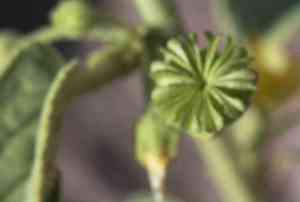
Newberry's velvetmallow (Horsfordia newberryi)
Also known as: Newberry's velvet-mallow
Newberry's velvetmallow (Horsfordia newberryi) is well-suited to desert environments, characterized by its velvety look from the dense soft hairs on its stems and leaves. This adaptation helps minimize water loss and reflect intense sunlight. The plant features yellow to orange flowers that bloom throughout much of the year, contributing to its resilience and ability to thrive in arid conditions.
In This Article
Attributes of Newberry's velvetmallow
Lifespan
Perennial
Plant Type
Shrub
Plant Height
81 cm
Spread
1.5 m
Leaf Color
Green, covered with fine hairs
Flower Size
1.5 cm
Flower Color
Yellow
Images of Newberry's velvetmallow
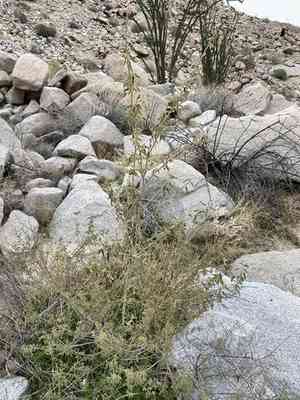
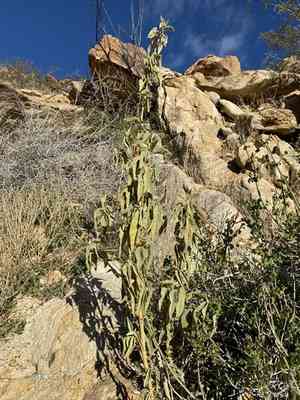
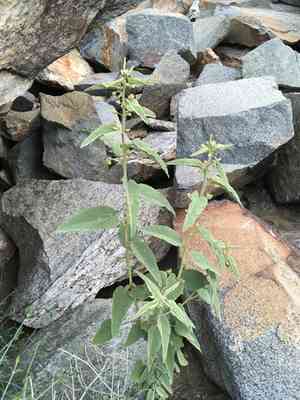
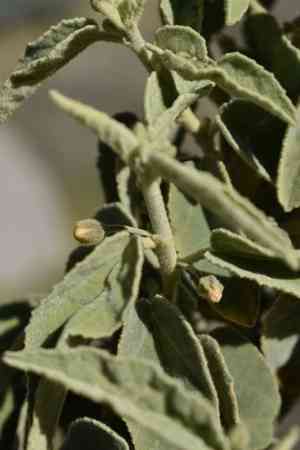
Quickly Identify Newberry's velvetmallow
1
Horsfordia newberryi can be identified by its velvety leaves and stems, along with its distinct pink to purple flowers which bloom in clusters. The plant typically has a shrubby appearance with a height reaching up to 1.5 meters. The leaves are lobed and covered with fine hairs.
Scientific Classification of Newberry's velvetmallow
Phylum
Vascular plants
Class
Dicotyledons
Order
Malvales
Family
Mallow
Genus
Velvetmallows
Species
Newberry's velvetmallow
Planting and Growing of Newberry's velvetmallow
Care Difficulty
Hard
Watering Schedule
Every 2 days
Sunlight Requirements
Full sun
Sunshine Duration
6-10 hours
Ideal Temperature
60-75℉
Soil Type
Potting Mix, Peat Mix
Soil pH
6.5-7.5
Fertilizer Type
Balanced
Pruning Season
Spring, Summer
Pruning Area
Branches, Leaves
Pruning Frequency
2 times a year
Repotting Season
Spring
Pot Type
Plastic, Terracotta
 How to Water Newberry's velvetmallow?
The watering amount for Horsfordia newberryi should be around 200ml per session. This ensures the soil is adequately moist without becoming waterlogged. It's vital to allow the soil to dry out almost completely between watering sessions to mimic its natural arid environment, preventing root rot.
What are the symptoms of an underwatered Newberry's velvetmallow?
›
What should I do if my Newberry's velvetmallow is not getting enough water?
›
What are the symptoms of an overwatered Newberry's velvetmallow?
›
How to save an overwatered Newberry's velvetmallow?
›
 What Are the Sunlight Requirements for Newberry's velvetmallow?
Horsfordia newberryi thrives in full sunlight. Ideal lighting promotes robust growth, enhances blooming, and ensures optimal photosynthetic function, leading to a healthier, more vigorous plant.
How much sun does it need?
›
What are the best solutions for ideal lighting?
›
What benefits occur under ideal lighting?
›
 What Is the Ideal Temperature Range for Newberry's velvetmallow?
For optimal growth, Horsfordia newberryi thrives best in environments where temperatures consistently hover between 60°F and 75°F. These conditions mimic the plant's native habitat, allowing it to photosynthesize effectively and develop robustly. During the growing season, maintaining temperatures within this range is critical for promoting healthy foliage and flowering.
 What Soil is Best for Newberry's velvetmallow?
Horsfordia newberryi thrives in well-drained soil, such as sandy or sandy loam. Good drainage prevents water from accumulating around the roots, reducing the risk of root rot and promoting healthy growth. While Horsfordia newberryi is not very demanding in terms of nutrients, a balanced sandy loam with moderate organic content is ideal. This nourishment supports its growth and flowering phase, resulting in a more vibrant plant. The plant benefits from soil that allows air to circulate around its roots. A light, sandy composition helps prevent compaction, ensuring that roots receive sufficient oxygen for optimal growth.
 How to Fertilize Newberry's velvetmallow?
Horsfordia newberryi, being a hardy perennial, benefits from a modest amount of fertilizer. Typically, apply about 1/4 to 1/2 cup of balanced 10-10-10 fertilizer around the base of each plant in spring and early summer to promote healthy growth and vibrant blooms.
 How to Prune Newberry's velvetmallow?
Do not remove more than one-third of the plant at a time. Over-pruning can stress the plant and inhibit its ability to photosynthesize effectively. Be cautious of wildlife that may inhabit your plant. Ensure no nests or beneficial insects are in the branches before pruning, to avoid disturbing their habitat. Though spring and autumn are ideal for pruning, avoid cutting the plant during extreme temperature fluctuations, as this can cause undue stress.
More About Pruning Techniques→
 How to Propagate Newberry's velvetmallow plant?
1
To propagate using seeds, fill a tray with a seed starting mix and scatter the seeds on the surface. Lightly cover the seeds with a thin layer of soil and water gently to ensure they remain moist.
2
Select a healthy stem and use sharp pruners to cut a section around 6 inches long. Remove the lower leaves to create a bare section for rooting, and dip the cut end in rooting hormone to improve root development.
3
Place the cuttings into a pot filled with moist potting soil. Ensure that the soil remains consistently moist but not waterlogged. Covering the pot with a plastic dome or bag can help retain humidity.
 How to Repot Newberry's velvetmallow plant?
1
Repotting Horsfordia newberryi should be considered when you notice roots crowding out through the drainage holes or the plant seems to have outgrown its current pot. Spring and early summer are ideal times, as the plant will have the entire growing season to establish itself in its new home.
2
Choose a pot one size larger than the current one, ensuring it has adequate drainage holes. A slightly snug pot encourages healthy root growth and prevents waterlogging, which can be detrimental to Horsfordia newberryi.
3
Opt for a well-draining cactus mix that mimics the plant's natural habitat. This type of soil allows for proper aeration and moisture retention without suffocating the roots, optimal for healthy growth and nutrient uptake.
Learn More About Newberry's velvetmallow Diseases
Anthracnose
Bacterial Leaf Spot
Bacterial Wilt
Chemical Injury
Crown Gall
Cyst Nematode
Damping-off
Downy Mildew
Drought Stress
Fusarium Wilt
Gray Mold
Leaf Curl
Leaf Spot
Mosaic
Nutrient Deficiency
Nutrient Toxicity
Powdery Mildew
Root Rot
Root-knot Nematode
Rusts
Sooty Mold
Spider Mites
Temperature Stress
Thrips Damage
White Mold



