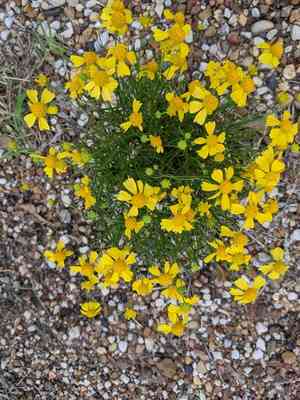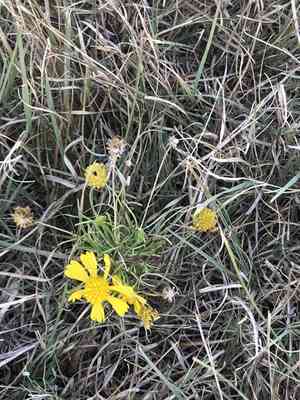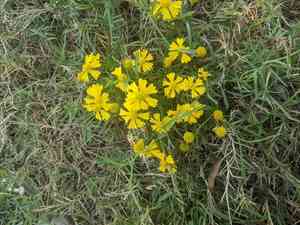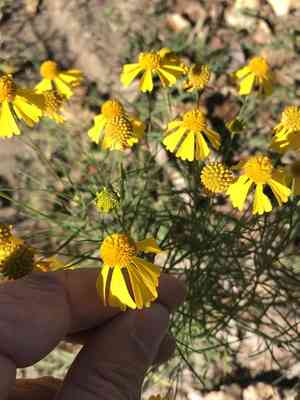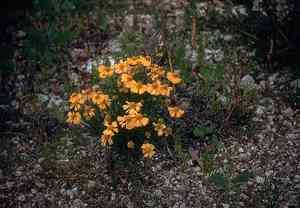
Bitter sneezeweed(Helenium amarum)

Bitter sneezeweed (Helenium amarum)

Also known as: Bitterweed, Yellow sneezeweed, Yellow Bitterweed, Fine-leaved Sneezweed

Bitter sneezeweed (Helenium amarum) is an annual herb that typically reaches heights of 25 to 51 cm. This plant, known for its strong odor and bitter flavor, belongs to the daisy family. It produces bright yellow, daisy-like flowers with brown centers in late spring or summer, which are arranged at the top of the stems and attract various pollinators such as bees and butterflies. Bitter sneezeweed thrives in sunny environments with well-drained soils and is frequently found in fields, prairies, roadsides, and disturbed areas across the southern and central United States.

Attributes of Bitter sneezeweed

Lifespan
Annual, Biennial, Perennial
Plant Type
Herb
Plant Height
30 cm to 61 cm
Spread
25 cm to 40 cm
Leaf Color
Green Blue
Flower Size
2.5 cm
Flower Color
Yellow

ForwardPlant - Identify plants with a snap

Identify and diagnose plants, get toxicity alerts, and explore safety guides for all types of fungi.

Try for Free

Images of Bitter sneezeweed

Bitter sneezeweed(Helenium amarum)

Quickly Identify Bitter sneezeweed

1
Helenium amarum can be identified by its slender, branching stems, linear leaves, and vibrant yellow, daisy-like flowers. The plant often grows in open, disturbed areas and has a distinctive bitter taste.

Scientific Classification of Bitter sneezeweed

Phylum
Vascular plants
Class
Dicotyledons
Order
Asterales
Family
Daisy
Genus
Sneezeweeds
Species
Bitter sneezeweed

Planting and Growing of Bitter sneezeweed

Care Difficulty
Easy
Watering Schedule
Every 2 days
Sunlight Requirements
Full sun
Sunshine Duration
6-10 hours
Ideal Temperature
70-80℉
Soil Type
Potting Mix, Peat Mix
Soil pH
6.5-7.5
Fertilizer Type
Balanced
Pruning Season
Spring, Summer
Pruning Area
Branches, Leaves
Pruning Frequency
2 times a year
Repotting Season
Spring
Pot Type
Terracotta, Plastic

water icon How to Water Bitter sneezeweed?

Helenium amarum prefers a thorough soak rather than frequent light watering. Each time you water, aim for about 500 ml—enough to moisten the soil thoroughly without leaving it waterlogged.
What are the symptoms of an underwatered Bitter sneezeweed?
What should I do if my Bitter sneezeweed is not getting enough water?
What are the symptoms of an overwatered Bitter sneezeweed?
How to save an overwatered Bitter sneezeweed?

sunlight icon What Are the Sunlight Requirements for Bitter sneezeweed?

Sunlight Requirements: Full sun
Duration of light: 6 to 8 hours daily
Helenium amarum prospers in full sun conditions, typically described as full-day exposure. This range helps the plant develop robust flower displays and stay healthy over the growing season.
What is the ideal amount of sunlight for Helenium amarum?
How can I ensure my plant gets adequate sunlight?
What are the benefits of ideal sunlight for Helenium amarum?
More About Sunlight Requirements Techniques

temperature icon What Is the Ideal Temperature Range for Bitter sneezeweed?

Ideal Temperature: 70 ~ 80℉
For optimal growth, Helenium amarum thrives in temperatures ranging from 70°F to 80°F. This range ensures that the plant receives adequate warmth without the risk of overheating. Maintaining this temperature helps promote healthy photosynthesis and nutrient absorption.

soil icon What Soil is Best for Bitter sneezeweed?

Soil type: Sandy loam, Loam
Soil PH: 6.5 ~ 7.5
Helenium amarum thrives in well-drained soil as it prevents waterlogging, ensuring the roots are healthy and not subject to rot. This is particularly important for the plant's growth and development, allowing it to produce vibrant blooms. The plant requires moderately fertile soil to achieve optimal growth. This ensures that Helenium amarum has access to enough nutrients without overwhelming it with excessive fertilization, thus supporting its robust flowering capacity. A combination of sand and loam is ideal for providing the necessary balance of moisture retention and drainage. This mixture offers sufficient aeration, supporting strong root development and overall plant health.

fertilize icon How to Fertilize Bitter sneezeweed?

Fertilizer type: Balanced
Helenium amarum typically requires a moderate amount of fertilizer. Use a balanced 10-10-10 liquid fertilizer at a dilution of half the recommended strength to ensure that the nutrients are delivered without overwhelming the plant.

prune icon How to Prune Bitter sneezeweed?

Pruning Time: Spring, Summer
Begin by identifying dead, damaged, or diseased stems. Use your sharp shears to cut these back to the base or to healthy tissue. This encourages new growth and keeps the plant robust. Trim back overlong branches to manage the size of the plant and encourage a bushier shape. Cut above a node or leaf pair to prompt branching that results in a fuller appearance. To promote continuous blooming, deadhead spent flowers regularly. Cut the stem back to a leaf node to prevent the plant from expending energy on seed production, favoring flower production instead. More About Pruning Techniques

propagate icon How to Propagate Bitter sneezeweed plant?

Propagate Time: Spring, Early spring
1
Begin by filling the seed tray with potting soil. Ensure the soil is evenly spread and thoroughly moistened. It's important not to compact the soil too much as this can hinder root growth and water drainage.
2
Place Helenium amarum seeds evenly across the surface of the soil, ensuring they are spaced adequately to allow for growth. Cover the seeds with a thin layer of soil, or lightly press them into the surface to ensure contact with the soil.
3
Keep the soil consistently moist but not waterlogged. Use a spray bottle to mist the soil surface regularly, especially in the first few weeks when seeds are germinating. This helps maintain the humidity around the seeds without overwatering.
More About Propagating Techniques

repot icon How to Repot Bitter sneezeweed plant?

Repotting frequency: Every 1-2 years
1
Helenium amarum should be repotted when you observe its roots coming out of the drainage holes or when the plant shows stunted growth. Another good signal is when the soil dries out too quickly after watering, indicating root-bound or compacted soil.
2
Select a pot that is one size larger than the current one, with ample drainage holes. This helps prevent waterlogging and gives the roots more space to grow, which is crucial for preventing root rot and promoting healthy growth.
3
Opt for a well-draining potting mix. This ensures that excess water can easily escape, preventing root rot. A mix with added perlite or sand is ideal, as it aids in aeration and improves the soil structure for optimal plant health.

ForwardPlant - Identify plants with a snap

Find the best spots for them to optimize their health, simply using your phone.

Try for Free

Toxicity of Bitter sneezeweed

Is Bitter sneezeweed toxic to cat?

Bitter sneezeweed presents a slight risk of toxicity to cats, especially when consumed in substantial amounts. Although the precise toxic substances remain unspecified, it is crucial to recognize that every part of bitter sneezeweed is regarded as toxic to cats. Following exposure, a cat might exhibit general signs of distress, including gastrointestinal issues, lethargy, or various indications of discomfort. It is vital for cat owners to keep a close watch on their pets for any negative reactions after contact with bitter sneezeweed and to seek veterinary assistance promptly for effective and timely treatment.

Is Bitter sneezeweed toxic to dog?

Bitter sneezeweed is recognized as having a relatively low degree of toxicity for dogs. When ingested in substantial quantities, this plant can lead to poisoning in dogs. Every part of bitter sneezeweed is poisonous, and consumption can result in a range of symptoms including gastrointestinal distress, excessive drooling, nausea, vomiting, or diarrhea. Therefore, it is vital for dog owners to keep a close watch on their pets and prevent them from entering areas where bitter sneezeweed is present. If there is any suspicion that a dog has ingested bitter sneezeweed, it is essential to obtain prompt veterinary assistance to ensure the best possible recovery for the animal.

Identify toxic plants for your safety

Learn which plants are harmful to you and your pets, and make informed choices for a safer home!

Try for Free
WARNING
The judgment on toxicity and danger is for reference only. We DO NOT GUARANTEE any accuracy of such judgment. Therefore, you SHALL NOT rely on such judgment. It is IMPORTANT TO SEEK PROFESSIONAL ADVICE in advance when necessary.
More About Toxic Techniques