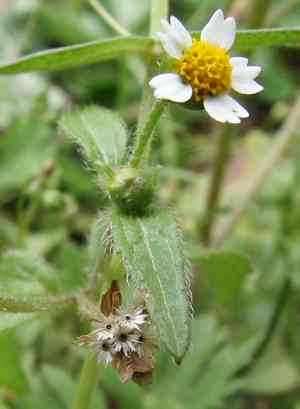
False broomweed (Haploesthes greggii)
Also known as: Gregg's Haploesthes, False Goldenweed
False broomweed (Ericameria austrotexana) is a hardy shrub ideal for arid environments. It prospers in full sunlight and well-drained soils. The plant's small, narrow leaves minimize water loss, and its deep root system allows it to access moisture from deep underground, making it highly drought-tolerant. During its blooming season, it produces bright yellow flowers that attract pollinators, adding a splash of color to dry landscapes.
In This Article
Attributes of False broomweed
Lifespan
Perennial
Plant Type
Herb
Plant Height
1 foot (30 cm)
Spread
Up to 2 feet (60 cm)
Leaf Color
Gray-green
Flower Size
0.5 inches (1.27 cm)
Flower Color
Yellow
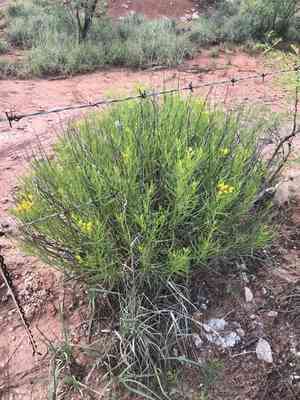
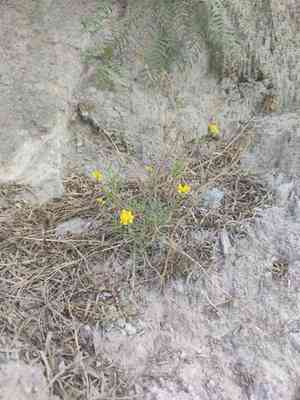
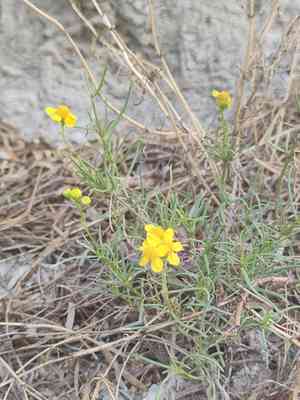
Images of False broomweed
Quickly Identify False broomweed
1
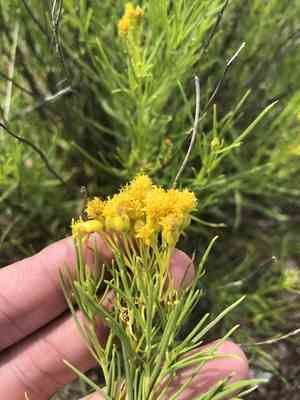
Haploesthes greggii can be identified by its small, yellow, daisy-like flowers and its gray-green, linear leaves. The plant tends to form low mounds or mats, typically reaching about a foot in height.
Scientific Classification of False broomweed
Phylum
Vascular plants
Class
Dicotyledons
Order
Asterales
Family
Daisy
Genus
False broomweed
Species
False broomweed
Planting and Growing of False broomweed
Care Difficulty
Moderate
Watering Schedule
Every 2 days
Sunlight Requirements
Full sun
Sunshine Duration
4-8 hours
Ideal Temperature
60-75℉
Soil Type
Potting Mix, Peat Mix
Soil pH
6.5-7.5
Fertilizer Type
Balanced
Pruning Season
Spring, Summer
Pruning Area
Branches, Leaves
Pruning Frequency
2 times a year
Repotting Season
Spring
Pot Type
Ceramic, Plastic
 How to Water False broomweed?
For Haploesthes greggii, ensure the soil is moistened adequately but not excessively. The general rule is to provide around 500 ml of water per session. Water until the soil turns moist but not soggy, ensuring it drains well to avoid waterlogging the roots.
What are the symptoms of an underwatered False broomweed?
›
What should I do if my False broomweed is not getting enough water?
›
What are the symptoms of an overwatered False broomweed?
›
How to save an overwatered False broomweed?
›
 What Are the Sunlight Requirements for False broomweed?
Full sun is essential for Haploesthes greggii, as it ensures abundant flowering and healthy growth, replicating its native sun-rich habitats.
What are the ideal light conditions for Haploesthes greggii?
›
How can you adjust its environment to get ideal sunlight?
›
What benefits come from providing Haploesthes greggii with ideal light?
›
 What Is the Ideal Temperature Range for False broomweed?
The ideal temperature range for Haploesthes greggii is between 60 and 75°F. Maintaining temperatures within this range ensures optimal growth and development, providing conditions similar to its native habitat. In this range, the plant efficiently carries out photosynthesis and other metabolic processes necessary for its health.
 What Soil is Best for False broomweed?
Haploesthes greggii thrives in soils that provide excellent drainage. Good drainage prevents waterlogging, reducing the risk of root rot, thus contributing to the plant's health and longevity. Moderate nutrient content is adequate for Haploesthes greggii, as overly fertile soils can lead to excessive foliage with fewer flowers. Balanced nutrition supports optimal growth and blooming. A sandy or sandy loam texture is ideal as it allows for easy root penetration and aeration, supporting robust plant growth and resilience against adverse environmental conditions.
 How to Fertilize False broomweed?
Haploesthes greggii benefits from a measured approach, receiving about a tablespoon of 10-10-10 liquid fertilizer per application. This ensures nutrients are available without overwhelming the plant, keeping its growth steady and vibrant.
 How to Prune False broomweed?
Start with clean, sharp pruning shears. Remove any dead or damaged stems first, cutting just above a set of healthy leaves to promote new growth. For shaping, trim back overgrown branches to maintain this plant's natural rounded form, ensuring even sunlight reaches the interior. To enhance blooming, focus on pruning right after the flowering period in the Summer. Cut back about 30% of the current growth, which stimulates the plant to produce more flowers in the following bloom cycle. Make sure cuts are clean to avoid lymphatic shock. For size control, selectively remove stems that overcrowd the bush, especially those growing inward or crossing each other. This not only tidies up the plant but increases air circulation, reducing disease risk and helping sunlight penetrate every part of the plant.
More About Pruning Techniques→
 How to Propagate False broomweed plant?
1
Start by filling seed trays with a well-draining seed starting mix. Sow the seeds at a depth of about twice their diameter and gently water the soil to keep it moist, but not waterlogged, to encourage germination.
2
Select healthy, non-flowering stems and cut them at a 45-degree angle. The cuttings should be 4-6 inches long with at least 2-3 nodes, and remove the leaves from the lower half to reduce moisture loss.
3
Dip the cut end of the cutting into rooting hormone to stimulate root development, then plant it in a potting mix or a mix of perlite and peat. Keep the medium lightly moist and cover the cutting with a plastic bag to maintain humidity.
 How to Repot False broomweed plant?
1
Haploesthes greggii requires repotting when you notice roots growing out of the drainage holes or when the soil has compacted and lost its structure. Spring and early summer are ideal times to repot, as the plant enters its active growth phase.
2
Choose a pot that is one size larger than the current one, ensuring it has good drainage holes. A slightly larger pot prevents waterlogging, providing ample space for root expansion, and reduces the risk of root rot.
3
Use a well-draining cactus mix that mimics the plant’s natural, arid environment. Such soil retains enough moisture for roots to absorb while quickly draining excess, reducing the risk of fungal diseases associated with soggy soil.
Learn More About False broomweed Diseases
Anthracnose
Bacterial Leaf Spot
Bacterial Wilt
Black Spot
Chemical Injury
Crown Gall
Cyst Nematode
Damping-off
Downy Mildew
Drought Stress
Fusarium Wilt
Gray Mold
Leaf Spot
Mosaic
Nutrient Deficiency
Nutrient Toxicity
Powdery Mildew
Root Rot
Root-knot Nematode
Rusts
Sooty Mold
Spider Mites
Temperature Stress
Thrips Damage
White Mold



