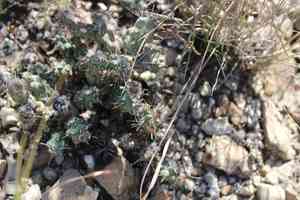
Big bend pricklypear (Grusonia schottii)
Also known as: Schott's club cholla, Grusonia
The Big Bend pricklypear (Opuntia aureispina) is a hardy cactus featuring thick, green pads and formidable spines that deter herbivores. Its segmented pads are adept at conserving water, essential for survival in arid landscapes. The plant's vivid flowers offer a striking contrast to its tough surroundings, showcasing its unique adaptation to desert life.
In This Article
Attributes of Big bend pricklypear
Lifespan
Perennial
Plant Type
Succulent
Plant Height
Up to 30 cm (1 ft)
Spread
Approximately 1.2 meters (4 ft)
Leaf Color
N/A, as it is a cactus
Flower Size
3-5 cm
Flower Color
Yellow or yellow-green
Images of Big bend pricklypear
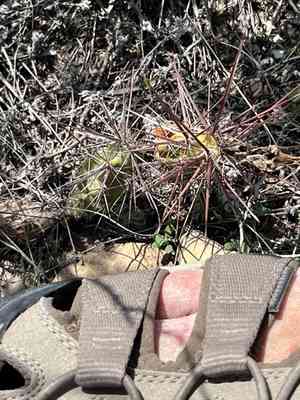
Quickly Identify Big bend pricklypear
1
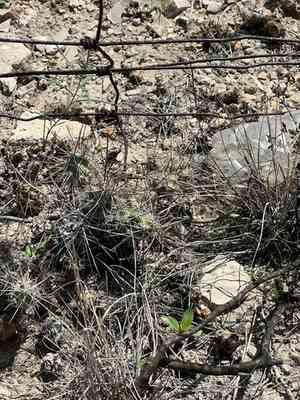
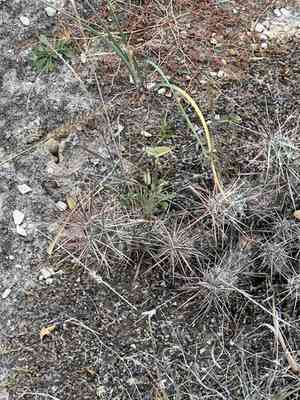
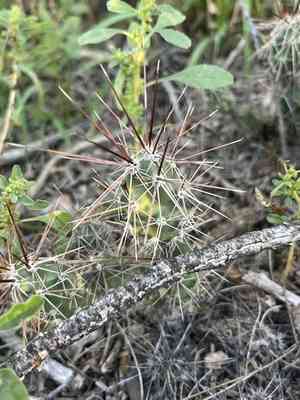
Grusonia schottii can be identified by its densely spined, cylindrical stems which branch from the base. The stems are often grey-green in color and can form clumps. The spines are grouped in clusters, making the plant appear very spiky.
Scientific Classification of Big bend pricklypear
Phylum
Vascular plants
Class
Dicotyledons
Order
Caryophyllales
Family
Cactuses
Genus
Cholla
Species
Big bend pricklypear
Planting and Growing of Big bend pricklypear
Care Difficulty
Easy
Watering Schedule
Every 2 days
Sunlight Requirements
Full sun
Sunshine Duration
4-8 hours
Ideal Temperature
70-85℉
Soil Type
Potting Mix, Peat Mix
Soil pH
6.5-7.5
Fertilizer Type
Balanced
Pruning Season
Spring, Summer
Pruning Area
Branches, Leaves
Pruning Frequency
2 times a year
Repotting Season
Spring
Pot Type
Plastic, Ceramic
 How to Water Big bend pricklypear?
For Grusonia schottii, which is a drought-tolerant cactus, the watering amount should be enough to slightly moisten the soil without letting it become soggy. Usually, 100 milliliters per watering session is appropriate. The key is to water deeply but infrequently, allowing the soil to dry out completely before the next watering. Water should penetrate the soil and reach the root zone but not sit in the pot, which can lead to root rot.
What are the symptoms of an underwatered Big bend pricklypear?
›
What should I do if my Big bend pricklypear is not getting enough water?
›
What are the symptoms of an overwatered Big bend pricklypear?
›
How to save an overwatered Big bend pricklypear?
›
 What Are the Sunlight Requirements for Big bend pricklypear?
Grusonia schottii thrives in full sun, ideally 8-10 hours daily. This ensures robust growth and helps maintain its health, mirroring its natural habitat conditions for maximum vitality.
Where should I place Grusonia schottii?
›
How does exposure to sunlight affect its growth?
›
What if my region has low sunlight exposure?
›
 What Is the Ideal Temperature Range for Big bend pricklypear?
Grusonia schottii thrives best in warm conditions, ideally ranging from 70°F to 85°F. This temperature range allows the plant to carry out necessary physiological processes efficiently, such as photosynthesis and respiration, ensuring healthy growth and development.
 What Soil is Best for Big bend pricklypear?
Grusonia schottii requires excellent drainage capability in its soil setup. Ample drainage helps prevent water retention which could lead to root rot. This requirement ensures the plant has an optimal moisture balance, promoting robust growth. While Grusonia schottii is a hardy plant, it still benefits from sparse nutrients present in the soil. A sandy soil with a trace of organic matter fulfills this need, sustaining minimal but essential nutrition vital for the plant's survival in harsh environments. This plant thrives in well-aerated soil, such as sandy loam, which allows roots easy access to oxygen. This prevents compaction, boosting root health and facilitating a stronger plant structure, particularly crucial in arid climates.
 How to Fertilize Big bend pricklypear?
For Grusonia schottii, apply a light dose of fertilizer. When using liquid fertilizer, dilute it to half the recommended strength to avoid root burn. With slow-release fertilizers, use about one tablespoon per plant annually to ensure they receive consistent nutrients.
 How to Prune Big bend pricklypear?
Begin by gathering thick gloves, long-sleeved clothing, a sharp, clean pair of garden shears, and ensure you have disinfectant for the tools to prevent disease spread. Safety is key as the spines can be dangerous. Look for damaged, diseased, or dead pads and any pads that are growing in an undesirable direction. Focus on maintaining the plant’s overall shape, which should be balanced and not too cluttered. Make clean cuts at the joint where the pad connects to the main plant structure. Avoid cutting too close to the main stem to prevent potential infection or damage to the main structure.
More About Pruning Techniques→
 How to Propagate Big bend pricklypear plant?
1
Select healthy, mature segments from the plant with sterile tools to avoid contamination. Allow the cut ends to callus for at least a few days before planting.
2
Plant the seeds shallowly in well-draining soil. Cover lightly with soil, mist with water, and keep in a warm, bright location.
3
After planting seeds or cuttings, water moderately to maintain slight soil moisture, avoiding waterlogging, which can lead to rot.
 How to Repot Big bend pricklypear plant?
1
Grusonia schottii should be repotted when you notice that its roots are growing out of the drainage holes, or when the plant appears to be too top-heavy for its current pot. This typically occurs every two to three years. Spring or summer is the perfect time to repot, as the plant is in its active growth phase.
2
Choose a pot that is slightly larger than the current one, with plenty of drainage holes. A slightly larger pot gives the roots more room to grow, while proper drainage prevents water from accumulating, which can lead to root rot. Consider a terracotta pot to enhance breathability and moisture regulation.
3
Select a well-draining cactus mix to prevent waterlogged roots. The ideal mix should have excellent aeration and be able to mimic the arid environment Grusonia schottii naturally thrives in. Ensure that the soil has materials like sand or pumice to enhance drainage.
Learn More About Big bend pricklypear Diseases
Anthracnose
Bacterial Leaf Spot
Bacterial Soft Rot
Crown Gall
Cyst Nematode
Damping-off
Drought Stress
Fusarium Wilt
Gray Mold
Leaf Spot
Mosaic
Nutrient Deficiency
Nutrient Toxicity
Powdery Mildew
Root Rot
Root-knot Nematode
Rusts
Sooty Mold
Spider Mites
Temperature Stress
Thrips Damage
White Mold
Chemical Injury



