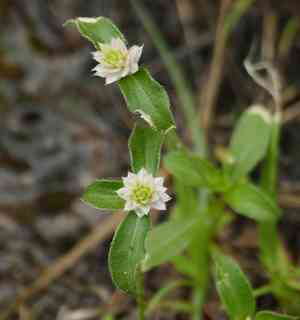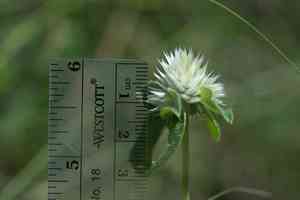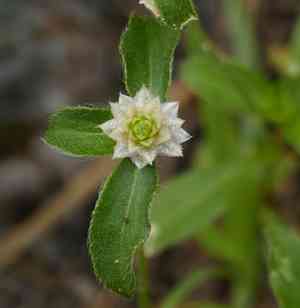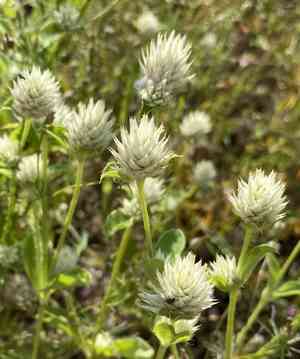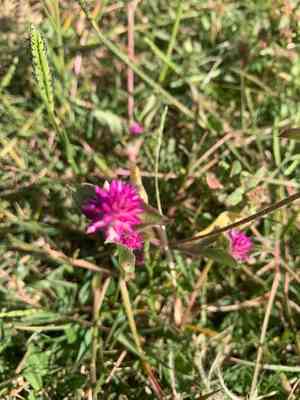
Pearly globe amaranth(Gomphrena nitida)

Pearly globe amaranth (Gomphrena nitida)

Also known as: None

The pearly globe amaranth (Gomphrena globosa) is notable for its striking, spherical flower heads that come in vivid shades like purple, pink, red, and white. Key characteristics include:

1. **Heat and Drought Resistance**: It excels in hot, dry climates, making it a great choice for water-efficient gardening.
2. **Extended Bloom Time**: The plant flowers from summer until the first frost, offering prolonged visual appeal.
3. **Easy Care**: Once established, it requires minimal upkeep.

Ecological benefits are:

1. **Pollinator Attraction**: Its bright flowers draw bees, butterflies, and other pollinators, supporting ecosystem health.
2. **Soil Stability**: Its strong root system helps to prevent soil erosion.
3. **Water Conservation**: Its ability to thrive with little water supports sustainable landscaping practices.

Attributes of Pearly globe amaranth

Lifespan
Annual
Plant Type
Herb
Plant Height
20-50 cm
Spread
Unspecified
Leaf Color
Green
Flower Size
0.5-1 cm
Flower Color
White or lilac

ForwardPlant - Identify plants with a snap

Identify and diagnose plants, get toxicity alerts, and explore safety guides for all types of fungi.

Try for Free

Images of Pearly globe amaranth

Pearly globe amaranth(Gomphrena nitida)

Quickly Identify Pearly globe amaranth

1
Gomphrena nitida can be identified by its elongated leaves, small clusters of tubo-shaped flowers, and its bushy habit.

Scientific Classification of Pearly globe amaranth

Phylum
Vascular plants
Class
Dicotyledons
Order
Caryophyllales
Family
Amaranth
Genus
Globe amaranths
Species
Pearly globe amaranth

Planting and Growing of Pearly globe amaranth

Care Difficulty
Easy
Watering Schedule
Every 3 days
Sunlight Requirements
Full sun
Sunshine Duration
6-10 hours
Ideal Temperature
65-75℉
Soil Type
Potting Mix, Peat Mix
Soil pH
6-7.5
Fertilizer Type
Balanced
Pruning Season
Spring, Summer
Pruning Area
Branches, Leaves
Pruning Frequency
Once a year
Repotting Season
Spring
Pot Type
Plastic, Ceramic

water icon How to Water Pearly globe amaranth?

For Gomphrena nitida, ensure you water the plant until the soil is thoroughly moist but not waterlogged. Usually, about 250 milliliters is sufficient per watering. It's important to let the soil dry out slightly between waterings to prevent root rot.
What are the symptoms of an underwatered Pearly globe amaranth?
What should I do if my Pearly globe amaranth is not getting enough water?
What are the symptoms of an overwatered Pearly globe amaranth?
How to save an overwatered Pearly globe amaranth?

sunlight icon What Are the Sunlight Requirements for Pearly globe amaranth?

Sunlight Requirements: Full sun, Partial sun
Duration of light: 6 to 8 hours
Gomphrena nitida thrives in conditions with full sun to partial sun exposure. Ideal light promotes vibrant growth, regular flowering, and enhances disease resistance, allowing the plant to maintain its ornamental appeal.
What lighting conditions does Gomphrena nitida prefer?
How can you provide ideal lighting for Gomphrena nitida indoors?
What benefits does optimal lighting provide for Gomphrena nitida?

temperature icon What Is the Ideal Temperature Range for Pearly globe amaranth?

Ideal Temperature: 65 ~ 75℉
The ideal temperature range for Gomphrena nitida is between 65°F and 75°F. This range supports optimal physiological processes and encourages healthy growth and flowering. Temperatures within this range help maintain cellular functions, photosynthesis, and nutrient uptake.

soil icon What Soil is Best for Pearly globe amaranth?

Soil type: Sandy loam, Loam, Sand soil
Soil PH: 6 ~ 7.5
Gomphrena nitida thrives in well-drained soil, which prevents waterlogging and root rot. This requirement ensures the plant’s roots can access sufficient air, promoting healthy growth. Incorporating organic matter into the soil enhances soil fertility and structure. This addition facilitates nutrient retention and improves drainage, fostering robust plant development. Gomphrena nitida prefers soil with moderate nutrient levels, which supports its steady growth without promoting excessive foliage at the cost of flowers. Balanced nutrients aid in optimal flowering and overall vigor.

fertilize icon How to Fertilize Pearly globe amaranth?

Fertilizer type: Balanced
For Gomphrena nitida, use a balanced fertilizer with an N-P-K ratio of 10-10-10. Liquid fertilizer should be diluted to half strength, using about 1 tablespoon per gallon of water. Ensure the soil is moist before application to prevent root burn.

prune icon How to Prune Pearly globe amaranth?

Pruning Time: Spring, Summer
Begin with removing any dead or diseased stems at the base of the plant. Then, gently shape the plant by trimming the outer growth to encourage a more compact and aesthetically pleasing form. To trigger more blooms, snip faded flowers just above the leaf nodes. This will redirect the plant’s energy from seed production to bushier growth and additional flowering. More About Pruning Techniques

propagate icon How to Propagate Pearly globe amaranth plant?

Propagate Time: Spring,Early summer
1
Choose seeds from a reputable supplier or harvest from healthy parent plants. Seeds should be mature, firm, and free from any signs of disease or damage. This is crucial for ensuring high germination rates and vigorous plant growth.
2
Use a well-draining potting mix that maintains moisture without becoming soggy. Mix peat, perlite, and vermiculite for ideal conditions. Sterilize the mix by baking it at low temperatures to eliminate potential pathogens.
3
Select healthy shoots around 4–6 inches long. Cut just below a node with sterilized pruning shears. Remove the lower leaves and dip the cut end in a rooting hormone to promote root development.
More About Propagating Techniques

repot icon How to Repot Pearly globe amaranth plant?

Repotting frequency: Every 2-3 years
1
Repotting Gomphrena nitida is best done in early spring or autumn when the plant shows signs of outgrowing its current pot. Look for indications such as roots emerging from the drainage holes or a slowed growth rate. These are clear signals that your plant is ready for a new, more spacious home.
2
Select a pot that is just one size larger than the current one, to prevent excessive water retention. Ensure it has adequate drainage holes to allow excess water to escape, preventing root rot. Using a slightly larger pot helps the plant stabilize and promotes healthy growth by giving the roots more room to expand.
3
Opt for a well-draining potting mix that mimics Gomphrena nitida's natural habitat. The soil should be a blend of peat, perlite, and coarse sand. This combination ensures proper aeration, prevents waterlogging, and provides the necessary nutrients for the plant to thrive.

ForwardPlant - Identify plants with a snap

Find the best spots for them to optimize their health, simply using your phone.

Try for Free