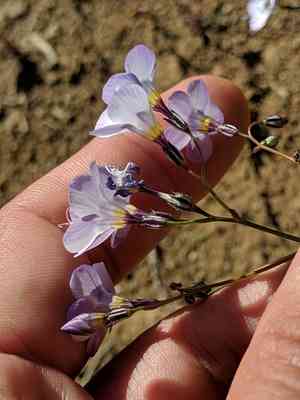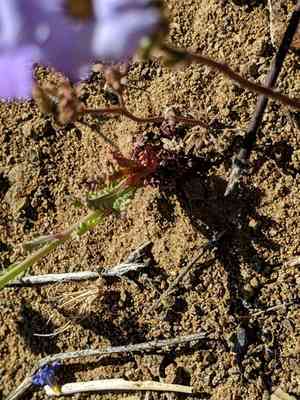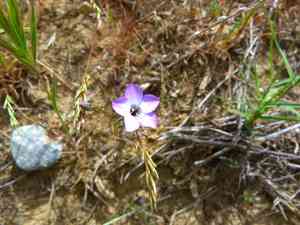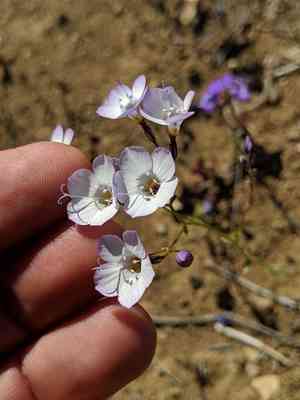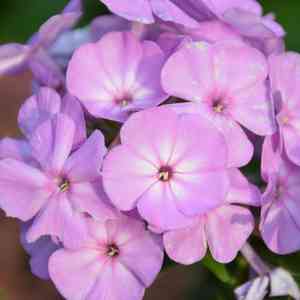
Hollyleaf gilia(Gilia latiflora)

Hollyleaf gilia (Gilia latiflora)

Also known as: Davy's broad-flowered gilia

Hollyleaf gilia (Aliciella latifolia) is notable for its distinctive holly-like leaves with spiny edges and small, trumpet-shaped flowers that are typically white or pink. This annual herb generally reaches a height of up to 30 cm (about 12 inches).

**Characteristics:**
- **Flowers:** Small, trumpet-shaped, usually white or pink.
- **Leaves:** Spiny, holly-like, helping to reduce water loss.
- **Stems:** Slender and upright.

**Habitat Preferences:**
- **Soil:** Prefers sandy or rocky soils.
- **Sunlight:** Thrives in full sun.
- **Climate:** Adapted to arid, dry regions, often found in deserts and scrublands.
- **Elevation:** Can grow at various elevations, from low deserts to higher mountainous areas.

Hollyleaf gilia is well-adapted to survive in harsh, dry environments, making it a resilient native plant of the southwestern United States.

Attributes of Hollyleaf gilia

Lifespan
Annual
Plant Type
Herb
Plant Height
10-40 cm
Spread
N/A
Leaf Color
Green
Flower Size
2-4 cm
Flower Color
Pale purple to lavender with yellow or white throat

ForwardPlant - Identify plants with a snap

Identify and diagnose plants, get toxicity alerts, and explore safety guides for all types of fungi.

Try for Free

Images of Hollyleaf gilia

Hollyleaf gilia(Gilia latiflora)

Quickly Identify Hollyleaf gilia

1
Identify Gilia latiflora by its large, pale purple flowers with yellow or white throats and finely divided leaves. It typically flowers in the spring and early summer.

Scientific Classification of Hollyleaf gilia

Phylum
Vascular plants
Class
Dicotyledons
Order
Ericales
Family
Phlox
Genus
Gilia
Species
Hollyleaf gilia

Planting and Growing of Hollyleaf gilia

Care Difficulty
Easy
Watering Schedule
Every 2 days
Sunlight Requirements
Full sun
Sunshine Duration
4-6 hours
Ideal Temperature
60-75℉
Soil Type
Potting Mix, Peat Mix
Soil pH
6.5-7.5
Fertilizer Type
Balanced
Pruning Season
Spring, Summer
Pruning Area
Branches, Leaves
Pruning Frequency
2 times a year
Repotting Season
Spring
Pot Type
Plastic, Ceramic

water icon How to Water Hollyleaf gilia?

Gilia latiflora thrives with a moderate watering approach. Typically, aim for about 500 ml of water per session. This amount should moisten the soil without causing excess saturation. The key principle is to ensure the soil is damp but not waterlogged, allowing the topsoil to dry out between waterings.
What are the symptoms of an underwatered Hollyleaf gilia?
What should I do if my Hollyleaf gilia is not getting enough water?
What are the symptoms of an overwatered Hollyleaf gilia?
How to save an overwatered Hollyleaf gilia?

sunlight icon What Are the Sunlight Requirements for Hollyleaf gilia?

Sunlight Requirements: Full sun, Partial sun
Duration of light: 6-8 hours daily
Gilia latiflora ideally receives full sun to partial shade, benefiting from consistent sunlight exposure. Ideal lighting promotes vibrant floral displays and robust plant health, emanating a flourishing garden presence.
What does Gilia latiflora thrive in?
How can Gilia latiflora achieve ideal lighting?
Benefits of ideal lighting for Gilia latiflora?

temperature icon What Is the Ideal Temperature Range for Hollyleaf gilia?

Ideal Temperature: 60 ~ 75℉
Gilia latiflora ideally thrives in temperatures ranging from 60°F to 75°F. This range ensures optimal growth and blooming. Within this range, the plant can efficiently photosynthesize, absorb nutrients, and maintain cellular functions, leading to robust and healthy development.

soil icon What Soil is Best for Hollyleaf gilia?

Soil type: Sandy loam, Calcareous soil, Loam
Soil PH: 6.5 ~ 7.5
Gilia latiflora thrives in well-drained soil that prevents waterlogging, which can lead to root rot. Ensuring good drainage promotes healthy root development and enhances nutrient uptake. A nutrient-rich soil benefits Gilia latiflora by providing the essential minerals needed for its growth. The presence of organic matter and minerals supports robust foliage and vibrant flowering. The soil should retain adequate moisture to support the plant’s growth without becoming waterlogged. This balance aids in maintaining plant vigor and sustaining bloom production.

fertilize icon How to Fertilize Hollyleaf gilia?

Fertilizer type: Balanced
Gilia latiflora is a moderately demanding plant in terms of nutrients. It prefers a balanced fertilizer, typically applied at a quarter of the recommended strength for liquid fertilizers. For slow-release fertilizers, a light application is preferred, ensuring the nutrients are gradually available over a longer period.

prune icon How to Prune Hollyleaf gilia?

Pruning Time: Spring, Summer
Start by removing any dead, diseased, or damaged branches. This not only improves the plant's appearance but also helps it focus energy on new and healthy growth. Trim back any excessively long stems to maintain the desired shape. This species tends to grow in a bushy manner, so encourage fullness by cutting back stems just above a leaf node. Prune back about one third of the length of the plant’s stems to encourage more branching and flowering. This results in a fuller plant with more blooms. More About Pruning Techniques

propagate icon How to Propagate Hollyleaf gilia plant?

Propagate Time: Spring, Early spring
1
Fill a seed tray with a suitable potting mix, leaving about a centimeter of space from the top. This prevents the mix from spilling over and allows for proper watering without disturbing the seeds.
2
Sprinkle Gilia latiflora seeds sparsely over the surface of the potting mix. Gently press them down into the soil using your fingers to ensure good contact without burying them too deeply.
3
Using a fine mist spray bottle, water the seeds lightly but thoroughly to moisten the soil. Cover the tray with a plastic dome or lid to maintain humidity and place it in a warm, bright area away from direct sunlight.
More About Propagating Techniques

repot icon How to Repot Hollyleaf gilia plant?

Repotting frequency: Every 2-3 years
1
Gilia latiflora requires repotting when you notice roots coming out of the drainage holes or the plant's growth seems stalled despite proper care. Early spring is the best time to undertake this task, as the plant emerges from its dormant phase, ready to grow robustly in fresh soil.
2
Select a pot that is one size larger than the current one, emphasizing drainage capabilities. Clay pots are excellent choices as they allow better air exchange and reduce the risk of root rot. Ensure the pot has adequate drainage holes to prevent water accumulation.
3
Opt for a well-draining sandy soil mix, which is critical for Gilia latiflora, as it mimics its natural habitat. The sandy structure ensures excess water drains quickly, reducing the risk of root rot and promoting healthy root growth.

ForwardPlant - Identify plants with a snap

Find the best spots for them to optimize their health, simply using your phone.

Try for Free