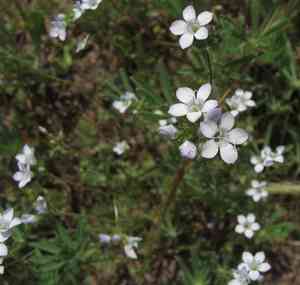
Chaparral gilia (Gilia angelensis)
Also known as: Angel's Gilia
Chaparral gilia, a delicate annual herb native to California, thrives in coastal sage scrub environments. It typically blooms from March to May, displaying clusters of blue to purple, bell-shaped flowers with lobe-tipped petals. The plant's feathery, finely divided foliage is well-suited to the Mediterranean climate of its natural habitat.
In This Article
Attributes of Chaparral gilia
Lifespan
Annual
Plant Height
10 to 30 cm
Spread
N/A
Leaf Color
Green
Flower Size
1 to 2 cm
Flower Color
Blue to purplish
Images of Chaparral gilia
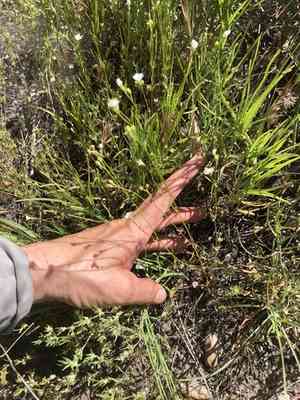
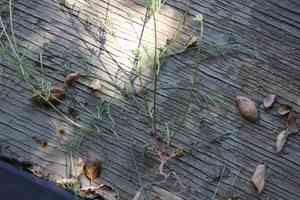
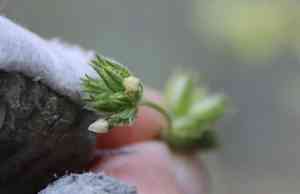
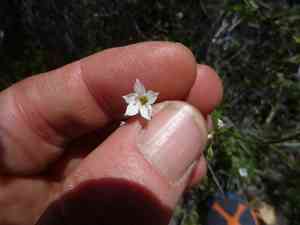
Quickly Identify Chaparral gilia
1
Easily identified by its delicate, blue to purplish tubular flowers and deeply lobed leaves. It\'s a small, herbaceous plant typically found in dry, sandy soils.
Scientific Classification of Chaparral gilia
Phylum
Vascular plants
Class
Dicotyledons
Order
Ericales
Family
Phlox
Genus
Gilia
Species
Chaparral gilia
Planting and Growing of Chaparral gilia
Care Difficulty
Moderate
Watering Schedule
Every 2 days
Sunlight Requirements
Full sun
Sunshine Duration
4-8 hours
Ideal Temperature
65-75℉
Soil Type
Potting Mix, Peat Mix
Soil pH
6.5-7.5
Fertilizer Type
Balanced
Pruning Season
Spring, Summer
Pruning Area
Branches, Leaves
Pruning Frequency
2 times a year
Repotting Season
Spring
Pot Type
Plastic, Ceramic
 How to Water Chaparral gilia?
Gilia angelensis prefers its soil to be moderately moist, but not waterlogged. It thrives best when watered with approximately 250 ml each session. The soil should feel slightly damp to the touch, and be sure to allow the top inch to dry out between waterings to prevent root rot.
What are the symptoms of an underwatered Chaparral gilia?
›
What should I do if my Chaparral gilia is not getting enough water?
›
What are the symptoms of an overwatered Chaparral gilia?
›
How to save an overwatered Chaparral gilia?
›
 What Are the Sunlight Requirements for Chaparral gilia?
Gilia angelensis prefers full sun to partial sun, benefiting from ideally 6-8 hours of sunlight. Such conditions promote robust flowering and overall plant vigor.
What is the best lighting condition for Gilia angelensis?
›
How can one achieve ideal lighting for Gilia angelensis indoors?
›
What benefits does ideal lighting offer to Gilia angelensis?
›
 What Is the Ideal Temperature Range for Chaparral gilia?
The ideal temperature range for growing Gilia angelensis is between 65°F and 75°F. This range provides enough warmth to support the metabolic processes necessary for optimal growth, flowering, and overall plant health while preventing heat stress or cooling stress. Maintaining these temperatures helps in preserving the plant structure and encouraging robust blooming.
 What Soil is Best for Chaparral gilia?
Gilia angelensis flourishes in well-drained soil, preventing root rot and providing optimal aeration for the roots. This ensures the plant taps into essential nutrients efficiently and maintains robust growth. While it thrives in nutrient-poor conditions, providing a nutrient-rich soil mix can enhance its blooming potential. This allows for more vibrant flowers, as the plant can allocate more resources to its reproductive efforts. Gilia angelensis benefits from moderately fertile soil that supports its growth without overwhelming it with nutrients, which could lead to excessively lush foliage at the expense of flower production.
 How to Fertilize Chaparral gilia?
Gilia angelensis requires a modest amount of fertilizer. Apply liquid fertilizer at half the concentration recommended on the label to prevent nutrient burn, using approximately 1 tablespoon per gallon of water. Ensure that the soil is evenly moist but not waterlogged when applying any fertilizer.
 How to Prune Chaparral gilia?
Carefully examine your Gilia angelensis and locate any dead or diseased branches or leaves. Removing these not only improves appearance but also helps prevent the spread of disease. When removing branches or shoots, make a clean cut at a 45-degree angle with the node facing upwards. This promotes better healing and reduces the risk of water pooling on the cut surface. Consider shaping the plant to encourage a more compact, bushy form. Trim overgrown branches to even out the overall shape. This allows light and air to reach the inner parts of the plant, promoting overall health.
More About Pruning Techniques→
 How to Propagate Chaparral gilia plant?
1
Start by filling the seed trays with a well-drained potting mix. Lightly press the seeds into the surface without burying them too deeply. Cover the seeds with a thin layer of soil, just enough to shield them from direct sunlight.
2
Gently water the seeds using a fine mist spray to avoid displacing them. Maintain the soil's moisture consistently, ensuring it is damp but not waterlogged, which can inhibit germination or cause seeds to rot.
3
Place the seed trays in a well-lit area or under a grow light. Gilia angelensis seeds require ample light for successful germination. Ensure they receive at least 6 hours of light daily.
 How to Repot Chaparral gilia plant?
1
Gilia angelensis should be repotted when its growth becomes stagnant, roots start emerging from the bottom of the pot, or the soil appears depleted. These are indicators that it’s time to refresh the plant’s living conditions.
2
Select a pot that is one size larger than the current one, with adequate drainage holes. This prevents waterlogging and encourages healthy root growth, helping the plant thrive in its new environment.
3
Choose a well-draining sandy mix to provide the right air and moisture balance. Such soil prevents root rot and supports optimal nutrient absorption, boosting the plant's health and vigor.
Learn More About Chaparral gilia Diseases
Anthracnose
Bacterial Leaf Spot
Bacterial Soft Rot
Bacterial Wilt
Black Spot
Chemical Injury
Crown Gall
Cyst Nematode
Damping-off
Downy Mildew
Drought Stress
Fusarium Wilt
Gray Mold
Leaf Curl
Leaf Spot
Mosaic
Nutrient Deficiency
Nutrient Toxicity
Powdery Mildew
Root Rot
Root-knot Nematode
Rusts
Sooty Mold
Spider Mites
Temperature Stress
Thrips Damage
White Mold



