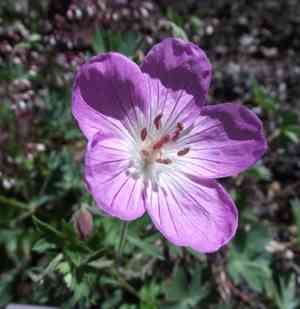
California cranesbill (Geranium californicum)
Also known as: California geranium
The California cranesbill (Geranium californicum) is a perennial wildflower native to California. It features delicate, intricately veined leaves and vibrant pinkish-purple flowers. This hardy plant thrives in rocky soils and dry climates. Its low, mat-forming growth habit makes it an excellent pioneer species in challenging soil conditions.
In This Article
Attributes of California cranesbill
Lifespan
Perennial
Plant Type
Herb
Plant Height
30 cm to 91 cm
Spread
Approximately 1 foot
Leaf Color
Green
Flower Size
1 to 2 inches
Flower Color
Pink to lavender
Images of California cranesbill
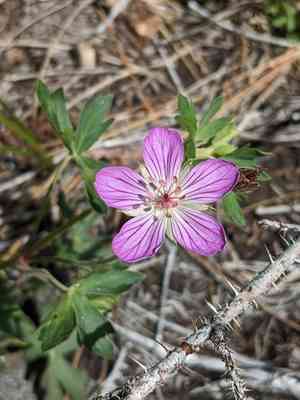
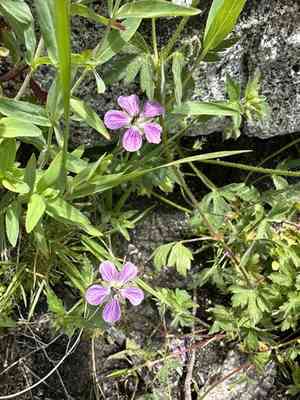
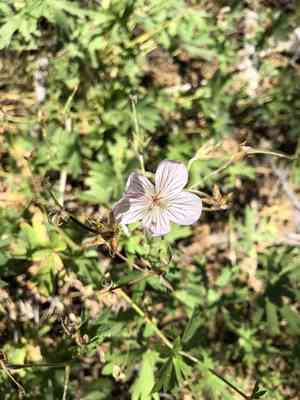
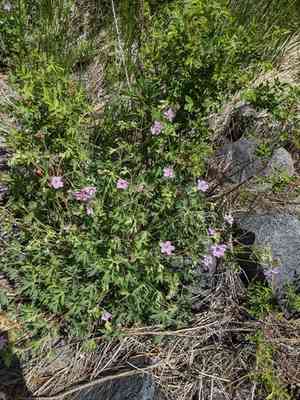
Quickly Identify California cranesbill
1
Look for its characteristic deeply lobed leaves and delicate pink to lavender flowers with five petals. The flowers typically grow in small clusters.
Scientific Classification of California cranesbill
Phylum
Vascular plants
Class
Dicotyledons
Order
Geraniales
Family
Geranium
Genus
Geraniums
Species
California cranesbill
Planting and Growing of California cranesbill
Care Difficulty
Easy
Watering Schedule
Every 2 days
Sunlight Requirements
Partial sun
Sunshine Duration
4-8 hours
Ideal Temperature
60-75℉
Soil Type
Potting Mix, Peat Mix
Soil pH
5.5-7.5
Fertilizer Type
Balanced
Pruning Season
Spring, Summer
Pruning Area
Branches, Leaves
Pruning Frequency
2 times a year
Repotting Season
Spring
Pot Type
Plastic, Ceramic
 How to Water California cranesbill?
Geranium californicum requires a moderate watering approach, which means about 500 milliliters per session. The soil should be moist but not soggy; roots benefit from consistent moisture without sitting in water. Water until the surrounding soil is saturated without standing water.
What are the symptoms of an underwatered California cranesbill?
›
What should I do if my California cranesbill is not getting enough water?
›
What are the symptoms of an overwatered California cranesbill?
›
How to save an overwatered California cranesbill?
›
 What Are the Sunlight Requirements for California cranesbill?
Geranium californicum thrives best under partial sun, allowing 4-6 hours of gentle sun exposure. This ideal range promotes vigorous growth, full-bodied foliage, and prolific blooming while minimizing risks of sun damage.
What is the best lighting condition for Geranium californicum?
›
How can I achieve ideal lighting for Geranium californicum?
›
What benefits does ideal lighting provide to Geranium californicum?
›
 What Is the Ideal Temperature Range for California cranesbill?
Geranium californicum thrives best within a temperature range of 60 to 75°F. This range supports optimal growth, flowering, and overall health, providing conditions similar to its native habitat. Regular monitoring ensures that environments remain constant, enabling the plant to utilize nutrients efficiently and maintain robust growth patterns.
 What Soil is Best for California cranesbill?
Geranium californicum thrives in well-draining soil which prevents waterlogging and root rot. This type of soil allows excess water to escape, ensuring that the roots have access to oxygen while retaining necessary moisture. Ensuring good drainage is crucial for the healthy growth and blooming of this plant. This geranium prefers soil that is moderately fertile. Too rich a soil can promote excessive foliage growth at the expense of blooms. A balance of nutrients supports robust flowering and maintains the structural integrity of the plant without pushing it into overgrowth. Maintaining an appropriate soil pH level, between 5.5 and 7.5, helps Geranium californicum to absorb nutrients efficiently. An acidic or highly alkaline environment can interfere with nutrient uptake, stunting growth and reducing flower production.
 How to Fertilize California cranesbill?
For Geranium californicum, moderate fertilization is key to ensuring healthy growth. When using liquid fertilizers, a dilution ratio of 1:4 (fertilizer to water) is recommended. For slow-release fertilizers, apply a balanced amount based on the manufacturer's instructions, usually around 2 to 4 tablespoons per plant, depending on its size and age.
 How to Prune California cranesbill?
Prune your Geranium californicum in the morning or late afternoon when evaporation is minimal and the plant is less stressed. Avoid pruning during wet or excessively hot conditions as this can lead to plant stress or disease propagation. Ideal weather conditions help the plant recover quickly from cutting. Pay attention to signs of over-pruning such as stunted growth or browning edges on the leaves. These can indicate that too much of the plant has been removed or that it's under environmental stress afterward. Balance is key to maintaining a healthy plant that can thrive throughout its seasons.
More About Pruning Techniques→
 How to Propagate California cranesbill plant?
1
Start by preparing a well-draining potting mix for seeds or cuttings. Mix equal parts of perlite, peat moss, and coarse sand. This mix should retain moisture while providing adequate drainage.
2
Scatter the seeds evenly across the tray and lightly cover them with a thin layer of the potting mix. Ensure the seeds are in contact with the soil, then mist lightly to keep the surface moist.
3
Select healthy stems for cuttings, cut them at a 45-degree angle, and remove lower leaves. Dip the cut end in rooting hormone and insert it into pre-moistened soil, ensuring that enough nodes are buried.
 How to Repot California cranesbill plant?
1
Geranium californicum shows signs it needs repotting when you see roots emerging from the drainage holes or the plant's growth has noticeably slowed. Repot during a period of active growth, ideally in spring or summer, to give the plant the best chance to establish itself in the new soil.
2
Select a pot that's one size larger than the current one. It should have drainage holes to prevent waterlogging, which can lead to root rot. A terracotta pot is ideal as it allows for better airflow and moisture evaporation, helping maintain a healthy root environment.
3
Use a well-draining potting mix rich in organic matter. This helps maintain good moisture retention without sogginess, facilitating root health and robust plant growth. A mixture containing perlite or coarse sand enhances drainage and prevents compaction.
Learn More About California cranesbill Diseases
Anthracnose
Bacterial Leaf Spot
Bacterial Soft Rot
Bacterial Wilt
Black Spot
Chemical Injury
Crown Gall
Damping-off
Downy Mildew
Drought Stress
Fusarium Wilt
Gray Mold
Leaf Curl
Leaf Spot
Mosaic
Nutrient Deficiency
Nutrient Toxicity
Powdery Mildew
Root Rot
Root-knot Nematode
Rusts
Sooty Mold
Spider Mites
Temperature Stress
Thrips Damage
White Mold



