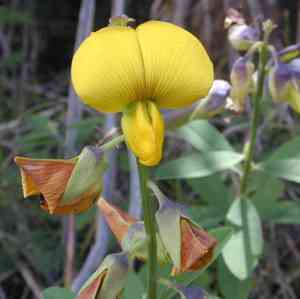
Leafy broom (Genista stenopetala)
Also known as: Sweet broom
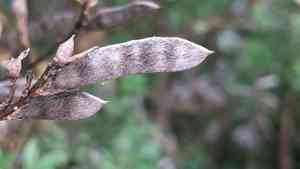
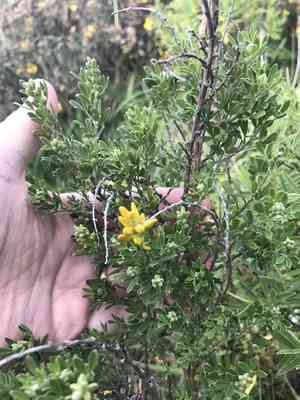
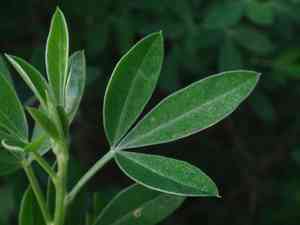
This evergreen shrub typically reaches a height of up to 3 meters. Its leaves are trifoliate with narrow, elliptic leaflets measuring 1 to 3 cm in length and covered in silky, silvery hairs. The shrub produces yellow flowers, each 1 to 2 cm long, arranged in racemes that are 5 to 11 cm in length. The fruit is a pod, generally 2 to 3 cm long.
In This Article
Attributes of Leafy broom
Lifespan
Perennial
Plant Type
Shrub
Plant Height
0.5 to 1.5 meters
Spread
0.5 to 1 meter
Leaf Color
Green Blue
Flower Size
1 to 2 cm
Flower Color
Yellow
Images of Leafy broom
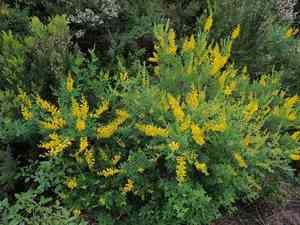
Quickly Identify Leafy broom
1
Look for a shrubby plant with green branches and leaves that are typically pointed and narrow. During flowering seasons, the yellow flowers are a prominent feature.
Scientific Classification of Leafy broom
Phylum
Vascular plants
Class
Dicotyledons
Order
Fabales
Family
Legume
Genus
Brooms
Species
Leafy broom
Planting and Growing of Leafy broom
Care Difficulty
Easy
Watering Schedule
Every day
Sunlight Requirements
Full sun
Sunshine Duration
6-10 hours
Ideal Temperature
60-75℉
Soil Type
Potting Mix, Peat Mix
Soil pH
6.5-7.5
Fertilizer Type
Balanced
Pruning Season
Spring, Summer
Pruning Area
Branches, Leaves
Pruning Frequency
Once a year
Repotting Season
Spring
Pot Type
Plastic, Ceramic
 How to Water Leafy broom?
Genista stenopetala thrives with a careful watering process. Aim for approximately 250 milliliters per session to maintain moist, but never soggy, soil. This shrub prefers soil that is lightly damp, simulating its natural habitat. Make sure water penetrates deeply to encourage strong root growth without saturating the surface.
What are the symptoms of an underwatered Leafy broom?
›
What should I do if my Leafy broom is not getting enough water?
›
What are the symptoms of an overwatered Leafy broom?
›
How to save an overwatered Leafy broom?
›
 What Are the Sunlight Requirements for Leafy broom?
Genista stenopetala thrives best in conditions of partial sun to full sun, benefiting significantly from direct morning rays followed by dappled shade. Optimal lighting promotes healthier blooms and plant longevity.
More About Sunlight Requirements Techniques→
Optimal Setting
›
Solution Implementation
›
Benefits
›
 What Is the Ideal Temperature Range for Leafy broom?
The ideal temperature range for cultivating Genista stenopetala is between 60°F and 75°F. These conditions simulate its native habitat, providing enough warmth to encourage healthy growth, flowering, and seed production, without causing heat or cold stress to the plant.
 What Soil is Best for Leafy broom?
Genista stenopetala thrives best in well-draining soil to prevent root rot. Such soil ensures that water doesn't pool around the roots, allowing the plant to take up nutrients efficiently and maintain healthy growth. The plant prefers soil with moderate fertility, providing enough nutrients to sustain its growth without over-feeding. This ensures the plant has access to essential nutrients while avoiding the stress of excessive nutrient accumulation. Soil that allows air to circulate freely supports healthy root development for Genista stenopetala. Proper aeration helps the roots breathe, thus enhancing their ability to absorb water and nutrients efficiently.
 How to Fertilize Leafy broom?
Genista stenopetala generally requires a balanced fertilizer that provides equal amounts of nitrogen, phosphorus, and potassium. A 10-10-10 or 20-20-20 NPK formula diluted to half strength is often suitable. Make sure not to use too much, as this could harm the roots.
 How to Prune Leafy broom?
Start by removing dead or diseased branches to promote health. Then, cut back about a third of the plant in early spring to shape it and encourage new growth. During summer, lightly trim to maintain desired shape, avoiding excessive cutting. To give your plant a good shape, trim lateral branches more heavily than the main stem. This ensures an upright and bushy form. Always use sharp pruning shears to make clean cuts just above a bud or a node.
More About Pruning Techniques→
 How to Propagate Leafy broom plant?
1
To successfully propagate Genista stenopetala by seed, begin by preparing the seeds with a soak in warm water for 24 hours. This softens the seed coat, increasing water uptake and significantly enhancing germination rates.
2
Select healthy stem cuttings approximately 5-10 cm long during spring. Ensure the chosen stems have at least two nodes and are free from disease or insect damage. Cutting at an angle increases the surface area for rooting.
3
Plant seeds in seed trays filled with a well-draining seed-starting mix. Maintain a consistent moisture level and place the trays in a location with indirect sunlight to promote healthy germination and growth of seedlings.
 How to Repot Leafy broom plant?
1
Repot when you notice roots peeking through the drain holes or the plant becomes root-bound, generally every two to three years. It's crucial if the growth has stagnated despite optimal conditions.
2
Select a pot that is about 2 inches larger in diameter than the current one. Ensure it has ample drainage holes to prevent waterlogging, which is crucial for maintaining root health in Genista stenopetala.
3
Opt for a well-draining sandy soil mix that allows sufficient aeration. Sandy soil prevents compaction and ensures roots have the necessary air and moisture, mimicking the plant’s natural habitat.
Learn More About Leafy broom Diseases
Anthracnose
Bacterial Leaf Spot
Black Spot
Chemical Injury
Crown Gall
Damping-off
Downy Mildew
Drought Stress
Fusarium Wilt
Gray Mold
Leaf Curl
Leaf Spot
Mosaic
Nutrient Deficiency
Nutrient Toxicity
Powdery Mildew
Root Rot
Root-knot Nematode
Rusts
Sooty Mold
Spider Mites
Temperature Stress
Thrips Damage
White Mold



