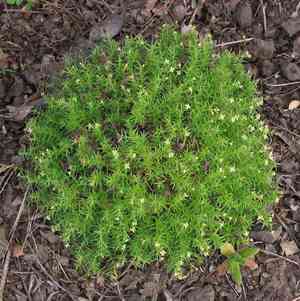
Phloxleaf bedstraw (Galium andrewsii)
Also known as: Andrews' bedstraw, Phlox-leaf serpentine bedstraw
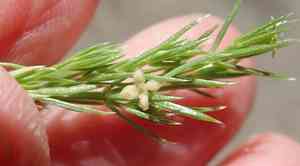
Galium andrewsii is a low-growing, mat-forming perennial herb that typically reaches up to 22 cm in height. It features narrow, needle-like green to grayish leaves arranged in whorls of four along its slender stems. This plant is dioecious, meaning individual plants produce either male or female flowers.
In This Article
Attributes of Phloxleaf bedstraw
Lifespan
Perennial
Plant Type
Herb
Plant Height
10-70 cm
Spread
Varies, relatively small and compact
Leaf Color
Green
Flower Size
Approximately 2-3 mm
Flower Color
White to yellowish
Images of Phloxleaf bedstraw
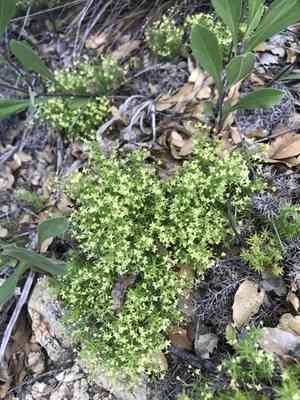
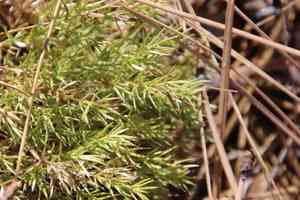
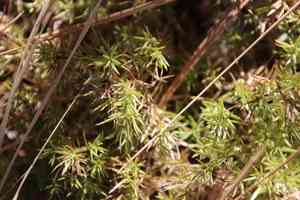
Quickly Identify Phloxleaf bedstraw
1
Andrew\'s bedstraw can be identified by its small, whorled leaves that are stiff and pointed. It produces small, white to yellowish flowers grouped in clusters.
Scientific Classification of Phloxleaf bedstraw
Phylum
Vascular plants
Class
Dicotyledons
Order
Gentianales
Family
Madder
Genus
Bedstraws
Species
Phloxleaf bedstraw
Planting and Growing of Phloxleaf bedstraw
Care Difficulty
Moderate
Watering Schedule
Every 3 days
Sunlight Requirements
Partial sun
Sunshine Duration
6-10 hours
Ideal Temperature
60-75℉
Soil Type
Potting Mix, Peat Mix
Soil pH
6.5-7.5
Fertilizer Type
Balanced
Pruning Season
Spring, Summer
Pruning Area
Branches, Leaves
Pruning Frequency
2 times a year
Repotting Season
Spring
Pot Type
Plastic, Ceramic
 How to Water Phloxleaf bedstraw?
For Galium andrewsii, the watering amount should be approximately 150 milliliters per session. This should ensure that the soil is moist but not waterlogged, akin to a wrung-out sponge. It is crucial to water deeply yet allow the excess to drain, maintaining a balance that supports healthy root development without suffocating them.
What are the symptoms of an underwatered Phloxleaf bedstraw?
›
What should I do if my Phloxleaf bedstraw is not getting enough water?
›
What are the symptoms of an overwatered Phloxleaf bedstraw?
›
How to save an overwatered Phloxleaf bedstraw?
›
 What Are the Sunlight Requirements for Phloxleaf bedstraw?
Partial sun and full sun provide Galium andrewsii with vital energy for robust growth. Balanced exposure encourages healthy development and strengthens stems.
Optimal Sunlight Requirement
›
Solutions to Achieve Ideal Lighting
›
Benefits of Ideal Lighting
›
 What Is the Ideal Temperature Range for Phloxleaf bedstraw?
The ideal temperature range for Galium andrewsii is between 60°F and 75°F. This range ensures optimal growth and development. At these temperatures, the plant can photosynthesize efficiently, absorb nutrients effectively, and maintain robust health.
 What Soil is Best for Phloxleaf bedstraw?
Galium andrewsii thrives in well-drained soil, allowing roots to access air and nutrients easily. This prevents root rot and promotes healthy growth by avoiding waterlogged conditions. Although well-drained, the soil should also remain slightly moist. This balance helps sustain the plant during dry periods, ensuring it gets enough hydration for nutrient absorption. Enriched soil with organic matter supports Galium andrewsii in providing essential nutrients. This encourages strong stem and leaf growth and contributes to a robust root system.
 How to Fertilize Phloxleaf bedstraw?
For Galium andrewsii, it's advisable to use fertilizers moderately. A balanced 10-10-10 fertilizer can be applied, focusing on small amounts. During the growing season, use about one teaspoon per gallon of water for liquid fertilizers, or apply a quarter cup of slow-release granules to the soil around the base of your plants.
 How to Prune Phloxleaf bedstraw?
Start by inspecting the plant and identify dead, damaged, or diseased stems. Carefully remove these sections first to promote healthy growth. Next, look for any crossing branches that may rub and cause damage—eliminate the least desirable branch. To encourage dense growth, trim back the plant by cutting branches just above a set of healthy leaves or node. Be sure to prune systematically to avoid creating holes in the plant's canopy. After pruning, ensure the plant is properly watered and consider applying a balanced fertilizer to support new growth. Keep the area around the base of the plant free of weeds and debris, which can harbor pests and diseases. Monitor the plant regularly for signs of stress or disease and address any issues promptly.
More About Pruning Techniques→
 How to Propagate Phloxleaf bedstraw plant?
1
Collect seeds from mature Galium andrewsii plants in late summer. Sow the seeds in a mixture of peat and vermiculite in early spring. Lightly cover with soil and water to keep moist but not waterlogged.
2
In early spring, select healthy stems from the parent plant. Use a sharp knife to make clean cuts just below a node. Remove any leaves near the cut to reduce transpiration and encourage root growth.
3
For cutting propagation, dip the cut end of the stem into rooting hormone to stimulate root development. Place the cutting into a prepared pot filled with moist potting soil.
 How to Repot Phloxleaf bedstraw plant?
1
Repot Galium andrewsii when you notice roots growing out of the drainage holes or the growth has slowed significantly. These are signs that the roots need more space to continue healthy development.
2
Select a pot that is 2 inches larger in diameter than the current one, with ample drainage holes. A slightly bigger pot helps promote root growth, and drainage holes prevent waterlogging, which is crucial for plant health.
3
Opt for a well-draining potting mix rich in organic matter. Such soil prevents water from clinging to the roots too long, reducing rot risk and providing nutrients for healthy plant growth.
Learn More About Phloxleaf bedstraw Diseases
Anthracnose
Bacterial Leaf Spot
Bacterial Soft Rot
Bacterial Wilt
Chemical Injury
Crown Gall
Cyst Nematode
Damping-off
Downy Mildew
Drought Stress
Fusarium Wilt
Gray Mold
Leaf Spot
Mosaic
Nutrient Deficiency
Nutrient Toxicity
Powdery Mildew
Root Rot
Root-knot Nematode
Rusts
Sooty Mold
Spider Mites
Temperature Stress
Thrips Damage
White Mold



