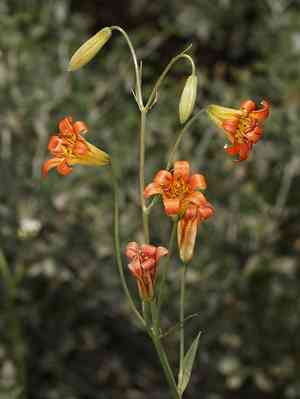
Scarlet fritillary (Fritillaria recurva)
Also known as: Scarlet fritillary, Recurved fritillary
The scarlet fritillary, or Fritillaria recurva, is a striking species with bright red, tubular-shaped flowers that are particularly attractive to hummingbirds. This plant is native to California and Oregon but is also grown worldwide from seeds for ornamental purposes.
In This Article
Attributes of Scarlet fritillary
Lifespan
Perennial
Plant Type
Herb
Plant Height
91 cm
Spread
10 cm to 15 cm
Leaf Color
Green
Flower Size
1.5 cm to 4 cm
Flower Color
Yellow Red Orange
Images of Scarlet fritillary
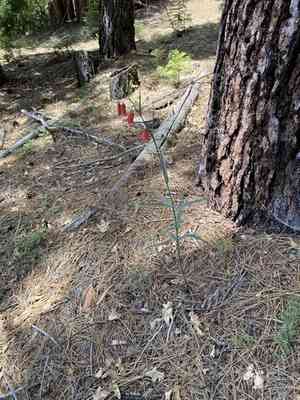
Quickly Identify Scarlet fritillary
1
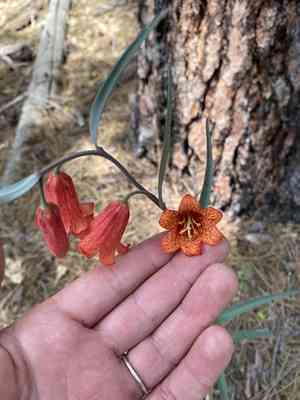
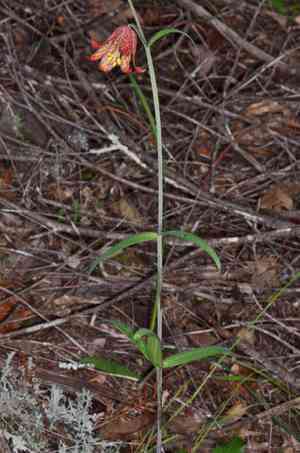
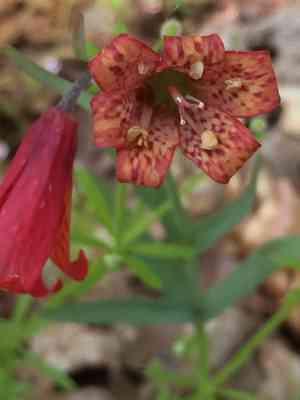
Fritillaria recurva can be identified by its bright red, nodding, bell-shaped flowers with strongly recurved tepals. The flowers are typically about 2-3 cm in length. The plants often grow to about 60-90 cm tall, with narrow, lance-shaped leaves arranged in whorls around the stem.
Scientific Classification of Scarlet fritillary
Phylum
Vascular plants
Class
Monocotyledons
Order
Liliales
Family
Lily
Genus
Fritillaries
Species
Scarlet fritillary
Planting and Growing of Scarlet fritillary
Care Difficulty
Moderate
Watering Schedule
Every 2 days
Sunlight Requirements
Partial sun
Sunshine Duration
6-10 hours
Ideal Temperature
60-75℉
Soil Type
Potting Mix, Peat Mix
Soil pH
6.5-7.5
Fertilizer Type
Balanced
Pruning Season
Spring, Summer
Pruning Area
Branches, Leaves
Pruning Frequency
2 times a year
Repotting Season
Spring
Pot Type
Plastic, Ceramic
 How to Water Scarlet fritillary?
Fritillaria recurva requires approximately 250 milliliters of water each time you irrigate. The soil should be evenly moist but not waterlogged, as too much water can lead to root rot. Ensuring that water drains effectively is crucial to prevent the roots from sitting in excessive moisture.
What are the symptoms of an underwatered Scarlet fritillary?
›
What should I do if my Scarlet fritillary is not getting enough water?
›
What are the symptoms of an overwatered Scarlet fritillary?
›
How to save an overwatered Scarlet fritillary?
›
 What Are the Sunlight Requirements for Scarlet fritillary?
Fritillaria recurva benefits from partial to full sun exposure for 6-8 hours daily. This balance of light promotes healthy flowering and robust growth, aligning closely with its native habitat conditions, wherein it flourishes under filtered forest light.
More About Sunlight Requirements Techniques→
How much sun does Fritillaria recurva need?
›
What is the best location for optimal light?
›
Solution to achieve ideal light conditions indoors?
›
 What Is the Ideal Temperature Range for Scarlet fritillary?
Fritillaria recurva thrives best in temperatures ranging from 60 to 75 degrees Fahrenheit. This range provides a balanced environment that supports active growth without causing thermal stress. Growing them within this temperature range ensures robust growth and healthy blooms.
 What Soil is Best for Scarlet fritillary?
Fritillaria recurva thrives in well-drained soil which prevents root rot and allows for healthy growth. Good drainage means excess water can exit the root zone, which is essential for this bulbous plant. This plant flourishes in soil with moderate nutrient levels. A balanced nutrient supply promotes robust flowering and vibrant foliage, crucial for sustaining its ornamental blooms. Fritillaria recurva benefits from soil rich in organic matter, as it enhances soil structure, water retention, and supplies essential nutrients slowly over time. Organic-enriched soil supports healthy, sustained growth of the plant.
 How to Fertilize Scarlet fritillary?
Fritillaria recurva requires careful attention to fertilizer amounts; excess nutrients can harm the plant. Typically, a low-concentration liquid fertilizer diluted to half the recommended strength is applied to avoid overfeeding. It's crucial to monitor the plant's response to any fertilizer and adjust accordingly.
 How to Prune Scarlet fritillary?
Begin by removing any dead or fading flowers to direct energy back into the main plant and promote healthier blooming in the next season. Inspect the plant for any signs of disease such as discoloration or wilting. Cut back affected areas to healthy tissue to prevent the spread of disease within the plant. Trim back any unruly stems to maintain a balanced shape. Focus on cutting just above a leaf node or bud to encourage branching and fuller growth.
More About Pruning Techniques→
 How to Propagate Scarlet fritillary plant?
1
Begin by gathering seeds in spring. Clean seeds if necessary and store them in a cool, dry place. Prior to planting, soak the seeds in water for 24 hours to help break dormancy and encourage germination.
2
Prepare a seed mix that's well-draining, adding components like sand or perlite to improve aeration. Fill the seed tray with this mix up to three-quarters full, ensuring it's evenly distributed and moistened before planting seeds.
3
For seeds, sow them thinly on the prepared tray and lightly cover with soil. For division, carefully dig up and separate bulbs, ensuring each division has roots. Plant these divisions at appropriate depth, spaced adequately apart.
 How to Repot Scarlet fritillary plant?
1
Fritillaria recurva needs repotting when you notice signs like roots emerging from drainage holes or the plant's growth seems stunted. Typically, the best time is during Spring or Autumn when the plant is naturally entering a growth stage. Ensuring it's not actively flowering during repotting will lessen stress.
2
Select a pot slightly larger than the current one to allow room for growth. A terracotta pot is ideal for this species as it allows better air circulation, preventing root rot. Ensure the pot has adequate drainage holes to help maintain proper moisture levels.
3
Choose a well-draining sandy mix, enriched with organic matter. This type of soil provides Fritillaria recurva the drainage it needs, preventing waterlogged conditions that can lead to bulb rot and promoting healthy root development.
Toxicity
Ingestion
WARNING
The judgment on toxicity and danger is for reference only. We DO NOT GUARANTEE any accuracy of such judgment. Therefore, you SHALL NOT rely on such judgment. It is IMPORTANT TO SEEK PROFESSIONAL ADVICE in advance when necessary.
Learn More About Scarlet fritillary Diseases
Anthracnose
Bacterial Leaf Spot
Bacterial Soft Rot
Bacterial Wilt
Chemical Injury
Crown Gall
Cyst Nematode
Damping-off
Downy Mildew
Drought Stress
Fusarium Wilt
Gray Mold
Leaf Spot
Mosaic
Nutrient Deficiency
Nutrient Toxicity
Powdery Mildew
Root Rot
Root-knot Nematode
Rusts
Sooty Mold
Spider Mites
Temperature Stress
Thrips Damage
White Mold



