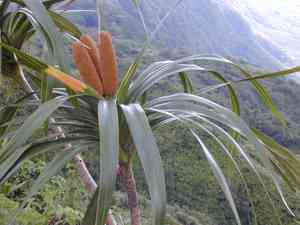
White eye (Freycinetia arborea)
Also known as: ieie vine, uluhe
Leaves range from 41 to 79 cm in length and 1 to 3 cm in width, arranged in a spiral pattern around the branch tips. Flowers grow on spike-like inflorescences also located at the branch ends and can be either male (staminate) or female (pistillate). Staminate spikes are yellowish-white and can reach up to 10 cm long. The fruit measures about 1 cm and contains numerous seeds around 1.5 mm in size.
In This Article
Attributes of White eye
Lifespan
Perennial
Plant Type
Vine
Plant Height
3 m
Spread
4.5 m
Leaf Color
Green
Flower Size
10 cm
Flower Color
Orange
Images of White eye
Quickly Identify White eye
1
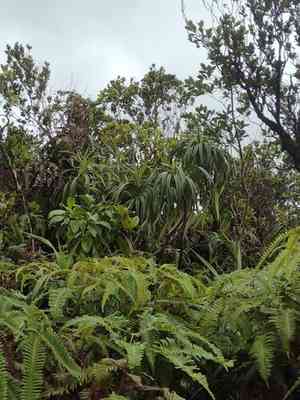
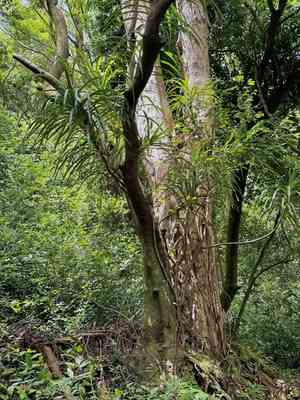
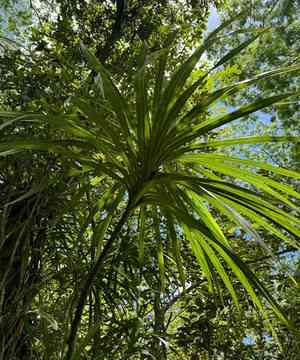
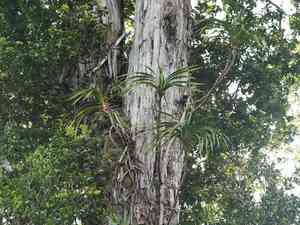
Freycinetia arborea can be identified by its long, flexible, and climbing stems. Its leaves are arranged in spirals around the stem and have a distinctive shiny surface. The plant produces flowers in clustered spikes which are often orange to red in color.
Scientific Classification of White eye
Phylum
Vascular plants
Class
Monocotyledons
Order
Pandanales
Family
Screw-pine
Genus
Freycinetia
Species
White eye
Planting and Growing of White eye
Care Difficulty
Hard
Watering Schedule
Every 2 days
Sunlight Requirements
Partial sun
Sunshine Duration
4-6 hours
Ideal Temperature
65-85℉
Soil Type
Potting Mix, Peat Mix
Soil pH
5.5-7
Fertilizer Type
Balanced
Pruning Season
Spring, Summer
Pruning Area
Branches, Leaves
Pruning Frequency
2 times a year
Repotting Season
Spring
Pot Type
Terracotta, Plastic
 How to Water White eye?
Freycinetia arborea thrives in moist, well-drained soil. When watering, aim to provide about 300 ml of water each time to keep the soil consistently moist but not waterlogged. It's vital to avoid over-saturation, as this can lead to root rot.
What are the symptoms of an underwatered White eye?
›
What should I do if my White eye is not getting enough water?
›
What are the symptoms of an overwatered White eye?
›
How to save an overwatered White eye?
›
 What Are the Sunlight Requirements for White eye?
Partial sun or full shade is ideal for Freycinetia arborea, ensuring it has some exposure to filtered light but avoids direct sun contact. This balanced light access stimulates natural growth, maintains leaf integrity, and supports the plant's understory-adapted physiology.
What is the best lighting condition for Freycinetia arborea?
›
How can one achieve these optimal lighting conditions?
›
Benefits of achieving ideal lighting conditions
›
 What Is the Ideal Temperature Range for White eye?
The ideal temperature range for Freycinetia arborea is between 65°F and 85°F. This warm temperature range supports optimal metabolic processes, photosynthesis, and overall plant vigor, mimicking its native tropical and subtropical habitats.
 What Soil is Best for White eye?
Freycinetia arborea thrives in soils that can retain moisture well. This is crucial for its growth as it ensures that the plant receives a steady supply of water, helping it maintain lush and healthy foliage. This plant requires soils rich in nutrients, as it significantly impacts its growth and floral development. Nutrient-rich soils provide the essential elements needed for robust growth and vibrant, vivid blooms. A well-drained soil structure prevents waterlogging, which can be detrimental to Freycinetia arborea. Proper drainage ensures roots can breathe and reduces the risk of root rot, fostering healthy growth.
 How to Fertilize White eye?
Freycinetia arborea thrives when given a balanced amount of fertilizer. For liquid fertilizers, a half-strength solution of an all-purpose plant food is ideal to prevent over-nutrification. Solid fertilizers like slow-release granules should be used sparingly to ensure nutrients are gradually absorbed.
 How to Prune White eye?
Begin by ensuring you have the right tools: sharp pruning shears and gloves. Choose early morning or late afternoon for pruning to avoid excessive midday heat. Always sanitize your tools before and after use to prevent disease spread. Identify the stems that need trimming—look for dead, damaged, or overgrown vines. Make clean cuts on the vine, just above a leaf node, to encourage successful regrowth. This technique helps manage plant size and directs energy to robust areas of the plant. To keep the Freycinetia arborea in its desired shape, trim back encroaching stems and vines that upset the plant's balance or extend beyond its designated area. This enhances the plant's aesthetic appeal and maintains its shape effectively.
More About Pruning Techniques→
 How to Propagate White eye plant?
1
Choose healthy and semi-hardwood cuttings about 4-6 inches long. Ensure the plant is disease-free, and always use sharp, sterilized tools to make clean cuts.
2
Remove the lower leaves and dip the cut end in rooting hormone. This process encourages quicker root development and prepares the cutting for planting.
3
Place cuttings in a well-draining soil mix. Keep the soil lightly moist but not waterlogged. Use a propagation tray with a clear lid to maintain humidity levels.
 How to Repot White eye plant?
1
Freycinetia arborea signals the need for repotting when its roots begin to circle the container, evident through drainage holes. Other indicators include slowed growth or the soil drying out more rapidly. Ideally, repot during active growth periods like spring or summer for optimal recovery and root establishment.
2
Select a pot that is 1-2 inches larger in diameter than the current one to prevent waterlogging and root rot. Ensure the new pot has ample drainage holes, as excess water retention can harm the plant's roots. An appropriately sized pot facilitates growth and prevents unnecessary stress.
3
Opt for a well-draining soil mix that is rich in organic matter to ensure adequate nutrient supply while preventing water accumulation. Such soil promotes healthy root development and provides essential nutrients, ensuring the plant's vibrant growth and resilience to environmental stressors.
Learn More About White eye Diseases
Anthracnose
Bacterial Leaf Spot
Bacterial Soft Rot
Bacterial Wilt
Black Spot
Chemical Injury
Crown Gall
Cyst Nematode
Damping-off
Downy Mildew
Drought Stress
Fusarium Wilt
Gray Mold
Leaf Curl
Leaf Spot
Mosaic
Nutrient Deficiency
Nutrient Toxicity
Powdery Mildew
Root Rot
Root-knot Nematode
Rusts
Sooty Mold
Spider Mites
Temperature Stress
Thrips Damage
White Mold



