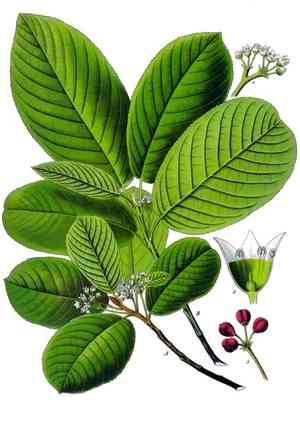
Cascara serpentine buckthorn (Frangula purshiana)
Also known as: Cascara, Caribou coffeeberry
Cascara (Rhamnus purshiana), commonly referred to as cascara buckthorn, is native to the Pacific Northwest of North America, including areas from British Columbia to California. It thrives in moist, shaded forests.
Key Characteristics:
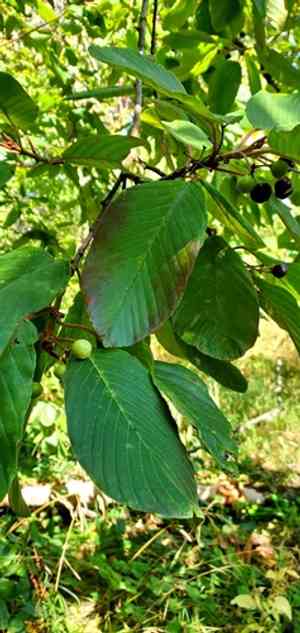
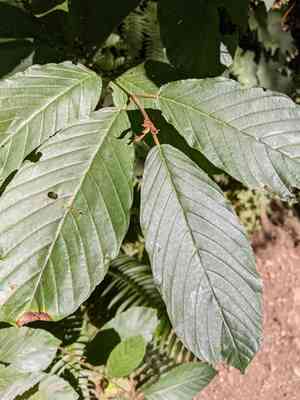
- **Leaves**: Oval-shaped, dark green, and finely serrated.
- **Flowers**: Small, greenish-yellow, appearing in clusters.
- **Fruit**: Small, black berries that are generally tasteless.
- **Bark**: Dark brown to purplish-black, aromatic, and traditionally harvested in the summer for its medicinal properties.
Cascara is particularly known for the laxative effects of its dried bark.
In This Article
Attributes of Cascara serpentine buckthorn
Lifespan
Perennial
Plant Type
Tree
Plant Height
12 m
Spread
9 m
Leaf Color
Dark green
Flower Size
Less than 0.5 inches
Flower Color
Greenish-yellow
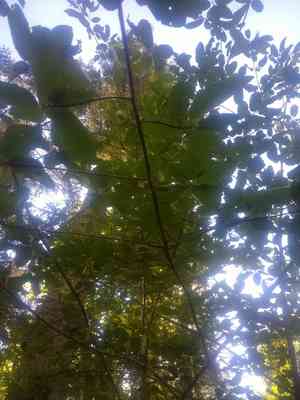
Images of Cascara serpentine buckthorn
Quickly Identify Cascara serpentine buckthorn
1
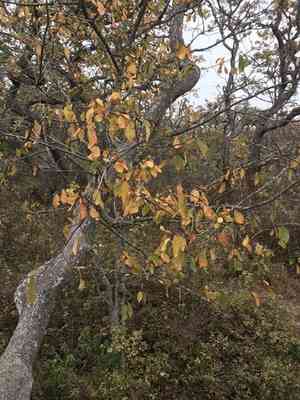
Frangula purshiana can be identified by its simple, alternate leaves with prominent venation, smooth edges, and small greenish-yellow flowers that grow in clusters, followed by small black berries.
Scientific Classification of Cascara serpentine buckthorn
Phylum
Vascular plants
Class
Dicotyledons
Order
Rosales
Family
Buckthorn
Genus
Alder buckthorns
Species
Cascara serpentine buckthorn
Planting and Growing of Cascara serpentine buckthorn
Care Difficulty
Moderate
Watering Schedule
Every 2 days
Sunlight Requirements
Partial sun
Sunshine Duration
6-12 hours
Ideal Temperature
60-75℉
Soil Type
Potting Mix, Peat Mix
Soil pH
6.5-7.5
Fertilizer Type
Balanced
Pruning Season
Spring, Summer
Pruning Area
Branches, Leaves
Pruning Frequency
2 times a year
Repotting Season
Spring
Pot Type
Plastic, Ceramic
 How to Water Cascara serpentine buckthorn?
For Frangula purshiana, ensure each watering session delivers about 500 ml of water. This quantity reflects the plant's preference for moderate moisture levels. Water should sink into the soil until it starts to just seep from the drainage holes of the pot, ensuring roots receive adequate moisture without becoming waterlogged.
What are the symptoms of an underwatered Cascara serpentine buckthorn?
›
What should I do if my Cascara serpentine buckthorn is not getting enough water?
›
What are the symptoms of an overwatered Cascara serpentine buckthorn?
›
How to save an overwatered Cascara serpentine buckthorn?
›
 What Are the Sunlight Requirements for Cascara serpentine buckthorn?
Frangula purshiana prefers partial sun to full shade environments. Maintaining proper light exposure fosters robust growth, lush foliage, and bolsters the plant's natural defences against environmental stresses.
What type of sunlight does Frangula purshiana prefer?
›
How to ensure ideal lighting conditions for Frangula purshiana?
›
What benefits does Frangula purshiana gain from ideal lighting?
›
 What Is the Ideal Temperature Range for Cascara serpentine buckthorn?
The ideal temperature range for Frangula purshiana, commonly known as Cascara, is between 60°F and 75°F. Within this temperature range, the plant thrives in its natural growth process, displaying optimal leaf production and vigor. Managing the temperature in this range closely mimics the conditions found in its native habitats, primarily in forested areas of the Western United States.
 What Soil is Best for Cascara serpentine buckthorn?
Frangula purshiana thrives best in well-drained soil. This type of soil allows water to move easily through the soil, preventing waterlogging and root rot, which is essential for healthy root development and overall plant vigor. The plant benefits from soil with moderate organic matter content. Organic matter improves soil structure by enhancing aeration and nutrient availability, promoting robust growth and strong resistance against stressors such as drought and pests. While drainage is important, the soil should also have moisture retentive properties. This ensures that the plant roots have consistent access to water, crucial for maintaining hydration during dry spells and supporting steady growth.
 How to Fertilize Cascara serpentine buckthorn?
For Frangula purshiana, use a balanced fertilizer with NPK values of around 10-10-10. When applying liquid fertilizer, dilute it to half strength and apply about 1 liter per square meter for optimal growth. For solid fertilizers, use approximately 30 grams per plant.
 How to Prune Cascara serpentine buckthorn?
Begin by removing any dead or diseased branches, cutting them back to a healthy portion of the plant. Focus on removing any crossing or rubbing branches to prevent damage. Trim the plant to maintain a balanced shape, ensuring that the center is open enough for air and sunlight penetration. When trimming Frangula purshiana, consider the desired shape and size of the plant. Cut above a node facing the direction you want new growth to emerge. This method encourages the plant to develop vigorous shoots in the specified direction, helping maintain an aesthetically pleasing silhouette.
More About Pruning Techniques→
 How to Propagate Cascara serpentine buckthorn plant?
1
First, collect seeds from mature Frangula purshiana fruits. Clean the seeds thoroughly to remove any pulp, as this pulp can inhibit germination.
2
Plant the seeds in seed trays filled with a well-draining, sterile potting mix. Cover them lightly with soil to maintain moisture around the seeds.
3
Cut 4-6 inch sections of softwood from the parent plant during late spring. Remove lower leaves and dip the cut end in rooting hormone to encourage root growth.
 How to Repot Cascara serpentine buckthorn plant?
1
Frangula purshiana should be repotted when you notice roots coming out of the drainage holes or the growth has noticeably slowed. These signs indicate that the plant has outgrown its current home and needs more space to thrive.
2
Select a pot that is just one size larger than the current one, preferably with good drainage holes. This size ensures the roots have space to expand without the risk of water retention that might lead to root rot.
3
Opt for a rich, well-draining soil mix that can retain necessary moisture but not become waterlogged. This type of soil helps provide essential nutrients while ensuring proper air circulation to the roots.
Toxicity
Ingestion
WARNING
The judgment on toxicity and danger is for reference only. We DO NOT GUARANTEE any accuracy of such judgment. Therefore, you SHALL NOT rely on such judgment. It is IMPORTANT TO SEEK PROFESSIONAL ADVICE in advance when necessary.



