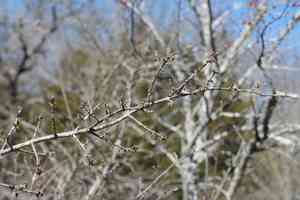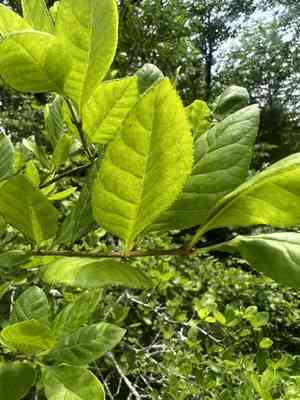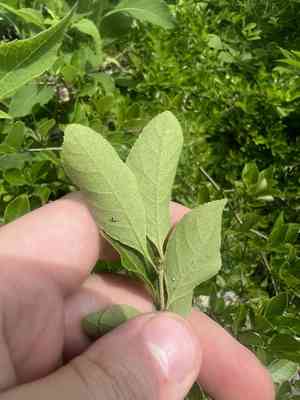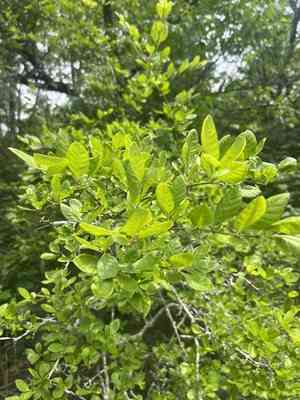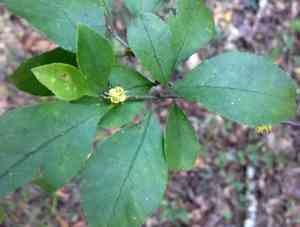
Upland swamp privet(Forestiera ligustrina)

Upland swamp privet (Forestiera ligustrina)

Also known as: upland swampprivet

Upland swamp privet (Forestiera pubescens) is a versatile deciduous shrub or small tree native to North America. It stands out for its adaptability, often found in well-drained areas near streams and rivers. Key features include:

- **Height**: Typically 6-15 feet.
- **Leaves**: Opposite, simple, and elliptical with slightly serrated edges.
- **Flowers**: Small, yellow-green, appearing in early spring before the leaves.
- **Fruit**: Blue-black drupes that mature by late summer to fall.

Ecological benefits:

1. **Wildlife Habitat**: Produces berries that attract birds and other wildlife.
2. **Erosion Control**: Deep root systems help stabilize soil and prevent erosion.
3. **Pollinator Support**: Early blooms provide a food source for pollinators like bees.
4. **Biodiversity**: Enhances plant diversity, contributing to healthier ecosystems.

In conclusion, upland swamp privet is important for its role in providing food and shelter for wildlife, preventing soil erosion, supporting pollinators, and fostering biodiversity in wetland environments.

Attributes of Upland swamp privet

Lifespan
Perennial
Plant Type
Shrub
Plant Height
1.5 to 4.5 meters (5 to 15 feet)
Spread
up to 3 meters (10 feet)
Leaf Color
Green, turning yellow in fall
Flower Size
Small, less than 1 cm
Flower Color
Greenish-white or yellowish

ForwardPlant - Identify plants with a snap

Identify and diagnose plants, get toxicity alerts, and explore safety guides for all types of fungi.

Try for Free

Images of Upland swamp privet

Upland swamp privet(Forestiera ligustrina)

Quickly Identify Upland swamp privet

1
Forestiera ligustrina can be identified by its opposite leaves, small and inconspicuous flowers, and dark blue to black drupes. The shrub typically has a rounded crown and smooth, gray bark. The leaves are simple, ovate to lanceolate, and have entire margins.

Scientific Classification of Upland swamp privet

Phylum
Vascular plants
Class
Dicotyledons
Order
Lamiales
Family
Olive
Genus
Swampprivets
Species
Upland swamp privet

Planting and Growing of Upland swamp privet

Care Difficulty
Easy
Watering Schedule
Every 3 days
Sunlight Requirements
Partial sun
Sunshine Duration
6-10 hours
Ideal Temperature
60-75℉
Soil Type
Potting Mix, Peat Mix
Soil pH
6.5-7.5
Fertilizer Type
Balanced
Pruning Season
Spring, Summer
Pruning Area
Branches, Leaves
Pruning Frequency
2 times a year
Repotting Season
Spring
Pot Type
Plastic, Terracotta

water icon How to Water Upland swamp privet?

For Forestiera ligustrina, it’s crucial to water deeply but infrequently. The goal is to thoroughly moisten the root zone without causing waterlogging. Make sure the soil is evenly moist but never soggy—letting the top layer dry out between waterings ensures the roots receive enough oxygen.
What are the symptoms of an underwatered Upland swamp privet?
What should I do if my Upland swamp privet is not getting enough water?
What are the symptoms of an overwatered Upland swamp privet?
How to save an overwatered Upland swamp privet?

sunlight icon What Are the Sunlight Requirements for Upland swamp privet?

Sunlight Requirements: Partial sun
Duration of light: 3 to 6 hours
The ideal light range supports partial sun exposure, which helps the plant flourish with robust foliage and optimal growth cycles, maintaining a healthy and thriving state.
What is the best light condition for Forestiera ligustrina?
How to achieve ideal lighting for Forestiera ligustrina?
Benefits of ideal lighting conditions?

temperature icon What Is the Ideal Temperature Range for Upland swamp privet?

Ideal Temperature: 60 ~ 75℉
Forestiera ligustrina thrives in temperatures ranging from 60°F to 75°F. This range supports optimal growth and development by providing the perfect environment for photosynthesis and nutrient uptake. Maintaining consistent temperatures within this range ensures that the plant can flourish with adequate energy without causing cellular stress or growth stagnation.

soil icon What Soil is Best for Upland swamp privet?

Soil type: Sandy soil, Loam, Clay soil
Soil PH: 6.5 ~ 7.5
Forestiera ligustrina thrives in well-drained soils that can retain moisture without becoming waterlogged. This ensures the roots stay nourished and healthy, particularly during dry spells, enhancing the plant's resilience. A soil rich in organic matter and nutrients supports the vigorous growth of Forestiera ligustrina. The ample nutrients provide the plant with essential minerals that promote robust foliage and flowering. Soil with good aeration is crucial for Forestiera ligustrina, as it allows for proper root respiration and prevents the build-up of harmful pathogens. Well-aerated soil promotes strong and healthy root systems.

fertilize icon How to Fertilize Upland swamp privet?

Fertilizer type: Balanced
Forestiera ligustrina benefits from a balanced application of fertilizer that mimics its natural nutrient uptake. For liquid fertilizer, apply approximately 1 teaspoon per gallon of water, ensuring even distribution across the root zone. For slow-release granules, use about 1/4 cup per shrub, distributing it evenly in the spring.

prune icon How to Prune Upland swamp privet?

Pruning Time: Spring, Summer, Autumn
Start your pruning process by using sharp and sterilized tools to make clean cuts. This reduces the risk of tearing the plant tissue, which can invite diseases. High-quality bypass pruners or loppers are best for thin branches, while saws should be reserved for thicker limbs. Closely inspect your Forestiera ligustrina and prioritize cutting away dead, damaged, or diseased branches. This clears the path for healthy parts of the plant to thrive, while also preventing harmful conditions from spreading to other parts of the plant. After removing undesirables, focus on shaping the plant. Keep in mind the natural form of Forestiera ligustrina, which is often bushy and sprawling. Trim back any overgrown areas to maintain a balanced look, with the central section slightly elevated to assist in water run-off. While it's important to shape the plant, avoid cutting too close to the main stem, as this could hinder its natural growth pattern. Maintain a balance between aesthetic appeal and the plant's health by only removing about a third of the growth at any one time. More About Pruning Techniques

propagate icon How to Propagate Upland swamp privet plant?

Propagate Time: Spring, Early spring
1
Select healthy stems from a mature Forestiera ligustrina plant and cut them approximately 4-6 inches long. Make sure to remove the leaves from the bottom half before planting.
2
Sow seeds in a seed starting tray with a good quality seed starting mix. Lightly cover them with soil and keep the soil consistently moist until germination occurs.
3
Carefully dig around the base of the plant to expose the roots. Use a sharp tool to divide the plant into multiple sections, ensuring each section has sufficient roots.
More About Propagating Techniques

repot icon How to Repot Upland swamp privet plant?

Repotting frequency: Every 3-4 years
1
Indicators for repotting Forestiera ligustrina include roots protruding from the drainage holes, a noticeable slump in plant growth, or soil that dries too rapidly after watering. These signs suggest that the plant needs more room to expand or fresher soil enriched with nutrients.
2
Select a pot that is one size larger than the current one, ensuring it has adequate drainage holes. A slightly larger pot prevents waterlogging, offers room for healthy root development, and provides stability to the growing plant. Aim for breathable materials like terracotta for optimal results.
3
Opt for a well-draining potting mix targeted for shrubs; a combination of peat, perlite, and a touch of sand works wonders. This mixture prevents root rot, retains necessary moisture, and grants robust support for your Forestiera ligustrina while delivering essential nutrients.

ForwardPlant - Identify plants with a snap

Find the best spots for them to optimize their health, simply using your phone.

Try for Free