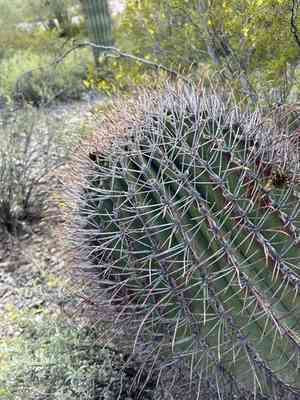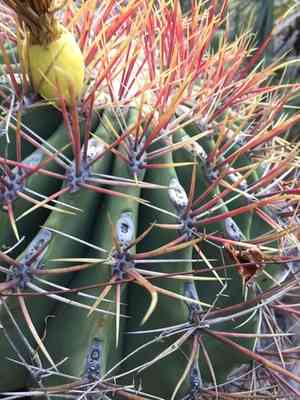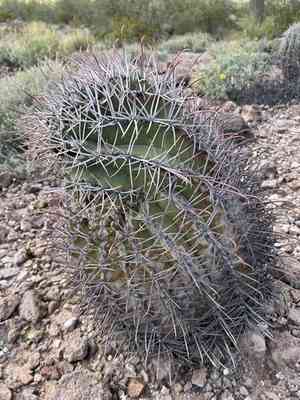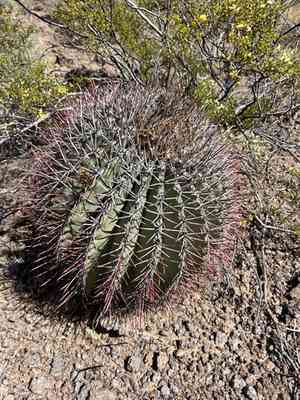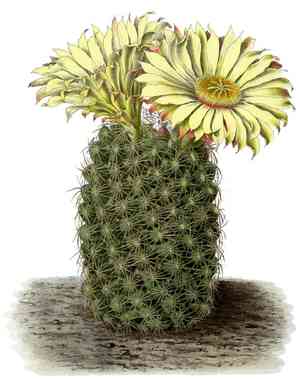
Emory's barrel cactus(Ferocactus emoryi)

Emory's barrel cactus (Ferocactus emoryi)

Also known as: Emory’s barrel cactus

Emory's barrel cactus (Ferocactus emoryi) has a range of uses both historically and today. Indigenous groups, such as the Seris Indians, utilized parts of the cactus for medicinal purposes and as a food source. In contemporary times, it is highly valued for ornamental gardening, particularly in arid landscapes due to its resilience to drought.

The cactus reproduces through both sexual and asexual methods. It produces vivid flowers that attract pollinators like bees, leading to the formation of fruit containing seeds. These seeds are then dispersed by animals and environmental factors. Additionally, the cactus can generate offsets or clones at its base, which can develop into new plants.

Attributes of Emory's barrel cactus

Lifespan
Perennial
Plant Type
Shrub
Plant Height
91 cm to 1.8 m
Spread
80 cm
Leaf Color
Green (Note: The leaves are modified into spines)
Flower Size
Up to 10 centimeters (4 inches)
Flower Color
Bright red, yellow, or orange

ForwardPlant - Identify plants with a snap

Identify and diagnose plants, get toxicity alerts, and explore safety guides for all types of fungi.

Try for Free

Images of Emory's barrel cactus

Emory's barrel cactus(Ferocactus emoryi)

Quickly Identify Emory's barrel cactus

1
Identify Ferocactus emoryi by its thick, ribbed, barrel-shaped stem, strong, curved spines, and bright red or yellow flowers that appear at the top of the cactus during the blooming season.

Scientific Classification of Emory's barrel cactus

Phylum
Vascular plants
Class
Dicotyledons
Order
Caryophyllales
Family
Cactuses
Genus
Ferocactus
Species
Emory's barrel cactus

Planting and Growing of Emory's barrel cactus

Care Difficulty
Easy
Watering Schedule
Every day
Sunlight Requirements
Full sun
Sunshine Duration
6-10 hours
Ideal Temperature
60-80℉
Soil Type
Potting Mix, Peat Mix
Soil pH
6.5-7.5
Fertilizer Type
Balanced
Pruning Season
Spring, Summer
Pruning Area
Branches, Leaves
Pruning Frequency
2 times a year
Repotting Season
Spring
Pot Type
Plastic, Terracotta

water icon How to Water Emory's barrel cactus?

For Ferocactus emoryi, known as Emory's barrel cactus, the watering should be done thoroughly but infrequently. You should aim to water the cactus enough to moisten the soil without leaving it waterlogged. A typical watering session should involve around 250 ml of water, ensuring the water reaches the roots but does not pool at the bottom of the pot. This promotes healthy root growth and prevents rot.
What are the symptoms of an underwatered Emory's barrel cactus?
What should I do if my Emory's barrel cactus is not getting enough water?
What are the symptoms of an overwatered Emory's barrel cactus?
How to save an overwatered Emory's barrel cactus?

sunlight icon What Are the Sunlight Requirements for Emory's barrel cactus?

Sunlight Requirements: Full sun
Duration of light: 6 to 8 hours daily
Ferocactus emoryi benefits from full sun, emphasizing its resilience and promoting optimal flowering and spine growth under such light conditions.
Optimal Sunlight Exposure
Preventing Etiolation
Sunlight Position Adjustment
More About Sunlight Requirements Techniques

temperature icon What Is the Ideal Temperature Range for Emory's barrel cactus?

Ideal Temperature: 60 ~ 80℉
What is the ideal temperature range for Ferocactus emoryi cultivation? The ideal temperature range for growing Ferocactus emoryi is between 60°F and 80°F. These temperatures allow the cactus to thrive, encouraging optimal growth and blooming. Consistent exposure to this temperature range ensures the plant's health and vitality.

soil icon What Soil is Best for Emory's barrel cactus?

Soil type: Sandy soil, Loam, Sand soil
Soil PH: 6.5 ~ 7.5
For Ferocactus emoryi, well-draining soil is imperative to prevent root rot. This cactus thrives when excess water efficiently drains away, simulating the arid environment it natively comes from. Well-drained soil ensures that roots receive necessary aeration and nutrients, promoting overall health and growth. Although typically adapted to poor soils, a nutrient-rich substrate can boost growth and flowering in Ferocactus emoryi. Balanced organic matter supports robust health, ensuring nutrients are readily available for optimal plant development. The grainy texture of soil, such as sandy loam, complements the cactus's water conservation traits. It allows water to percolate easily, preventing waterlogging while maintaining sufficient moisture levels for endurance under hot weather.

fertilize icon How to Fertilize Emory's barrel cactus?

Fertilizer type: Balanced
For Ferocactus emoryi, apply a liquid fertilizer at half strength. This cactus species benefits from nutrients, but over-fertilization can be harmful. Ensure you measure correctly and tailor the dosage to the size of your plant.

prune icon How to Prune Emory's barrel cactus?

Pruning Time: Spring, Summer
When pruning Ferocactus emoryi, ensure you use sterilized tools to prevent any infection. Gently remove any dead or damaged spines with precision to avoid harming the healthy parts of the plant. This allows the cactus to focus its energy on new growth. If the cactus starts to spread beyond the desired area, use a clean, sharp knife or pruning shears to cut back overgrown sections. This encourages a neater shape and prevents overcrowding, which could lead to poor airflow and potential rot. More About Pruning Techniques

propagate icon How to Propagate Emory's barrel cactus plant?

Propagate Time: Late spring, Early summer
1
To propagate Ferocactus emoryi from seeds, start by sterilizing the soil and sowing the seeds on the surface. Cover them lightly with sand. Keep the soil moist and warm, ideally at temperatures between 20-25°C.
2
For cuttings, select a healthy segment of the cactus and use a clean, sharp knife to remove it. Allow the cutting to dry and callous over for about a week before planting in a well-draining cactus mix.
3
To graft, choose a healthy scion and a compatible rootstock. Use a sharp knife to make a level cut on both the scion and stock. Join them together, secure with rubber bands, and place in a warm, low-light area to heal.
More About Propagating Techniques

repot icon How to Repot Emory's barrel cactus plant?

Repotting frequency: Every 2-3 years
1
Ferocactus emoryi needs repotting when its roots visibly outgrow the pot or when the soil starts compacting. These signs usually surface every 2-3 years. Spring is the perfect season as it allows the cactus to become established before its active growing period.
2
Choose a pot slightly larger than the previous one, ensuring it has adequate drainage holes. A terracotta pot is a great option as it is porous, promoting air circulation, which helps in avoiding water retention that can lead to root rot.
3
Use a well-draining cactus mix to prevent waterlogging and root rot. The airy texture of such soil facilitates quick drying, minimizing the risk of fungal infections and promoting a healthier root environment.

ForwardPlant - Identify plants with a snap

Find the best spots for them to optimize their health, simply using your phone.

Try for Free