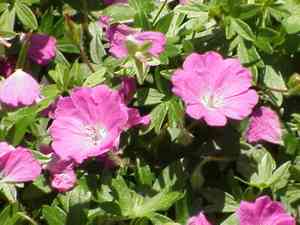
Sticky fagonbush (Fagonia pachyacantha)
Also known as: None
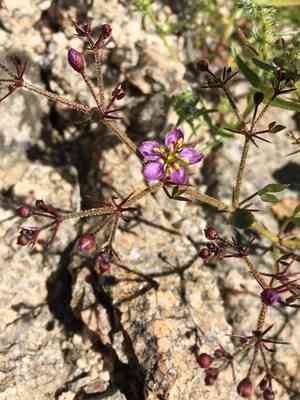
The resilient desert shrub you're referring to is the sticky fagonbush. It boasts thick, spiny stems that are well-suited for arid environments. With vibrant pink flowers that contrast sharply against its tough, green-gray leaves, this plant usually stays low to the ground. Its ability to conserve water and endure harsh sunlight makes it a true symbol of desert endurance.
In This Article
Attributes of Sticky fagonbush
Lifespan
Perennial
Plant Type
Shrub
Plant Height
20-50 cm
Spread
Depends on growth conditions; typically up to 30 cm
Leaf Color
Green
Flower Size
5-10 mm
Flower Color
Pink, Purple
Images of Sticky fagonbush
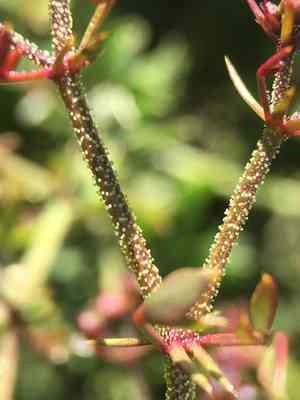
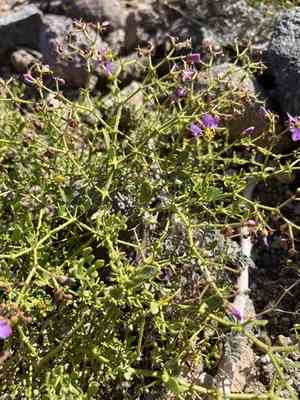
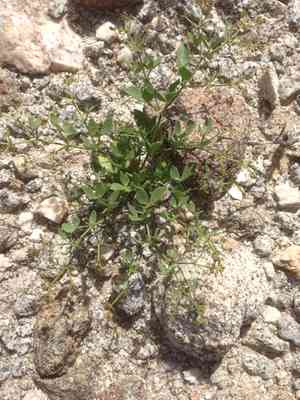
Quickly Identify Sticky fagonbush
1
Fagonia pachyacantha can be identified by its small, star-shaped flowers with five petals, typically pink or purple in color, and its spiny stems. The leaves are small, trifoliate, and arranged alternately.
Scientific Classification of Sticky fagonbush
Phylum
Vascular plants
Class
Dicotyledons
Order
Zygophyllales
Family
Creosote-bush
Genus
Fagonbushes
Species
Sticky fagonbush
Planting and Growing of Sticky fagonbush
Care Difficulty
Moderate
Watering Schedule
Every day
Sunlight Requirements
Full sun
Sunshine Duration
4-8 hours
Ideal Temperature
70-85℉
Soil Type
Potting Mix, Peat Mix
Soil pH
6.5-7.5
Fertilizer Type
Balanced
Pruning Season
Spring, Summer
Pruning Area
Branches, Leaves
Pruning Frequency
2 times a year
Repotting Season
Spring
Pot Type
Plastic, Ceramic
 How to Water Sticky fagonbush?
Fagonia pachyacantha, a desert-adapted plant, prefers minimal watering. Each session should involve around 100ml of water. It thrives on the principle of letting its soil dry out completely between waterings, mimicking the arid environment of its native habitat.
What are the symptoms of an underwatered Sticky fagonbush?
›
What should I do if my Sticky fagonbush is not getting enough water?
›
What are the symptoms of an overwatered Sticky fagonbush?
›
How to save an overwatered Sticky fagonbush?
›
 What Are the Sunlight Requirements for Sticky fagonbush?
Fagonia pachyacantha prospers under full sun, benefiting from daily solar exposure that enhances photosynthetic efficiency and supports robust growth.
What is the perfect location for Fagonia pachyacantha?
›
How do you ensure consistent sunlight?
›
What are the benefits of optimal light exposure?
›
 What Is the Ideal Temperature Range for Sticky fagonbush?
Fagonia pachyacantha thrives in warm conditions. It grows optimally when the ambient temperature ranges between 70°F and 85°F. These temperatures mimic the plant's natural desert environment, promoting healthy photosynthesis and growth. Ensuring a stable temperature within this range helps in maintaining the plant's metabolism and vigor.
 What Soil is Best for Sticky fagonbush?
Fagonia pachyacantha thrives in well-draining soil types. It prevents waterlogging, which could lead to root rot. Well-drained soil enhances aeration, ensuring roots breathe efficiently and access vital nutrients. This plant requires soil that is moderately rich in nutrients. It supports healthy growth and flower production by providing essential minerals. Organic matter can be added to improve soil fertility and support vigorous development. Fagonia pachyacantha prefers soil with low to moderate water retention. This characteristic is crucial for its survival in arid regions, ensuring it gets enough moisture without becoming waterlogged, promoting healthy root growth.
 How to Fertilize Sticky fagonbush?
For Fagonia pachyacantha, use a balanced liquid fertilizer at a dilution rate of 1/2 teaspoon per gallon of water when applying once a month. For slow-release granules, apply about 1 tablespoon per plant twice a year during the growing season.
 How to Prune Sticky fagonbush?
Start by using clean, sharp pruning shears to make precise cuts, which promotes healthier regrowth. Focus on removing dead or damaged branches first, as these can attract pests or diseases. Trim back overgrown areas to maintain shape and encourage bushier growth. Ensure that you're cutting at a 45-degree angle about a quarter-inch above a node to promote effective healing. Regular pruning every month helps keep Fagonia pachyacantha vibrant and healthy throughout its growing season. To enhance flowering, it's vital to focus on selective pruning. Gently cut back branches that have finished blooming to encourage the plant to direct its energy toward new growth and additional blooms. This not only extends the blooming period but also strengthens the plant's overall structure. Regularly assess for any excessively crowded areas where thinning may be necessary to improve air circulation and sunlight penetration, which are crucial for flower development.
More About Pruning Techniques→
 How to Propagate Sticky fagonbush plant?
1
Start by filling a seed tray with a well-draining potting mix. Sow the seeds lightly on the surface and gently press them down. Cover with a thin layer of sand to maintain moisture.
2
Use pruning shears to take a healthy 4-6 inch cutting from a mature plant. Ensure the cutting includes a few nodes, as this is where roots will form.
3
Dip the cut end of the cutting in rooting hormone and place it in a pot with a moist, well-draining soil mix. Cover with a plastic bag to maintain humidity while it roots.
 How to Repot Sticky fagonbush plant?
1
Look for signs like roots growing out of drainage holes or a slowed growth rate. These indicate a need for repotting. Aim to repot Fagonia pachyacantha when it shows such signs of needing more space, usually in spring or summer.
2
Select a pot that is slightly larger than the current one. Ensure it has drainage holes to prevent waterlogging, which can lead to root rot. The right pot allows the roots to breathe and supports optimal growth.
3
Choose a well-draining cactus mix, ideally one that mimics the plant’s natural, arid habitat. Good soil promotes healthy root development and prevents overwatering, which is crucial for succulents.
Learn More About Sticky fagonbush Diseases
Anthracnose
Bacterial Leaf Spot
Bacterial Soft Rot
Bacterial Wilt
Black Spot
Chemical Injury
Crown Gall
Cyst Nematode
Damping-off
Downy Mildew
Drought Stress
Fusarium Wilt
Gray Mold
Leaf Curl
Leaf Spot
Mosaic
Nutrient Deficiency
Nutrient Toxicity
Powdery Mildew
Root Rot
Root-knot Nematode
Rusts
Sooty Mold
Spider Mites
Temperature Stress
Thrips Damage
White Mold



