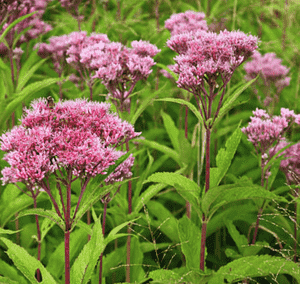
Sweet Joe-Pye weed (Eutrochium purpureum)
Also known as: Kidney-root, Sweet joe-pye-weed, Trumpet weed
Eutrochium purpureum, widely known as sweet Joe-Pye weed, is a perennial flowering plant that typically reaches heights of 1.2 to 2 meters. Its dense clusters of small, pinkish-purple flowers emit a vanilla-like fragrance, which makes them particularly appealing to butterflies.
In This Article
Attributes of Sweet Joe-Pye weed
Lifespan
Perennial
Plant Type
Herb
Plant Height
61 cm to 1.5 m
Spread
90 cm to 1.5 m
Leaf Color
Green Blue Purple
Flower Size
2.5 cm
Flower Color
Pink Red
Images of Sweet Joe-Pye weed
Quickly Identify Sweet Joe-Pye weed
1
Tall herbaceous perennial, 5-7 feet (1.5-2.1 meters) high, 2-4 feet (0.6-1.2 meters) wide.
2
Dark green serrated leaves in whorls of 3-4, 6-12 inches (15-30 cm) long.
3
Fragrant pinkish-purple flowers in domed heads, 12-18 inches (30-45 cm) across.
4
Small tubular flowers with 5-7 florets, dull pinkish-purple hue.
5
Distinctive bullet-shaped cypselas, 0.16-0.2 inches (4-5 mm) long with tuft of hair.
Scientific Classification of Sweet Joe-Pye weed
Phylum
Vascular plants
Class
Dicotyledons
Order
Asterales
Family
Daisy
Genus
Joe-pye weeds
Species
Sweet Joe-Pye weed
Planting and Growing of Sweet Joe-Pye weed
Care Difficulty
Easy
Watering Schedule
Every 4 days
Sunlight Requirements
Partial sun
Sunshine Duration
6-10 hours
Ideal Temperature
65-75℉
Soil Type
Potting Mix, Peat Mix
Soil pH
6.5-7.5
Fertilizer Type
Balanced
Pruning Season
Spring, Summer
Pruning Area
Branches, Leaves
Pruning Frequency
2 times a year
Repotting Season
Spring
Pot Type
Plastic, Ceramic
 How to Water Sweet Joe-Pye weed?
Eutrochium purpureum prefers a consistent amount of moisture. The goal is to maintain evenly damp soil without allowing it to become soggy. Water until the soil feels thoroughly moist to a depth of at least 5 centimeters, but avoid standing water.
What are the symptoms of an underwatered Sweet Joe-Pye weed?
›
What should I do if my Sweet Joe-Pye weed is not getting enough water?
›
What are the symptoms of an overwatered Sweet Joe-Pye weed?
›
How to save an overwatered Sweet Joe-Pye weed?
›
 What Are the Sunlight Requirements for Sweet Joe-Pye weed?
Eutrochium purpureum flourishes best in partial sun conditions, ideally under 4 to 6 hours of sunlight per day. This balance allows for steady development, supporting abundant flowering and robust leaf growth without causing stress.
More About Sunlight Requirements Techniques→
How can I achieve the ideal lighting conditions?
›
What specific actions can I take to provide optimal lighting?
›
What benefits arise from maintaining ideal lighting conditions?
›
 What Is the Ideal Temperature Range for Sweet Joe-Pye weed?
The ideal temperature range for cultivating Eutrochium purpureum typically falls between 65°F and 75°F. This range provides a stable environment that supports healthy growth and optimal flowering. Maintaining consistent temperatures within this range promotes the plant’s natural processes and reduces stress.
 What Soil is Best for Sweet Joe-Pye weed?
Eutrochium purpureum thrives in soil that retains moisture well. This is essential for maintaining consistent hydration, which supports lush foliage and robust flowering. Ensuring the soil does not dry out is key for its growth. The plant benefits from nutrient-rich soil that can provide essential minerals and nutrients. This enriches growth, enhances flower size and color, and boosts overall plant health. While moisture retention is vital, good drainage prevents water-logging, which could lead to root rot. This balance supports a healthy root system and prevents disease.
 How to Fertilize Sweet Joe-Pye weed?
For Eutrochium purpureum, it's recommended to use a balanced 10-10-10 NPK fertilizer. When using liquid fertilizers, dilute to half the recommended strength; for granular fertilizers, use about 1 tablespoon per plant. This allows the plant to absorb nutrients without the risk of overfertilization.
 How to Prune Sweet Joe-Pye weed?
Incorporate shape-focused pruning by cutting stems back to just above a leaf node or a healthy bud. This helps to control the plant's size and encourages a bushier and more robust growth. Regular shaping maintains the aesthetic and ensures the plant's energy is directed towards healthy shoots. During late summer, as flowers begin to fade, deadheading, or removing spent blooms, can extend the flowering period. This directs the plant’s energy into producing more blooms rather than seed production. Always cut just above a lower pair of leaves or a dormant bud.
More About Pruning Techniques→
 How to Propagate Sweet Joe-Pye weed plant?
1
Begin by sowing seeds in seed trays filled with a moist, well-draining potting mix. Cover lightly with soil and maintain a consistent moisture level until germination occurs.
2
Select healthy stems from the parent plant and use pruning shears to make clean cuts. Each cutting should be approximately 4-6 inches in length and should include at least two nodes.
3
Division involves carefully digging up the plant and separating the root ball into sections. Ensure each section has healthy roots and stems before replanting in prepared soil.
 How to Repot Sweet Joe-Pye weed plant?
1
Eutrochium purpureum should be repotted when you notice slowed growth or roots escaping through the drainage holes. These signs indicate the plant has outgrown its current container. Spring or early summer is the best time, as active growth helps it recover and root quickly.
2
Select a pot that is 1-2 inches larger in diameter than the current one. Ensure it has drainage holes to prevent waterlogging, which can cause root rot. A slightly larger pot allows for root expansion, providing the plant ample room to grow without overly stress-inducing jumps in space.
3
Use a moisture-retentive, well-draining soil mix. This combination maintains the necessary moisture balance that Eutrochium purpureum needs while avoiding water retention that could lead to root decay. Opt for a mix containing peat, perlite, or sand for improved drainage.
Learn More About Sweet Joe-Pye weed Diseases
Anthracnose
Bacterial Leaf Spot
Bacterial Soft Rot
Bacterial Wilt
Chemical Injury
Crown Gall
Damping-off
Downy Mildew
Drought Stress
Fusarium Wilt
Gray Mold
Leaf Curl
Leaf Spot
Mosaic
Nutrient Deficiency
Nutrient Toxicity
Powdery Mildew
Root Rot
Root-knot Nematode
Rusts
Sooty Mold
Spider Mites
Temperature Stress
Thrips Damage
White Mold



