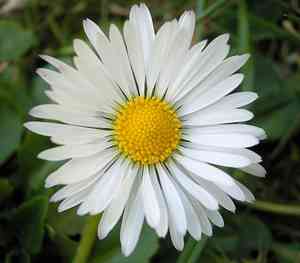
Grass-leaved goldenrod (Euthamia graminifolia)
Also known as: Grass-leaved Goldenrod, Flat-top Goldentop
Grass-leaved goldenrod (Euthamia graminifolia) is a perennial plant featuring clusters of yellow flowers similar to true goldenrod. It flourishes in full sunlight and prefers soil conditions that range from medium wet to dry. This plant is known for its potential to spread vigorously.
In This Article
Attributes of Grass-leaved goldenrod
Lifespan
Perennial
Plant Type
Herb
Plant Height
61 cm to 1.2 m
Spread
30 cm to 60 cm
Leaf Color
Green
Flower Size
2.5 cm
Flower Color
Yellow
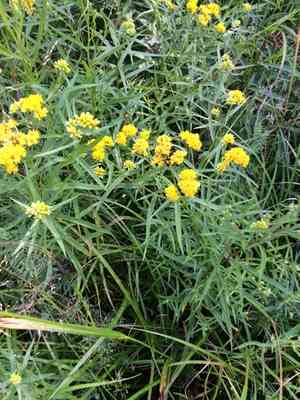
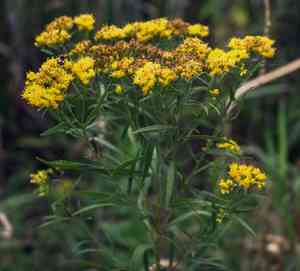
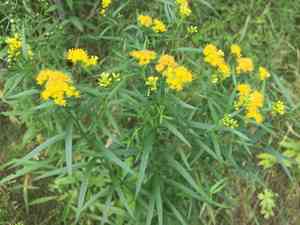
Images of Grass-leaved goldenrod
Quickly Identify Grass-leaved goldenrod
1
Euthamia graminifolia can be identified by its narrow, grass-like leaves and flat-topped clusters of small yellow flowers. The stems are smooth and can grow up to 1 meter tall. The flowers typically bloom in late summer to early fall.
Scientific Classification of Grass-leaved goldenrod
Phylum
Vascular plants
Class
Dicotyledons
Order
Asterales
Family
Daisy
Genus
Goldentops
Species
Grass-leaved goldenrod
Planting and Growing of Grass-leaved goldenrod
Care Difficulty
Easy
Watering Schedule
Every 4 days
Sunlight Requirements
Full sun
Sunshine Duration
4-6 hours
Ideal Temperature
60-75℉
Soil Type
Potting Mix, Peat Mix
Soil pH
6.5-7.5
Fertilizer Type
Balanced
Pruning Season
Spring, Summer
Pruning Area
Branches, Leaves
Pruning Frequency
2 times a year
Repotting Season
Spring
Pot Type
Plastic, Ceramic
 How to Water Grass-leaved goldenrod?
When watering Euthamia graminifolia, aim to ensure the soil is thoroughly moistened but not waterlogged. Typically, 500 ml is sufficient to reach this balance, as the goal is to hydrate the roots without drowning them. Ensure excess water can freely drain to prevent root rot.
What are the symptoms of an underwatered Grass-leaved goldenrod?
›
What should I do if my Grass-leaved goldenrod is not getting enough water?
›
What are the symptoms of an overwatered Grass-leaved goldenrod?
›
How to save an overwatered Grass-leaved goldenrod?
›
 What Are the Sunlight Requirements for Grass-leaved goldenrod?
Euthamia graminifolia thrives best with full sun conditions, which encourages prolific flowering and robust growth. Proper light exposure is crucial for ensuring plant vigor.
How does Euthamia graminifolia thrive in sunlight?
›
What solutions help in obtaining ideal sunlight conditions?
›
What benefits does ideal sunlight provide to Euthamia graminifolia?
›
 What Is the Ideal Temperature Range for Grass-leaved goldenrod?
The ideal temperature range for Euthamia graminifolia growth is between 60°F and 75°F. This range supports optimal photosynthesis and ensures healthy metabolic activity within the plant. At these temperatures, the plant can efficiently uptake nutrients and grow vigorously. By maintaining this range, Euthamia graminifolia is less susceptible to diseases and pests, and it will have the best chance for abundant flowering.
 What Soil is Best for Grass-leaved goldenrod?
Euthamia graminifolia thrives in well-drained soils, which prevent waterlogging. Proper drainage is crucial as it ensures roots receive adequate oxygen and prevents root rot. This environment fosters healthier and more robust plant growth. This plant grows best in moderately fertile soils that supply essential nutrients without excessive richness. Balanced fertility levels support steady growth and flowering without promoting overly lush foliage that is prone to pests. While well-drained, the soil should retain adequate moisture. This balance aids the plant during periods of drought, ensuring that it remains hydrated without experiencing stress from overly dry conditions.
 How to Fertilize Grass-leaved goldenrod?
Euthamia graminifolia, commonly known as grass-leaved goldenrod, requires a careful balance in fertilization. Use a diluted liquid fertilizer with a concentration of 10-20-10, applying about half a gallon per plant to avoid overfeeding.
 How to Prune Grass-leaved goldenrod?
Start by observing the natural shape of Euthamia graminifolia. Remove any dead or dying stems first, cutting them back to the base. Trim back any overgrown or leggy growth by up to one-third to encourage bushier plants. Make cuts just above a leaf node to foster new growth. Be mindful of maintaining an even shape as you work around the plant. Prune Euthamia graminifolia in early spring to encourage new growth after winter. Additional light pruning in late summer can help maintain shape and encourage another flush of blooms. Late autumn pruning helps tidy the plant and prepare it for the dormant winter months.
 How to Propagate Grass-leaved goldenrod plant?
1
Prepare seed trays with well-draining soil mix, sow seeds on the surface, and lightly cover with soil. Maintain even moisture and place in a location with indirect sunlight.
2
Choose healthy, non-flowering stems. Use sharp pruning shears to cut a 10-15 cm piece, remove lower leaves, and dip in rooting hormone before planting in soil.
3
Gently dig up mature plants in early spring or late autumn. Use a sharp tool to divide the root ball into smaller sections, ensuring each has roots and buds, before replanting.
 How to Repot Grass-leaved goldenrod plant?
1
Recognize the optimal moment for repotting Euthamia graminifolia when the roots are peeking through the drainage holes or if growth seems stunted. Repotting during spring or summer allows for optimal recovery and growth, as these are the most active growing seasons.
2
Select a pot that is one to two inches larger in diameter than the current one to give the roots room to expand. Ensure it has adequate drainage holes to prevent waterlogging, which can lead to root rot, promoting healthier root systems.
3
Choose a well-draining sandy loam soil that mimics its natural habitat, allowing for good air circulation around the roots. This helps prevent water accumulation, lowering the risk of root rot and ensuring the plant receives essential nutrients and water efficiently.
Learn More About Grass-leaved goldenrod Diseases
Anthracnose
Bacterial Leaf Spot
Bacterial Wilt
Crown Gall
Cyst Nematode
Damping-off
Downy Mildew
Drought Stress
Fusarium Wilt
Gray Mold
Leaf Spot
Mosaic
Nutrient Deficiency
Nutrient Toxicity
Powdery Mildew
Root Rot
Root-knot Nematode
Rusts
Sooty Mold
Spider Mites
Temperature Stress
Thrips Damage
White Mold



