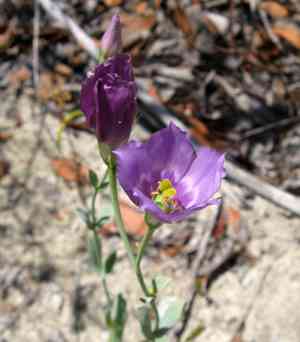
Catchfly prairie gentian (Eustoma exaltatum)
Also known as: Seaside gentian, Small bluebell, Western blue gentian, Marsh gentian
The catchfly prairie gentian, a perennial herb hailing from the southern United States and the West Indies, is known for its ability to thrive in salty conditions. During its blooming season, it showcases eye-catching purple bell-shaped flowers. This plant is closely related to the Texas bluebell (Eustoma russellianum), a popular choice for cut flowers.
In This Article
Attributes of Catchfly prairie gentian
Lifespan
Annual, Perennial
Plant Type
Herb
Plant Height
30 cm
Spread
8 cm to 13 cm
Leaf Color
Green Blue
Flower Size
2.5 cm to 5 cm
Flower Color
Purple White Pink
Images of Catchfly prairie gentian
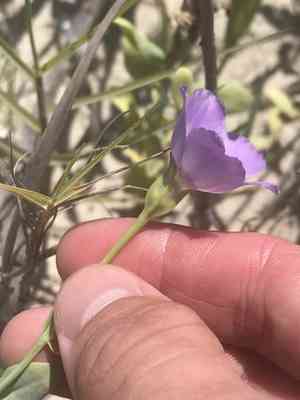
Quickly Identify Catchfly prairie gentian
1
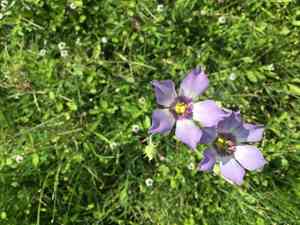
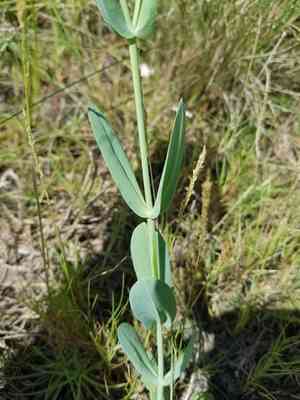
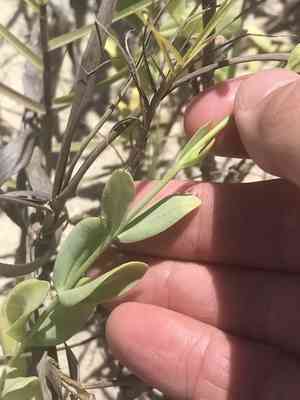
Identify Eustoma exaltatum by its smooth, oval leaves arranged alternately on the stem. The flowers are typically bell-shaped and can be found in shades of blue, purple, pink, white, and sometimes bi-color. Its stems are slender and delicate.
Scientific Classification of Catchfly prairie gentian
Phylum
Vascular plants
Class
Dicotyledons
Order
Gentianales
Family
Gentian
Genus
Prairie gentian
Species
Catchfly prairie gentian
Planting and Growing of Catchfly prairie gentian
Care Difficulty
Moderate
Watering Schedule
Every 3 days
Sunlight Requirements
Full sun
Sunshine Duration
4-8 hours
Ideal Temperature
65-75℉
Soil Type
Potting Mix, Peat Mix
Soil pH
6.5-7.5
Fertilizer Type
Balanced
Pruning Season
Spring, Summer
Pruning Area
Branches, Leaves
Pruning Frequency
2 times a year
Repotting Season
Spring
Pot Type
Plastic, Ceramic
 How to Water Catchfly prairie gentian?
For Eustoma exaltatum, ensure the soil is consistently moist but not waterlogged. Watering with approximately 200ml per session should suffice, allowing the water to soak deeply into the soil. This helps the roots access moisture effectively and supports healthy growth.
What are the symptoms of an underwatered Catchfly prairie gentian?
›
What should I do if my Catchfly prairie gentian is not getting enough water?
›
What are the symptoms of an overwatered Catchfly prairie gentian?
›
How to save an overwatered Catchfly prairie gentian?
›
 What Are the Sunlight Requirements for Catchfly prairie gentian?
Eustoma exaltatum thrives in full sun to partial sun conditions. Ideal light ensures improved flowering, vibrant foliage, and enhanced overall plant vigor, crucial for its optimal growth cycle.
More About Sunlight Requirements Techniques→
What is the best lighting condition for Eustoma exaltatum?
›
How can I ensure Eustoma exaltatum receives ideal lighting?
›
What are the benefits of ideal lighting for Eustoma exaltatum?
›
 What Is the Ideal Temperature Range for Catchfly prairie gentian?
The ideal temperature range for growing Eustoma exaltatum, commonly known as lisianthus, lies between 65°F and 75°F. This range is optimal for achieving vigorous growth and vibrant blooms. Within this temperature window, the plant's physiological processes, such as photosynthesis and nutrient uptake, function efficiently.
 What Soil is Best for Catchfly prairie gentian?
Eustoma exaltatum thrives in well-draining soil, which prevents waterlogging and root rot. This soil type ensures roots receive sufficient oxygen, promoting healthier growth. This plant benefits from soil rich in organic matter, providing essential nutrients. Nutrient-rich soil supports vibrant blooms and robust overall plant health. While drainage is important, maintaining consistent soil moisture is also crucial. This balance prevents both drought stress and over-saturation, fostering optimal growth conditions.
More About Soil→
 How to Fertilize Catchfly prairie gentian?
Eustoma exaltatum appreciates a balanced approach when it comes to fertilization. Use a water-soluble fertilizer diluted to half-strength or approximately 1 tablespoon per gallon of water. This allows the plant to absorb necessary nutrients without the risk of overfeeding.
More About Fertilizing Techniques→
 How to Prune Catchfly prairie gentian?
Start by eliminating any dead or diseased stems and leaves to prevent the spread of infections. This keeps your plant healthy and allows it to channel energy towards new growth. Trim back overgrown areas to maintain the desired shape and size. Keep in mind to cut just above a leaf node, which encourages new branches to form and results in a fuller appearance. Pinch back the tops of stems lightly to promote bushier growth and enhance the flowering potential. Doing this encourages lateral shoots and leads to a more spectacular bloom.
More About Pruning Techniques→
 How to Propagate Catchfly prairie gentian plant?
1
Select seeds from a reliable source to ensure they are healthy and viable. Check the expiration date and inspect seeds for any signs of damage or disease. Soak seeds in water for a few hours before planting to enhance germination.
2
Choose a healthy parent plant and use sterilized shears to take cuttings about 4-6 inches long. Remove leaves from the lower half and dip the cut end in rooting hormone to promote root development.
3
Plant seeds or cuttings in a well-draining soil mix in trays or pots. Water gently and keep the propagation area in a warm, bright location, away from direct sunlight. Maintain consistent moisture levels but avoid waterlogging.
 How to Repot Catchfly prairie gentian plant?
1
Eustoma exaltatum should be repotted when you notice the roots circling the pot's bottom, the plant's growth stalls, or water drains too quickly. This indicates that the plant has outgrown its current home and needs more space to thrive.
2
Choose a pot that's only slightly larger than the current one; this helps prevent overwatering and provides just enough space for healthy root growth. Good drainage is essential, so ensure the pot has adequate drainage holes to allow excess moisture to escape.
3
Opt for a well-draining potting mix, ideally one that incorporates peat moss, perlite, and a little sand. This ensures that the roots receive enough air circulation and reduces the risk of root rot, which is crucial for the health of Eustoma exaltatum.
Learn More About Catchfly prairie gentian Diseases
Anthracnose
Bacterial Leaf Spot
Bacterial Soft Rot
Bacterial Wilt
Crown Gall
Cyst Nematode
Damping-off
Downy Mildew
Drought Stress
Fusarium Wilt
Gray Mold
Leaf Spot
Mosaic
Nutrient Deficiency
Nutrient Toxicity
Powdery Mildew
Root Rot
Root-knot Nematode
Rusts
Sooty Mold
Spider Mites
Temperature Stress
Thrips Damage
White Mold



