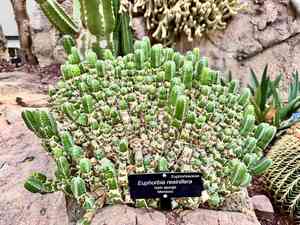
Resin spurge (Euphorbia resinifera)
Also known as: Gun euphorbium, Darkmous, Poisonous gum-thistle, African spurge
Resin spurge (Euphorbia resinifera), native to the forested regions of Morocco, is exceptionally easy to cultivate and thrives in a variety of soil conditions, including dry and nutrient-poor soils. Its adaptability makes it an excellent choice for a houseplant. However, caution is advised when handling, as it can cause skin irritation.
Attributes of Resin spurge
Images of Resin spurge
Quickly Identify Resin spurge
Scientific Classification of Resin spurge
Planting and Growing of Resin spurge
 How to Water Resin spurge?
 What Are the Sunlight Requirements for Resin spurge?
 What Is the Ideal Temperature Range for Resin spurge?
 What Soil is Best for Resin spurge?
 How to Fertilize Resin spurge?
 How to Prune Resin spurge?
 How to Propagate Resin spurge plant?
 How to Repot Resin spurge plant?
Toxicity of Resin spurge
Is Resin spurge toxic to humans?
Resin spurge presents a moderate toxicity hazard to humans, mainly attributed to the diterpene esters found in its sap. Contact with the sap may trigger allergic reactions upon touch, and accidental ingestion of this substance can lead to more severe health issues. The toxic components of resin spurge are typically not consumed intentionally; however, accidental contact or ingestion can occur. Poisoning symptoms might include skin irritation, redness, and swelling where touched. If ingested, people may experience a painful burning sensation in the mouth, discomfort in the throat, gastrointestinal disturbances, and in severe cases, systemic reactions. It is vital for individuals to exercise caution when handling resin spurge to prevent these negative effects.
Is Resin spurge toxic to cat?
Resin spurge poses a moderate toxicity threat to felines. Cats can encounter the plant's poisonous sap either through direct contact or unintentional ingestion. The key toxic agent present in resin spurge is Diterpene esters, primarily found within the sap. Interaction with resin spurge may lead to symptoms suggesting physical discomfort in cats, although the exact signs can differ. If a cat shows any atypical behavior or symptoms of illness following exposure to resin spurge, it is essential to obtain veterinary assistance promptly to safeguard their health and welfare.
Is Resin spurge toxic to dog?
Resin spurge presents a moderate toxicity risk for dogs. Canines can suffer from poisoning due to skin exposure to the plant's sap or by accidentally ingesting it. Contact with the sap may cause symptoms like irritation at the site of exposure, vomiting, diarrhea, and loss of appetite. The harmful substances that lead to these adverse reactions are diterpene esters present in the resin spurge sap. If a dog encounters or consumes any portion of resin spurge, it is essential to seek prompt veterinary care to guarantee appropriate treatment and symptom management.



