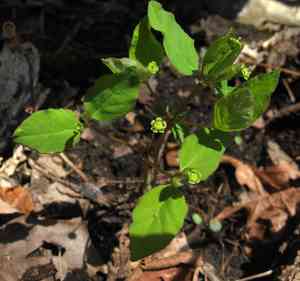
Mercury spurge (Euphorbia mercurialina)
Also known as: Mercury euphorbia
Mercury spurge (Euphorbia peplus) is well-adapted to thrive in its native environment, exhibiting several distinctive features:
1. **Distinctive Foliage**: The plant's leaves are arranged in a unique pattern, enhancing its ability to capture sunlight efficiently.
2. **Cyathia Structures**: It produces specialized flowering structures known as cyathia, which are vital for its reproductive success.
3. **Habitat Preference**: Mercury spurge flourishes in sunlit, rocky terrains, showcasing its preference for well-drained, challenging environments.
4. **Moisture Retention**: Its stems and leaves often have a waxy layer that helps conserve moisture, crucial for surviving in dry conditions.
5. **Growth Habit**: The plant's growth form allows it to stand out and efficiently utilize available space and resources.
These characteristics collectively enable Mercury spurge to adapt and thrive in its native habitats, particularly in sun-exposed, rocky outcrops.
Attributes of Mercury spurge
Images of Mercury spurge
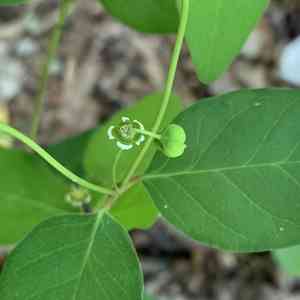
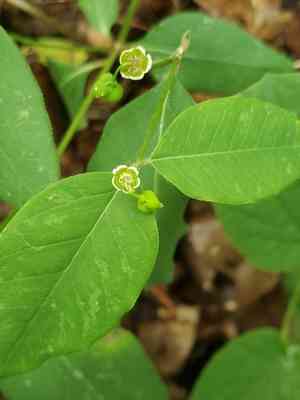
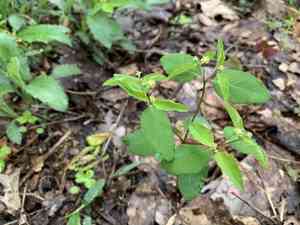
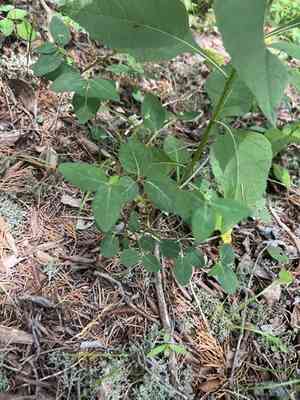
Quickly Identify Mercury spurge
Scientific Classification of Mercury spurge
Planting and Growing of Mercury spurge
 How to Water Mercury spurge?
 What Are the Sunlight Requirements for Mercury spurge?
 What Is the Ideal Temperature Range for Mercury spurge?
 What Soil is Best for Mercury spurge?
 How to Fertilize Mercury spurge?
 How to Prune Mercury spurge?
 How to Propagate Mercury spurge plant?
 How to Repot Mercury spurge plant?
Toxicity
Ingestion, Skin Contact



