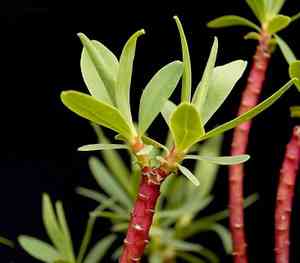
Tree spurge(Euphorbia dendroides)

Tree spurge (Euphorbia dendroides)

Also known as: Shrubby Spurge, Tree Spurge

The tree spurge, a small tree from the euphorbia family, is native to Mediterranean regions. It has a toxic white, milky sap and is not tolerant of frost.

Attributes of Tree spurge

Lifespan
Perennial
Plant Type
Shrub
Plant Height
2 m
Spread
2 m
Leaf Color
Green Blue Red Orange
Flower Size
Small and inconspicuous, less than 1 cm
Flower Color
Yellow Green

ForwardPlant - Identify plants with a snap

Identify and diagnose plants, get toxicity alerts, and explore safety guides for all types of fungi.

Try for Free

Images of Tree spurge

Tree spurge(Euphorbia dendroides)

Quickly Identify Tree spurge

1
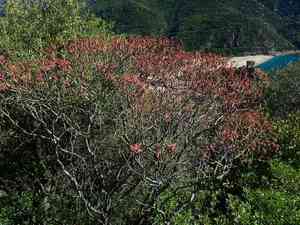
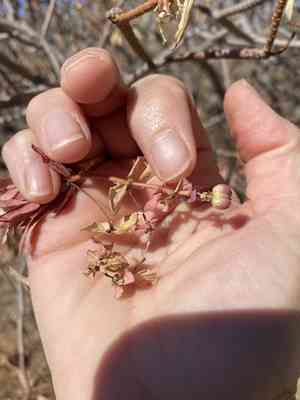
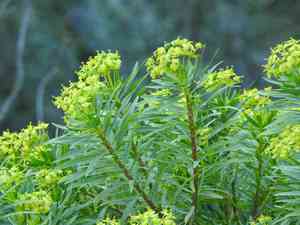
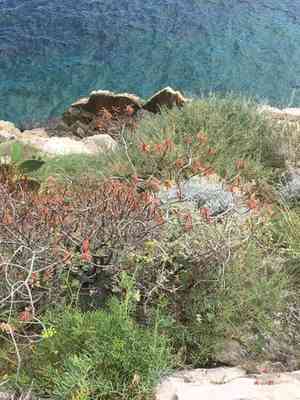
Euphorbia dendroides can be identified by its shrubby, tree-like form, smooth stems, and seasonal reddish coloration. The milky sap is another distinctive feature, often released when the plant is damaged.

Scientific Classification of Tree spurge

Phylum
Vascular plants
Class
Dicotyledons
Order
Malpighiales
Family
Spurge
Genus
Spurges
Species
Tree spurge

Planting and Growing of Tree spurge

Care Difficulty
Easy
Watering Schedule
Every 2 days
Sunlight Requirements
Full sun
Sunshine Duration
4-6 hours
Ideal Temperature
60-75℉
Soil Type
Potting Mix, Peat Mix
Soil pH
6.5-7.5
Fertilizer Type
Balanced
Pruning Season
Spring, Summer
Pruning Area
Branches, Leaves
Pruning Frequency
2 times a year
Repotting Season
Spring
Pot Type
Ceramic, Plastic

water icon How to Water Tree spurge?

Euphorbia dendroides thrives in sandy, well-draining soil. Water it deeply, allowing the top 1-2 inches of soil to dry out between waterings. Water around the base until the soil is evenly moist but not soggy, typically requiring about 200 ml each session.
What are the symptoms of an underwatered Tree spurge?
What should I do if my Tree spurge is not getting enough water?
What are the symptoms of an overwatered Tree spurge?
How to save an overwatered Tree spurge?

sunlight icon What Are the Sunlight Requirements for Tree spurge?

Sunlight Requirements: Full sun, Partial sun
Duration of light: 6 to 8 hours daily
Euphorbia dendroides requires 6 to 8 hours of sunlight daily, ideally in full sun conditions, to maintain its vibrant foliage and robust growth, offering resilience against pests and environmental stressors.
How much direct sunlight does it need?
Can it tolerate some shade?
How to simulate its ideal light conditions indoors?
More About Sunlight Requirements Techniques

temperature icon What Is the Ideal Temperature Range for Tree spurge?

Ideal Temperature: 60 ~ 75℉
The ideal temperature range for cultivating Euphorbia dendroides is between 60°F and 75°F. This range provides the optimal conditions for growth and development, ensuring that the plant receives the necessary warmth without the stress of excessive heat or cold. Maintaining this temperature range supports photosynthesis and overall plant health, contributing to robust and vigorous growth.

soil icon What Soil is Best for Tree spurge?

Soil type: Sandy soil, Calcareous soil, Sandy loam
Soil PH: 6.5 ~ 7.5
Euphorbia dendroides thrives best in well-drained soil, which prevents waterlogging and root rot. Ensuring good drainage allows the plant to absorb necessary nutrients without the detrimental effects of excess moisture. The plant flourishes in nutrient-rich soil that facilitates robust growth. Adequate nutrients support its vibrant foliage and optimal flowering, contributing to health and resistance against pests. It requires a balance of moisture retention to maintain hydration while avoiding conditions conducive to fungal diseases. Correct moisture levels aid in consistent growth and vitality.

fertilize icon How to Fertilize Tree spurge?

Fertilizer type: Balanced
Euphorbia dendroides thrives with a careful balance of nutrients. When applying liquid fertilizer, ensure it's diluted to half-strength to prevent nutrient burn. A general guideline is one tablespoon of liquid fertilizer mixed in a gallon of water. For slow-release granular fertilizers, apply sparingly—just one teaspoon per plant to avoid over-fertilization. This conservative approach ensures optimal growth without overwhelming the plant's root system.

prune icon How to Prune Tree spurge?

Pruning Time: Spring, Summer, Autumn
Begin by identifying the branches that need pruning. Focus on overgrown, misshapen areas or branches crossing over each other, which can cause damage during growth. Make cuts at a 45-degree angle just above a leaf node or lateral branch. This aids in redirecting energy towards new growth and deters water accumulation on the cut surface, reducing rot risk. After making initial cuts, step back and evaluate the plant’s shape. Adjust and prune further if necessary to ensure symmetry and a balanced form, enhancing the plant’s aesthetic appeal. Remove all cut branches and leaves from the area around the plant. This helps maintain a tidy garden and reduces the risk of pests or diseases developing in the discarded material. More About Pruning Techniques

propagate icon How to Propagate Tree spurge plant?

Propagate Time: Early spring,Late spring,Summer
1
Harvest seeds from mature Euphorbia dendroides plants after flowering. Ensure the seeds are dry and free from any fungal infections before storing them in a cool, dry place.
2
Select a healthy branch from the plant and use pruning shears to make a clean cut below a node. Allow the cutting to dry for a day to prevent sap leakage, which can hinder rooting.
3
Sow seeds in seed starting trays filled with a well-draining soil mix. For cuttings, insert them into a pot filled with moist sand or a vermiculite mix, and keep the environment warm and bright.
More About Propagating Techniques

repot icon How to Repot Tree spurge plant?

Repotting frequency: Every two to three years
1
Euphorbia dendroides should be repotted when you notice roots growing out of the drainage holes or the soil compacts significantly. These signals indicate the plant has outgrown its current pot, and to thrive, it needs more space to expand.
2
Choose a pot that's a size larger with adequate drainage holes. A slightly larger pot offers ample room while avoiding excessive moisture retention, promoting better air circulation around the roots.
3
Opt for well-draining soil to prevent root rot. A cactus mix enriched with sand and perlite works best, ensuring that water flows freely and doesn't suffocate the roots, offering a robust growing environment.

ForwardPlant - Identify plants with a snap

Find the best spots for them to optimize their health, simply using your phone.

Try for Free

Toxicity of Tree spurge

Is Tree spurge toxic to humans?

Tree spurge presents a moderate toxicity risk to humans, mainly attributed to the diterpene esters found in its sap. Exposure to the sap can trigger allergic reactions, while inadvertent ingestion of this substance raises significant concerns. Typically, the toxic components of tree spurge are not consumed; nevertheless, when the sap contacts the skin or mucous membranes, it may cause irritation and inflammation. Consuming the sap could lead to more serious symptoms, such as gastrointestinal distress, vomiting, and diarrhea. Due to its allergenic characteristics, individuals might also suffer from respiratory issues or skin rashes when exposed. It is essential to refrain from touching or consuming any part of tree spurge to avert these harmful health effects.

Is Tree spurge toxic to cat?

Tree spurge presents a moderate level of toxicity risk for cats. Exposure usually happens when a cat accidentally ingests portions of the plant or comes into contact with its sap. The main toxic components are diterpene esters, largely found in the sap of the plant. Signs of physical distress or illness may appear after ingestion or contact, although the exact reactions can differ. Due to the possibility of health complications, it is crucial that any cat displaying symptoms of distress following exposure to tree spurge is promptly taken to a veterinary clinic for suitable care.

Is Tree spurge toxic to dog?

Tree spurge presents a moderate risk of toxicity for dogs. Canines can be poisoned by tree spurge through skin exposure or accidental ingestion. The harmful component in tree spurge, particularly the plant's sap, contains diterpene esters that can be detrimental if they touch the dog's skin or are swallowed. Poisoning symptoms may differ, but they can include irritation at the contact site, digestive disturbances, vomiting, and diarrhea. It is essential for dog owners to protect their pets from any interaction with or consumption of any part of tree spurge. If there is a suspicion that a dog has ingested tree spurge, seeking immediate veterinary attention is vital to address symptoms and avert further issues.

Identify toxic plants for your safety

Learn which plants are harmful to you and your pets, and make informed choices for a safer home!

Try for Free
WARNING
The judgment on toxicity and danger is for reference only. We DO NOT GUARANTEE any accuracy of such judgment. Therefore, you SHALL NOT rely on such judgment. It is IMPORTANT TO SEEK PROFESSIONAL ADVICE in advance when necessary.
More About Toxic Techniques