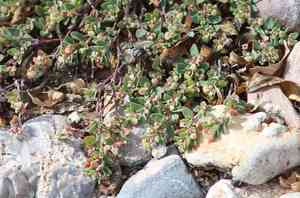
Ashy sandmat (Euphorbia cinerascens)
Also known as: No common aliases
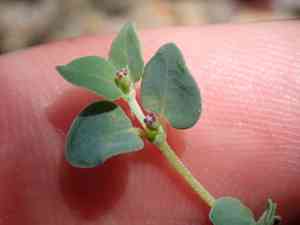
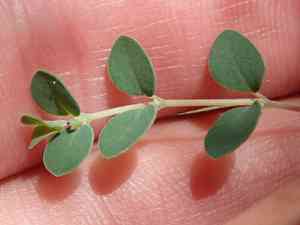
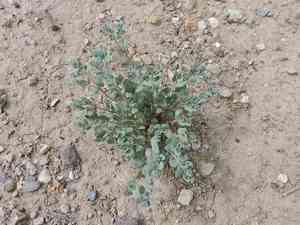
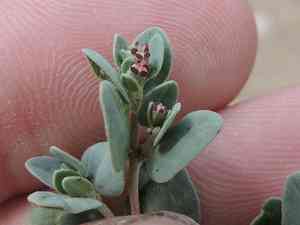
The ashy sandmat (Chamaesyce albomarginata) is a resilient succulent well-suited for arid environments. Its sprawling clusters of silver-gray stems resemble coral and are adapted to store water efficiently. The plant's small leaves are designed to reflect sunlight and minimize water evaporation. During spring, it produces modest flower clusters that provide a subtle contrast to its subdued foliage. This combination of features allows the ashy sandmat to thrive in harsh, dry habitats with elegance and resilience.
In This Article
Attributes of Ashy sandmat
Lifespan
Perennial
Plant Type
Succulent, Shrub
Plant Height
10-50 cm
Spread
20-30 cm
Leaf Color
Greyish-green
Flower Size
1-2 mm
Flower Color
Yellowish to greenish
Images of Ashy sandmat
Quickly Identify Ashy sandmat
1
To identify Euphorbia cinerascens, look for its succulent, greyish-green leaves, and the presence of small, inconspicuous flowers. Be cautious of its milky sap, which can be irritating to the skin.
Scientific Classification of Ashy sandmat
Phylum
Vascular plants
Class
Dicotyledons
Order
Malpighiales
Family
Spurge
Genus
Spurges
Species
Ashy sandmat
Planting and Growing of Ashy sandmat
Care Difficulty
Moderate
Watering Schedule
Every 2 days
Sunlight Requirements
Partial sun
Sunshine Duration
6-10 hours
Ideal Temperature
65-75℉
Soil Type
Potting Mix, Peat Mix
Soil pH
6.5-7.5
Fertilizer Type
Balanced
Pruning Season
Spring, Summer
Pruning Area
Branches, Leaves
Pruning Frequency
2 times a year
Repotting Season
Spring
Pot Type
Plastic, Terracotta
 How to Water Ashy sandmat?
Euphorbia cinerascens requires careful watering where you provide around 500ml of water each session. The key is to ensure that the water soaks through the soil and reaches the roots but does not pool. Allow the water to drain thoroughly and ensure the soil is completely dry before the next watering, avoiding the root rot associated with excess moisture.
What are the symptoms of an underwatered Ashy sandmat?
›
What should I do if my Ashy sandmat is not getting enough water?
›
What are the symptoms of an overwatered Ashy sandmat?
›
How to save an overwatered Ashy sandmat?
›
 What Are the Sunlight Requirements for Ashy sandmat?
Partial sun exposure is ideal, meaning the plant benefits immensely from 4 to 6 hours of dappled sunlight, which enhances its photosynthetic efficiency and growth stability.
What is the ideal lighting?
›
How to achieve ideal lighting?
›
What are the benefits of ideal lighting?
›
 What Is the Ideal Temperature Range for Ashy sandmat?
For optimal growth, Euphorbia cinerascens thrives best in temperatures ranging from 65°F to 75°F. This range supports the plant's physiological and metabolic needs, ensuring efficient photosynthesis and nutrient uptake. Consistent temperatures within this range are crucial for maintaining the plant's health and vitality over time.
 What Soil is Best for Ashy sandmat?
Euphorbia cinerascens thrives in well-drained soil conditions that prevent waterlogging and root rot. This quality is crucial for maintaining healthy root development and ensuring vigorous plant growth. This plant prefers soils that are moderately fertile, providing just enough nutrients to support its growth without causing excessive foliage elongation. Balanced fertility aids in maintaining optimal plant form and vibrant foliage. Good soil aeration is vital for Euphorbia cinerascens as it allows sufficient oxygen flow to the roots. This characteristic is beneficial for preventing root diseases and promoting efficient nutrient uptake.
 How to Fertilize Ashy sandmat?
For Euphorbia cinerascens, it is essential to provide a moderate amount of fertilizer. During the active growth phase, use a balanced liquid fertilizer diluted to half strength, typically 1/4 teaspoon per gallon of water. Solid fertilizers should be applied in small quantities, ensuring to follow packaging instructions to prevent root burn or nutrient overload.
 How to Prune Ashy sandmat?
Begin by locating any dead, damaged, or diseased stems within your Euphorbia cinerascens. These sections of the plant can drain energy and potentially spread issues to healthier parts. Use sharp pruning shears to make clean cuts just above a leaf node or a healthy branch. This encourages new growth and prevents further damage to the plant. Prune selectively to shape Euphorbia cinerascens, creating a balanced and aesthetically pleasing appearance. Trim any excessively long stems to maintain the desired size and form.
More About Pruning Techniques→
 How to Propagate Ashy sandmat plant?
1
Choose healthy stems approximately 3-4 inches long. Cut just below a node using a sterile knife. Remove the lower leaves and allow the cut end to dry and callus for 1-2 days to prevent rot during the rooting process.
2
Dip the callused end of each cutting into rooting hormone powder. Make sure that the powder only covers the base, as excess hormone can inhibit rooting. Tap gently to remove any excess powder.
3
Plant the treated cuttings into a well-draining cactus or succulent soil mix. Ensure the cuttings are inserted about 1-2 inches deep, enough to keep them upright, and water lightly.
 How to Repot Ashy sandmat plant?
1
Euphorbia cinerascens should be repotted when you notice roots coming through the drainage holes or when the plant growth is stunted. If the soil compaction looks severe, it's a sign that repotting is needed. Also, if your plant has been in the same pot for over two years, consider repotting to refresh the soil nutrients and allow room for root growth.
2
Choose a pot that is slightly larger than the current one but not too large, as too much space can lead to waterlogging. Ideally, the pot should have proper drainage holes to prevent root rot, which is especially important for Euphorbia species due to their susceptibility to root diseases. A clay or terracotta pot would be preferable as it allows excess moisture to evaporate more effectively.
3
Opt for a well-draining sandy soil mix with added organic matter for a slight nutrient boost. Cactus or succulent potting mix works excellently, preventing water retention that can lead to root rot and ensuring the plant has sufficient aeration in its root zone. The right soil mix will promote healthy growth and resilience against pests and diseases.
Toxicity
Ingestion, Contact
WARNING
The judgment on toxicity and danger is for reference only. We DO NOT GUARANTEE any accuracy of such judgment. Therefore, you SHALL NOT rely on such judgment. It is IMPORTANT TO SEEK PROFESSIONAL ADVICE in advance when necessary.
Learn More About Ashy sandmat Diseases
Anthracnose
Bacterial Leaf Spot
Bacterial Soft Rot
Bacterial Wilt
Crown Gall
Damping-off
Downy Mildew
Drought Stress
Fusarium Wilt
Gray Mold
Leaf Curl
Leaf Spot
Mosaic
Nutrient Deficiency
Nutrient Toxicity
Powdery Mildew
Root Rot
Root-knot Nematode
Rusts
Sooty Mold
Spider Mites
Temperature Stress
Thrips Damage
White Mold



