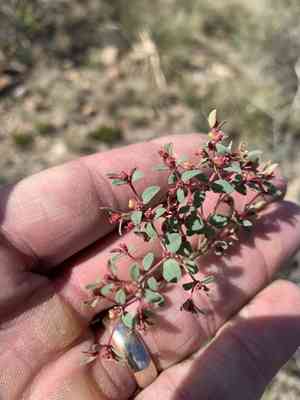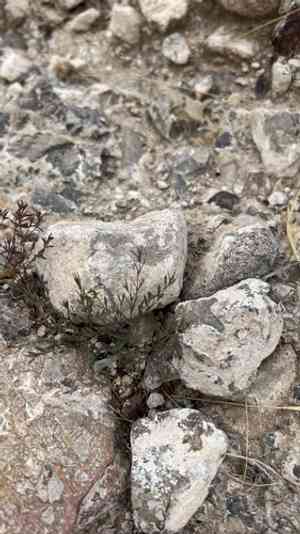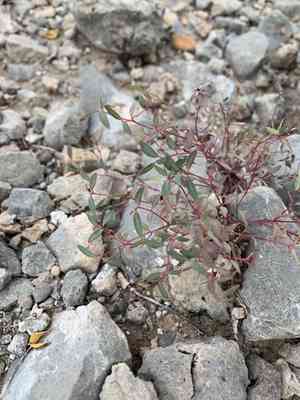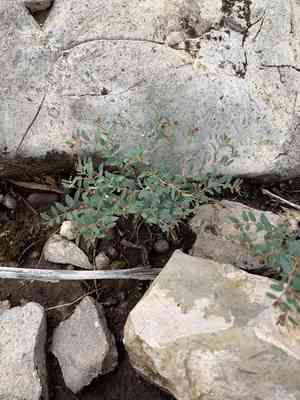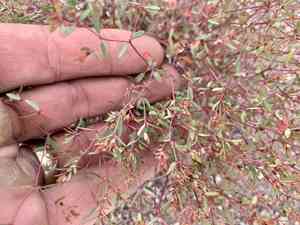
Bristlecup sandmat(Euphorbia chaetocalyx)

Bristlecup sandmat (Euphorbia chaetocalyx)

Also known as: Chaetocalyx Spurge

Bristlecup sandmat (Chamaesyce setiloba) is well-adapted to arid environments through several distinctive features. Unlike some succulents, its leaves are small and narrow, minimizing water loss. The plant's deep root system enables it to reach water reserves far below the surface. Its stems feature bristle-like structures, providing a unique texture that may help reduce water loss and deter herbivores. Additionally, bristlecup sandmat uses the water-efficient C4 photosynthesis pathway and can complete its life cycle rapidly, capitalizing on brief periods of moisture. These combined traits ensure its survival and resilience in dry, sun-soaked habitats.

Attributes of Bristlecup sandmat

Lifespan
Perennial
Plant Type
Shrub, Succulent
Plant Height
20-50 cm
Spread
10-30 cm
Leaf Color
Green
Flower Size
2-5 mm
Flower Color
Greenish-yellow

ForwardPlant - Identify plants with a snap

Identify and diagnose plants, get toxicity alerts, and explore safety guides for all types of fungi.

Try for Free

Images of Bristlecup sandmat

Bristlecup sandmat(Euphorbia chaetocalyx)

Quickly Identify Bristlecup sandmat

1
Identification can be done by observing its spiky stems and small, greenish-yellow flowers. The leaves are typically small and arranged in an alternate pattern.

Scientific Classification of Bristlecup sandmat

Phylum
Vascular plants
Class
Dicotyledons
Order
Malpighiales
Family
Spurge
Genus
Spurges
Species
Bristlecup sandmat

Planting and Growing of Bristlecup sandmat

Care Difficulty
Moderate
Watering Schedule
Every 2 days
Sunlight Requirements
Full sun
Sunshine Duration
6-12 hours
Ideal Temperature
65-75℉
Soil Type
Potting Mix, Peat Mix
Soil pH
6.5-7.5
Fertilizer Type
Balanced
Pruning Season
Spring, Summer
Pruning Area
Branches, Leaves
Pruning Frequency
2 times a year
Repotting Season
Spring
Pot Type
Terracotta, Plastic

water icon How to Water Bristlecup sandmat?

For Euphorbia chaetocalyx, ensure the soil is thoroughly moistened without becoming waterlogged. A single watering should use about 150 milliliters, enough to reach the roots but not so much that water runs out of the drainage holes excessively.
What are the symptoms of an underwatered Bristlecup sandmat?
What should I do if my Bristlecup sandmat is not getting enough water?
What are the symptoms of an overwatered Bristlecup sandmat?
How to save an overwatered Bristlecup sandmat?

sunlight icon What Are the Sunlight Requirements for Bristlecup sandmat?

Sunlight Requirements: Full sun, Partial sun
Duration of light: 6 to 8 hours
Euphorbia chaetocalyx thrives in full to partial sun exposure, benefiting from about 6 to 8 hours of light daily. This light range supports optimal growth, vibrancy, and resilience against environmental stresses.
What type of sunlight is best for Euphorbia chaetocalyx?
How can you ensure Euphorbia chaetocalyx receives ideal lighting?
What are the benefits of ideal lighting for Euphorbia chaetocalyx?

temperature icon What Is the Ideal Temperature Range for Bristlecup sandmat?

Ideal Temperature: 65 ~ 75℉
For the optimal growth of Euphorbia chaetocalyx, it is essential to maintain the temperature between 65°F and 75°F. This range supports robust growth and helps the plant produce vibrant foliage. Consistent exposure to these temperatures facilitates efficient metabolic processes and prevents stress-related issues.

soil icon What Soil is Best for Bristlecup sandmat?

Soil type: Sandy soil, Loam
Soil PH: 6.5 ~ 7.5
Euphorbia chaetocalyx thrives best in well-drained soil because it prevents waterlogging, which can lead to root rot. A well-aerated environment encourages root growth and enhances nutrient absorption, promoting healthier plant development. This plant favors soil with moderate fertility. Overly rich soil might cause excessive foliage at the expense of flowers, whereas moderately fertile soil supports balanced growth and sustains blooms without overwhelming nutrient levels. Euphorbia chaetocalyx prefers slightly alkaline conditions with a pH near the upper range of its tolerance. Such conditions help in optimizing nutrient availability and contribute to maintaining its vibrant foliage and blooms.

fertilize icon How to Fertilize Bristlecup sandmat?

Fertilizer type: Balanced
Euphorbia chaetocalyx benefits from a balanced nutrient supply typical of arid climate succulents. Use a diluted balanced fertilizer solution (e.g., 1/4 strength) during the growing season to avoid over-fertilization, which is crucial for maintaining vibrant and healthy growth.

prune icon How to Prune Bristlecup sandmat?

Pruning Time: Spring, Summer
Begin by inspecting Euphorbia chaetocalyx for any dead or diseased parts. Use sharp, sterilized scissors or pruning shears to remove these parts back to a healthy section of the plant. This will prevent disease from spreading and improve airflow around the plant. Next, shape the plant by cutting back long branches to maintain a compact form. Always cut back to a node or a pair of leaves to encourage branching. More About Pruning Techniques

propagate icon How to Propagate Bristlecup sandmat plant?

Propagate Time: Spring, Early summer
1
Choose a vigorously growing, disease-free parent plant. Spending time on selecting the best possible parent plant increases the likelihood of successful propagation and healthy new plants.
2
Harvest seeds from mature fruits when they have adequately dried. Clean them off any fruit residue and dry thoroughly to prevent mold and increase germination success during sowing.
3
Use sterilized shears to take cuttings from non-flowering stems, ensuring each cutting is about 2-4 inches long with several leaves. Remove lower leaves to minimize moisture loss.
More About Propagating Techniques

repot icon How to Repot Bristlecup sandmat plant?

Repotting frequency: Every 2-3 years
1
Euphorbia chaetocalyx should be repotted when you notice roots coming out of the drainage holes, signs of the plant becoming root-bound, or soil that is compacted and not retaining moisture well. These are indicators that the plant requires more space to grow and fresh soil to thrive.
2
Select a pot that is one size larger than the current one with drainage holes to prevent waterlogging. A slightly larger pot provides enough space for roots to expand while maintaining good drainage, ensuring the plant doesn't suffer from root rot.
3
Opt for a well-draining cactus mix for repotting. This type of soil is airy and allows excess water to pass through, preventing water retention that can lead to root rot. It mimics the plant's native environment, promoting healthy growth.

ForwardPlant - Identify plants with a snap

Find the best spots for them to optimize their health, simply using your phone.

Try for Free

Toxicity

Ingestion, Skin Contact

Identify toxic plants for your safety

Learn which plants are harmful to you and your pets, and make informed choices for a safer home!

Try for Free
WARNING
The judgment on toxicity and danger is for reference only. We DO NOT GUARANTEE any accuracy of such judgment. Therefore, you SHALL NOT rely on such judgment. It is IMPORTANT TO SEEK PROFESSIONAL ADVICE in advance when necessary.