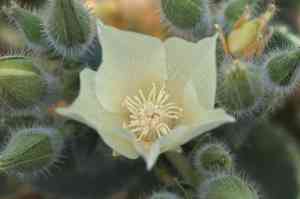
Desert stingbush (Eucnide urens)
Also known as: Velcro plant
The desert stingbush is a modest-sized shrub known for its attractive, cream-colored flowers with five petals. However, its leaves are adorned with stinging hairs, which is how it got its name. This plant is indigenous to the desert regions of the western United States.
In This Article
Attributes of Desert stingbush
Lifespan
Perennial
Plant Type
Shrub
Plant Height
30 cm to 60 cm
Spread
60 cm to 1.2 m
Leaf Color
Green
Flower Size
5 cm
Flower Color
White Yellow
Images of Desert stingbush
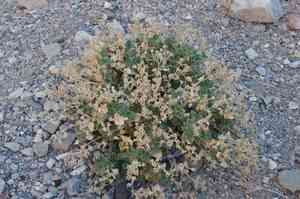
Quickly Identify Desert stingbush
1
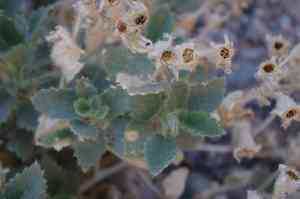
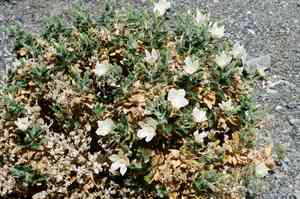
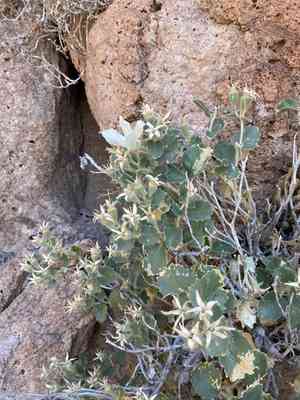
Look for its distinctive stinging hairs on the stems and leaves, the heart-shaped leaves, and the small white to yellow flowers.
Scientific Classification of Desert stingbush
Phylum
Vascular plants
Class
Dicotyledons
Order
Cornales
Family
Loasa
Genus
Stingbushes
Species
Desert stingbush
Planting and Growing of Desert stingbush
Care Difficulty
Easy
Watering Schedule
Every 2 days
Sunlight Requirements
Full sun
Sunshine Duration
6-10 hours
Ideal Temperature
70-85℉
Soil Type
Potting Mix, Peat Mix
Soil pH
6.5-7.5
Fertilizer Type
Balanced
Pruning Season
Spring, Summer
Pruning Area
Branches, Leaves
Pruning Frequency
2 times a year
Repotting Season
Spring
Pot Type
Plastic, Ceramic
 How to Water Desert stingbush?
For Eucnide urens, water each time with about 200 milliliters. This plant requires moderate moisture, so be sure the top inch of the soil is dry before re-watering. The soil should be moist but not waterlogged.
What are the symptoms of an underwatered Desert stingbush?
›
What should I do if my Desert stingbush is not getting enough water?
›
What are the symptoms of an overwatered Desert stingbush?
›
How to save an overwatered Desert stingbush?
›
 What Are the Sunlight Requirements for Desert stingbush?
Eucnide urens thrives in full sun with some partial shade, benefiting from an ideal range that fosters robust growth and maximizes photosynthetic effectiveness.
What is the best lighting condition?
›
How can I achieve ideal lighting?
›
What are the benefits of ideal light conditions?
›
 What Is the Ideal Temperature Range for Desert stingbush?
Eucnide urens thrives best in environments where temperatures are consistently between 70°F and 85°F. This temperature range supports optimal growth, ensuring the plant can photosynthesize efficiently and maintain its metabolic processes. Maintaining these conditions throughout the day and night ensures that the plant remains healthy and vigorous.
 What Soil is Best for Desert stingbush?
Eucnide urens thrives in well-drained soils which allow excess water to flow away easily. This trait prevents root rot and ensures that the plant receives optimal oxygen levels, crucial for its development and vibrancy. The plant benefits from a balanced nutrient supply that sandy loam provides. Essential nutrients support its growth and flowering, promoting a robust plant structure and vibrant blooms. Loamy soils balance moisture retention with drainage, offering Eucnide urens a steady supply of water without risking oversaturation. This condition supports sustained growth, particularly in dry climates.
 How to Fertilize Desert stingbush?
Eucnide urens, commonly known as 'desert stingbush', requires careful fertilization to thrive. Liquid fertilizers should be applied at a half-strength concentration, ensuring a balanced mix of essential nutrients to cater to its modest requirements. One should avoid excessive nitrogen to prevent stunted growth and maintain the plant’s natural vigor.
 How to Prune Desert stingbush?
Start by scouting your Eucnide urens for any dead or damaged stems. They are usually brown or greyish. Removing these helps the plant focus its energy on producing new, healthy growth. While cutting back Eucnide urens, avoid over-pruning. Trim about a third of the oldest growth, staying mindful not to strip away too much foliage, which can stress the plant. Once dead growth is removed, focus on shaping your Eucnide urens. Trim wayward branches to maintain a compact and appealing form, promoting uniform sunlight exposure and airflow.
More About Pruning Techniques→
 How to Propagate Desert stingbush plant?
1
Fill the seed trays with a well-draining potting mix. Lightly moisten the mix before sowing the seeds, ensuring it is damp but not waterlogged to provide an optimal environment for seed germination.
2
Scatter the Eucnide urens seeds evenly over the potting mix, or plant them in small groups. Cover with a thin layer of potting mix, pressing down gently to ensure good seed-to-soil contact, which aids in successful germination.
3
Place the seed trays in a warm, bright location but out of direct sunlight. Monitor the moisture levels and maintain consistent humidity by covering the trays with a clear lid or plastic wrap to ensure successful germination.
 How to Repot Desert stingbush plant?
1
Eucnide urens typically shows signs for repotting when its roots begin to circle the pot's interior or if you notice reduced growth and vitality. This usually occurs every couple of years, primarily during the growing season, when the plant is most resilient. Look for new growth spurts in spring or early summer to signify an optimal repotting moment.
2
Choose a pot with ample drainage holes and one that is slightly larger than the current container. The material should be porous like terracotta, which allows excess moisture to evaporate, thus preventing root rot. Choosing the right pot ensures stability and health for your plant, reducing future complications.
3
Opt for a well-draining cactus soil mix, rich in minerals but low in organic matter to mimic the natural rocky habitat of Eucnide urens. Such soil prevents waterlogging and encourages sturdy root development, promoting a robust and thriving plant.
Toxicity
Contact with the plant
WARNING
The judgment on toxicity and danger is for reference only. We DO NOT GUARANTEE any accuracy of such judgment. Therefore, you SHALL NOT rely on such judgment. It is IMPORTANT TO SEEK PROFESSIONAL ADVICE in advance when necessary.
Learn More About Desert stingbush Diseases
Anthracnose
Bacterial Leaf Spot
Bacterial Soft Rot
Bacterial Wilt
Black Spot
Chemical Injury
Crown Gall
Cyst Nematode
Damping-off
Downy Mildew
Drought Stress
Fusarium Wilt
Gray Mold
Leaf Curl
Leaf Spot
Mosaic
Nutrient Deficiency
Nutrient Toxicity
Powdery Mildew
Root Rot
Root-knot Nematode
Rusts
Sooty Mold
Spider Mites
Temperature Stress
Thrips Damage
White Mold



