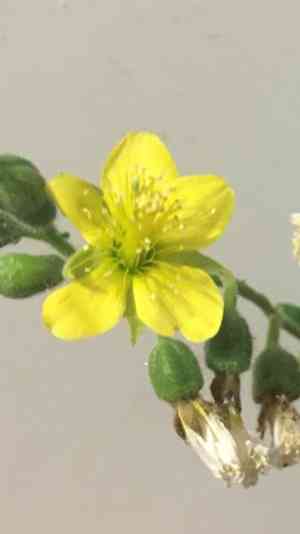
Lobed-leaf stingbush (Eucnide lobata)
Also known as: Rocknettle
The lobed-leaf stingbush is a hardy shrub well-suited to arid environments, characterized by its small, lobed leaves designed to minimize water loss. Its deep root system efficiently taps into underground water sources, and a waxy coating on the leaves helps retain moisture. Additionally, the plant produces striking white flowers that stand out against its rough habitat, adding a touch of beauty to its resilient nature.
In This Article
Attributes of Lobed-leaf stingbush
Lifespan
Perennial
Plant Type
Herb
Plant Height
30-60 cm
Spread
20-50 cm
Leaf Color
Green
Flower Size
1-2 cm
Flower Color
Yellow
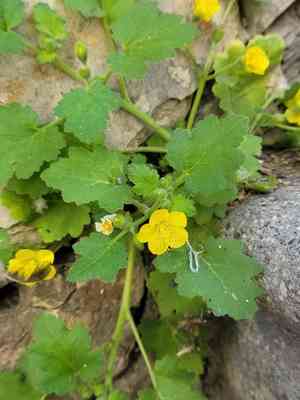
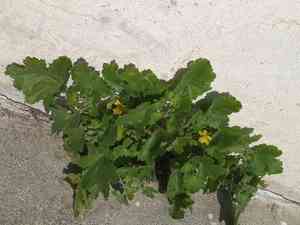
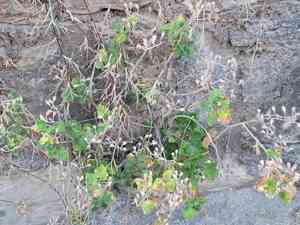
Images of Lobed-leaf stingbush
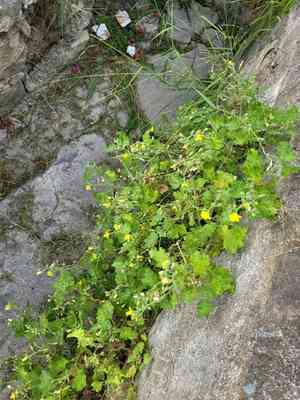
Quickly Identify Lobed-leaf stingbush
1
Identifying Eucnide lobata involves noting its lobed leaves, which are covered in fine, stinging hairs. The plant also produces small clusters of yellowish flowers and tends to grow in rocky or arid environments.
Scientific Classification of Lobed-leaf stingbush
Phylum
Vascular plants
Class
Dicotyledons
Order
Cornales
Family
Loasa
Genus
Stingbushes
Species
Lobed-leaf stingbush
Planting and Growing of Lobed-leaf stingbush
Care Difficulty
Moderate
Watering Schedule
Every 2 days
Sunlight Requirements
Full sun
Sunshine Duration
4-6 hours
Ideal Temperature
68-77℉
Soil Type
Potting Mix, Peat Mix
Soil pH
6.5-7.5
Fertilizer Type
Balanced
Pruning Season
Spring, Summer
Pruning Area
Branches, Leaves
Pruning Frequency
2 times a year
Repotting Season
Spring
Pot Type
Plastic, Ceramic
 How to Water Lobed-leaf stingbush?
Eucnide lobata prefers a moderate watering regime. Ensure that the soil is thoroughly soaked when you water it, but let it dry out slightly before the next watering session. This plant naturally exists in slightly arid environments and appreciates a careful balance rather than being consistently wet.
What are the symptoms of an underwatered Lobed-leaf stingbush?
›
What should I do if my Lobed-leaf stingbush is not getting enough water?
›
What are the symptoms of an overwatered Lobed-leaf stingbush?
›
How to save an overwatered Lobed-leaf stingbush?
›
 What Are the Sunlight Requirements for Lobed-leaf stingbush?
The ideal light range for Eucnide lobata is full sun to partial sun, indicating a need for abundant light for optimal growth. This exposure strengthens photosynthesis, encourages vigorous growth, and enhances the plant’s flowering ability, making it aesthetically pleasing.
Where should Eucnide lobata be placed?
›
How to ensure proper light exposure?
›
Benefits of ideal lighting for Eucnide lobata?
›
 What Is the Ideal Temperature Range for Lobed-leaf stingbush?
The ideal temperature range for Eucnide lobata, between 68°F and 77°F, ensures optimal growth conditions by maintaining sufficient warmth. This range facilitates photosynthesis, nutrient uptake, and overall plant metabolism, helping the plant to thrive and produce healthy blooms. Staying within these temperatures also helps avoid heat or cold stress, which could lead to growth abnormalities or plant damage.
 What Soil is Best for Lobed-leaf stingbush?
Eucnide lobata thrives in soil that drains well. This prevents waterlogging, which can lead to root rot. Ensuring proper drainage encourages robust root development and healthy plant growth. This plant benefits from a soil that's rich in organic matter. Nutrient-rich soils provide essential minerals that support the plant’s overall health and vibrant foliage. Eucnide lobata prefers soil with a friable and loose structure. This aeration allows roots to expand easily and enhances oxygen availability, leading to improved plant vitality.
 How to Fertilize Lobed-leaf stingbush?
For Eucnide lobata, apply liquid fertilizer at a rate of 1/4 to 1/2 teaspoon per gallon of water. Slow-release granules should be used sparingly, approximately one tablespoon per plant, to avoid root burn.
 How to Prune Lobed-leaf stingbush?
Start by sterilizing your pruning shears to prevent disease transmission. Identify dead, diseased, or damaged branches and cut them back to the main stem. Trim any overgrown areas to shape the plant, ensuring you keep the natural growth habit in mind. Make clean cuts near leaf nodes to encourage branching.
More About Pruning Techniques→
 How to Propagate Lobed-leaf stingbush plant?
1
Collect seeds from mature Eucnide lobata plants. Clean the seeds to remove any debris, which helps prevent fungal infections during germination. Soak seeds in water overnight to enhance germination rates.
2
Fill the seed trays with a well-draining potting mix. Moisten the soil lightly before sowing the seeds approximately 1/4 inch deep. Ensure they are spaced evenly to avoid overcrowding as they grow.
3
Select healthy, non-flowering stems from a mature Eucnide lobata plant. Using pruning shears, cut 4-6 inch sections at a 45-degree angle. Remove the lower leaves to prevent rot and dip in rooting hormone.
 How to Repot Lobed-leaf stingbush plant?
1
You will know it's time to repot your Eucnide lobata when you notice that its roots are filling up the pot and starting to show through the drainage holes. Additionally, if the plant's growth has slowed down noticeably or the soil dries out too quickly, these are signals suggesting it’s time for a bigger pot.
2
When selecting a pot for your Eucnide lobata, opt for one that is slightly larger than the current pot, with plenty of drainage holes. The extra space will give roots room to expand, while good drainage will prevent water from accumulating, which can lead to root rot.
3
Utilize a well-draining cactus mix as it ensures quick drainage and permits the necessary aeration that Eucnide lobata needs. A soil mix with these properties prevents waterlogging and helps to maintain optimal root health, fostering vigorous plant growth.
Toxicity
Skin contact
WARNING
The judgment on toxicity and danger is for reference only. We DO NOT GUARANTEE any accuracy of such judgment. Therefore, you SHALL NOT rely on such judgment. It is IMPORTANT TO SEEK PROFESSIONAL ADVICE in advance when necessary.
Learn More About Lobed-leaf stingbush Diseases
Anthracnose
Bacterial Leaf Spot
Bacterial Soft Rot
Bacterial Wilt
Black Spot
Chemical Injury
Crown Gall
Cyst Nematode
Damping-off
Downy Mildew
Drought Stress
Fusarium Wilt
Gray Mold
Leaf Curl
Leaf Spot
Mosaic
Nutrient Deficiency
Nutrient Toxicity
Powdery Mildew
Root Rot
Root-knot Nematode
Rusts
Sooty Mold
Spider Mites
Temperature Stress
Thrips Damage
White Mold



