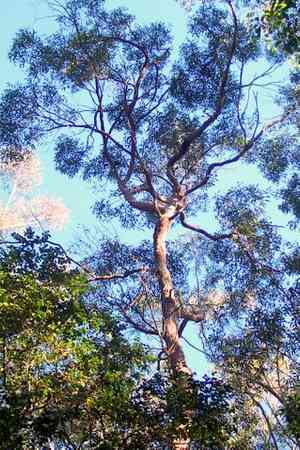
Redmahogany(Eucalyptus resinifera)

Redmahogany (Eucalyptus resinifera)

Also known as: Red Mahogany

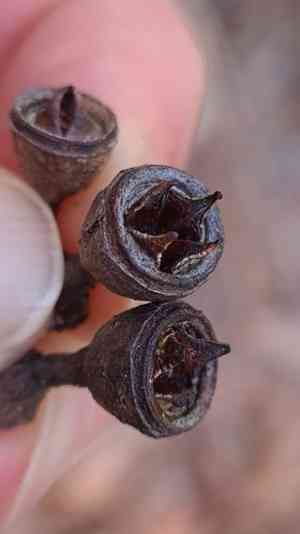
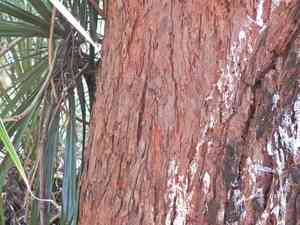
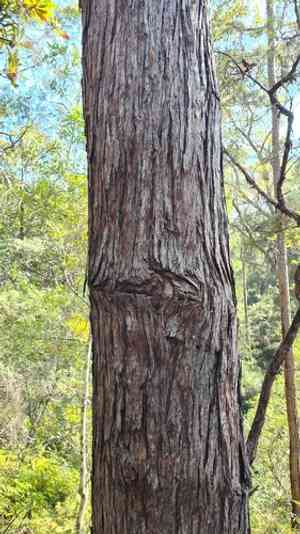
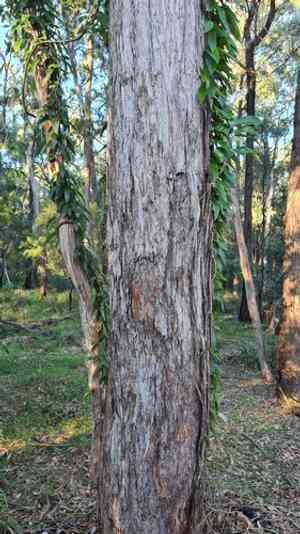
The Red Mahogany tree (Eucalyptus resinifera) is a tall, evergreen species notable for its rough, reddish-brown bark and slender, lance-shaped leaves. It produces clusters of small, white to cream flowers that are attractive to pollinators.

Preferred growing conditions for the Red Mahogany include:
- Climate: Warm temperate to tropical areas.
- Soil: Prefers well-drained, fertile soils but is adaptable to various soil types.
- Sunlight: Requires full sun exposure.
- Water: Moderate water needs; it is relatively drought-tolerant once established.
- Location: Typically found in coastal regions and areas with higher rainfall.

The tree's robust root system aids in its adaptability and widespread growth. Red Mahogany is valued for its hard, durable wood, making it popular for construction and furniture.

Attributes of Redmahogany

Lifespan
Perennial
Plant Height
Up to 45 meters (147 feet)
Spread
7 to 15 meters (23 to 49 feet)
Leaf Color
Dark green
Flower Size
Up to 2 cm (0.8 inches)
Flower Color
White

ForwardPlant - Identify plants with a snap

Identify and diagnose plants, get toxicity alerts, and explore safety guides for all types of fungi.

Try for Free

Images of Redmahogany

Redmahogany(Eucalyptus resinifera)

Quickly Identify Redmahogany

1
Look for a tall tree with a straight trunk and greyish bark that peels off in long ribbons. The leaves are dark green and the tree produces clusters of white flowers.

Scientific Classification of Redmahogany

Phylum
Vascular plants
Class
Dicotyledons
Order
Myrtales
Family
Myrtle
Genus
Eucalypts
Species
Redmahogany

Planting and Growing of Redmahogany

Care Difficulty
Moderate
Watering Schedule
Every 2 days
Sunlight Requirements
Full sun
Sunshine Duration
4-6 hours
Ideal Temperature
60-75℉
Soil Type
Potting Mix, Peat Mix
Soil pH
5-7.5
Fertilizer Type
Balanced
Pruning Season
Spring, Summer
Pruning Area
Branches, Leaves
Pruning Frequency
2 times a year
Repotting Season
Spring
Pot Type
Plastic, Ceramic

water icon How to Water Redmahogany?

Eucalyptus resinifera prefers a moderate watering schedule. You should aim to provide enough water to thoroughly moisten the soil, allowing excess to drain away. This ensures that the roots reach deep yet avoid waterlogging, which can be detrimental.
What are the symptoms of an underwatered Redmahogany?
What should I do if my Redmahogany is not getting enough water?
What are the symptoms of an overwatered Redmahogany?
How to save an overwatered Redmahogany?

sunlight icon What Are the Sunlight Requirements for Redmahogany?

Sunlight Requirements: Full sun
Duration of light: 6 to 8 hours
Eucalyptus resinifera requires full sun, meaning six to eight hours of direct sunlight daily. This ensures optimum growth and development, aiding in robust physiological functions.
What is the ideal light exposure for Eucalyptus resinifera?
How can you ensure Eucalyptus resinifera gets its ideal lighting?
What benefits does ideal light offer to Eucalyptus resinifera?

temperature icon What Is the Ideal Temperature Range for Redmahogany?

Ideal Temperature: 60 ~ 75℉
Eucalyptus resinifera thrives in environments where the temperatures are mild and steady. The ideal temperature range for these plants is between 60 and 75 degrees Fahrenheit. Within this range, Eucalyptus resinifera can maintain optimal growth and development, allowing it to exhibit its characteristic foliage and overall robust health.

soil icon What Soil is Best for Redmahogany?

Soil type: Sandy loam, Clay soil, Acidic soil
Soil PH: 5 ~ 7.5
Eucalyptus resinifera thrives best in soils with excellent drainage capabilities. Proper drainage helps prevent root rot by ensuring that excess water does not linger around the roots, promoting healthier growth and development. This species demands nutrient-rich soil to support its rapid growth. Ensuring ample availability of essential nutrients like nitrogen and phosphorus can significantly boost its development and overall health. A sandy loam texture is ideal as it allows for ample aeration while retaining necessary moisture. This balance aids in root development and supports the tree's structural integrity.

fertilize icon How to Fertilize Redmahogany?

Fertilizer type: Balanced
For Eucalyptus resinifera, the fertilization amount should be moderate. For liquid fertilizers, use approximately 1 liter of diluted solution per plant per application. For slow-release fertilizers, around 100 grams per square meter is adequate. Over-application can lead to nutrient imbalances and environmental issues.

prune icon How to Prune Redmahogany?

Pruning Time: Spring, Summer
Eucalyptus resinifera can grow large. Prune to control height and spread as desired or necessary, depending on the surroundings, such as proximity to buildings or other trees. Exercise caution when pruning tall branches; consider professional help if necessary. Wear protective gear and ensure ladders or climbing equipment are used securely. More About Pruning Techniques

propagate icon How to Propagate Redmahogany plant?

Propagate Time: Spring, Early spring, Late spring
1
Begin with gathering mature Eucalyptus resinifera seeds. Soak seeds in water for 24 hours to help soften the seed coat, which can enhance germination rates. After soaking, prepare them for planting by drying them and then placing them in seed trays filled with seed-starting mix.
2
Choose healthy parent plants and use sterilized pruning shears to cut 10-15 cm long semi-hardwood cuttings. Remove leaves from the lower half of the cuttings to reduce moisture loss and dip the cut ends in rooting hormone to stimulate root development.
3
For seeds, scatter them evenly over the surface of the soil and cover lightly. For cuttings, insert the cut end into a prepared pot with well-draining potting mix and firm the soil around it. Ensure they are stable and upright.
More About Propagating Techniques

repot icon How to Repot Redmahogany plant?

Repotting frequency: Every 2-3 years
1
Eucalyptus resinifera should be repotted when you notice its roots peeking out of the drainage holes or growing in circles at the base of the pot. This typically means the plant has outgrown its current home, and it's time to find more spacious accommodations. Additionally, if you observe that the soil surface dries out rapidly after watering, it's a sign the plant might be root-bound, indicating a need to repot.
2
Select a pot that is one size larger than the current one, ensuring it has ample drainage holes. A larger pot allows for healthy root expansion and prevents crowding, which can hamper the plant's growth. An adequately sized, well-drained pot will encourage robust growth and prevent waterlogging, reducing the risk of root rot in your eucalyptus.
3
Opt for a well-draining potting mix that replicates the eucalyptus' natural environment. A mix containing sand, loam, and a small amount of organic matter is ideal, as it ensures proper aeration and drainage. This helps prevent water retention, which can lead to root rot, and supports healthy root development.

ForwardPlant - Identify plants with a snap

Find the best spots for them to optimize their health, simply using your phone.

Try for Free