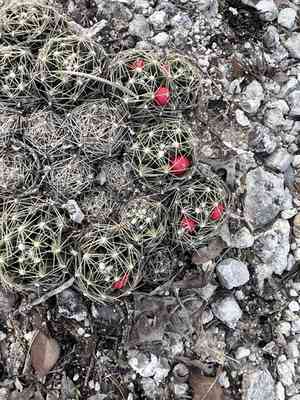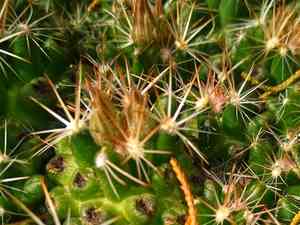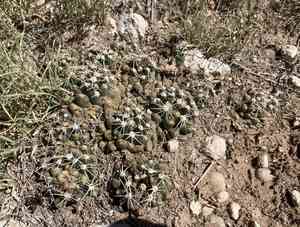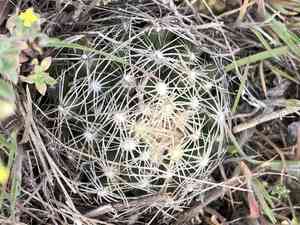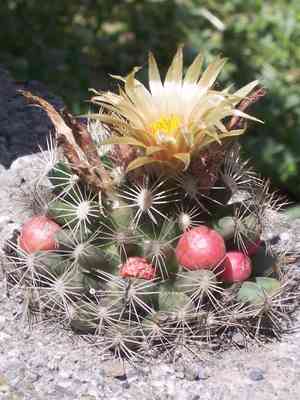
Missouri foxtail cactus(Escobaria missouriensis)

Missouri foxtail cactus (Escobaria missouriensis)

Also known as: Missouri pincushion

The Missouri foxtail cactus (Escobaria missouriensis) is a compact, clump-forming cactus that can expand up to 12 inches in diameter over time. Its surface is adorned with dense clusters of 6 to 21 spines. This cactus produces yellowish-green flowers from late spring to early summer, followed by bright red fruits in the fall.

**Growth Characteristics:**
- Clump-forming, reaching up to 12 inches in diameter
- Dense spines in clusters
- Yellowish-green flowers in late spring to early summer
- Bright red fruits ripen in fall

**Care Requirements:**
- **Light:** Prefers full sunlight
- **Soil:** Requires well-drained, sandy or rocky soil
- **Water:** Water sparingly; ensure soil dries out completely between watering
- **Temperature:** Can tolerate cold but needs protection from excessive winter moisture
- **Issues:** Susceptible to root rot, so maintaining low soil moisture is crucial

This cactus is ideal for rock gardens and xeriscaping, offering visual interest with minimal care.

Attributes of Missouri foxtail cactus

Lifespan
Perennial
Plant Type
Succulent
Plant Height
30 cm
Spread
30 cm
Leaf Color
N/A (cacti do not have typical leaves, but their stems are green)
Flower Size
1.9 cm to 4 cm
Flower Color
Yellow Green Pink

ForwardPlant - Identify plants with a snap

Identify and diagnose plants, get toxicity alerts, and explore safety guides for all types of fungi.

Try for Free

Images of Missouri foxtail cactus

Missouri foxtail cactus(Escobaria missouriensis)

Quickly Identify Missouri foxtail cactus

1
Identifying Escobaria missouriensis can be done by looking for its small, round shape with numerous tubercles and dense spines covering the surface. The flowers are typically yellowish-green to brownish in color.

Scientific Classification of Missouri foxtail cactus

Phylum
Vascular plants
Class
Dicotyledons
Order
Caryophyllales
Family
Cactuses
Genus
Foxtail cactus
Species
Missouri foxtail cactus

Planting and Growing of Missouri foxtail cactus

Care Difficulty
Easy
Watering Schedule
Every day
Sunlight Requirements
Full sun
Sunshine Duration
4-6 hours
Ideal Temperature
70-85℉
Soil Type
Potting Mix, Peat Mix
Soil pH
6.5-7.5
Fertilizer Type
Balanced
Pruning Season
Spring, Summer
Pruning Area
Branches, Leaves
Pruning Frequency
2 times a year
Repotting Season
Spring
Pot Type
Plastic, Ceramic

water icon How to Water Missouri foxtail cactus?

When watering Escobaria missouriensis, aim to thoroughly moisten the soil without causing it to become waterlogged. A volume of about 100 milliliters is generally sufficient, ensuring the water reaches the root zone but does not sit on the surface.
What are the symptoms of an underwatered Missouri foxtail cactus?
What should I do if my Missouri foxtail cactus is not getting enough water?
What are the symptoms of an overwatered Missouri foxtail cactus?
How to save an overwatered Missouri foxtail cactus?

sunlight icon What Are the Sunlight Requirements for Missouri foxtail cactus?

Sunlight Requirements: Full sun
Duration of light: 6-8 hours daily
The Escobaria missouriensis thrives in full sun conditions, ideally receiving 6-8 hours of sunlight daily. Proper light stimulates robust growth and supports outdoor acclimatization, resulting in a healthier, more resilient plant.
Optimal Location
Managing Shaded Areas
Balancing Natural and Artificial Light
More About Sunlight Requirements Techniques

temperature icon What Is the Ideal Temperature Range for Missouri foxtail cactus?

Ideal Temperature: 70 ~ 85℉
The ideal temperature range for Escobaria missouriensis is between 70°F and 85°F. This range is optimal for promoting healthy growth and development. It allows the cactus to photosynthesize efficiently while maintaining its overall cellular functions. These temperatures mimic the natural desert environment where the plant thrives best, ensuring robust growth and blooming.

soil icon What Soil is Best for Missouri foxtail cactus?

Soil type: Sandy soil, Sandy loam, Calcareous soil
Soil PH: 6.5 ~ 7.5
Escobaria missouriensis thrives in soil that drains exceptionally well. Proper drainage prevents root rot and other moisture-related diseases, promoting healthy growth. This cactus prefers soil with low organic matter, mimicking its natural arid environment. Such soil prevents excessive nutrient retention, which could be detrimental to its health. A soil low in fertility helps maintain the cactus's natural growth form. High nutrient levels can lead to unnatural rapid growth, making the plant susceptible to pests and diseases.

fertilize icon How to Fertilize Missouri foxtail cactus?

Fertilizer type: Balanced
Escobaria missouriensis requires a light hand when it comes to fertilization. Apply a diluted solution of cactus-specific fertilizer at half the recommended strength to avoid over-fertilization. The plant needs only a small amount, roughly a quarter to a half teaspoon per gallon of water, to thrive during its growing season.

prune icon How to Prune Missouri foxtail cactus?

Pruning Time: Spring, Summer, Autumn
Begin by ensuring your pruning tools are clean to prevent disease transmission. Carefully inspect Escobaria missouriensis to identify any dead or diseased stems. Using sharp, sterilized scissors, gently remove these sections, making clean cuts close to the base. Take care not to damage healthy parts of the cactus. If the plant becomes overgrown, you may also trim older stems to encourage new growth. Always prune during the active growing seasons to ensure quick recovery and robust regrowth.

propagate icon How to Propagate Missouri foxtail cactus plant?

Propagate Time: Spring, Late spring, Early spring
1
Collect seeds from mature Escobaria missouriensis plants and clean them thoroughly. Use a sterilized seed tray filled with seed-starting mix. Moisten the substrate evenly before planting.
2
Sow the seeds on the surface of the moist substrate, then cover them lightly with a thin layer of sand or vermiculite. Maintain humidity by covering the tray with a transparent lid or plastic wrap.
3
Select healthy segments from the cactus and use a clean, sharp knife to make a cut. Allow the cut ends to callous over for several days in a dry and ventilated area before planting.
More About Propagating Techniques

repot icon How to Repot Missouri foxtail cactus plant?

Repotting frequency: Every two to three years
1
Observe the Escobaria missouriensis for signs like roots emerging from drainage holes or the plant becoming too large for its container. These are clear indicators that it's time to give your plant more space to grow.
2
Select a pot that is slightly larger than the current one to prevent overwatering issues. Ensure it has drainage holes to avoid water retention. A terracotta pot can be ideal as it allows excess moisture to evaporate, keeping the roots healthy.
3
Opt for a well-draining cactus mix with components like sand and perlite. This prevents root rot by ensuring that water doesn't stagnate, which is crucial for the plant’s health. The soil should mimic its natural rocky habitat.

ForwardPlant - Identify plants with a snap

Find the best spots for them to optimize their health, simply using your phone.

Try for Free