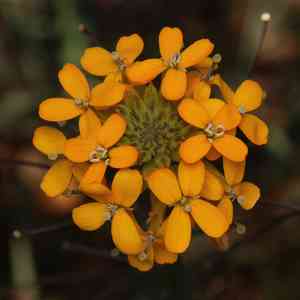
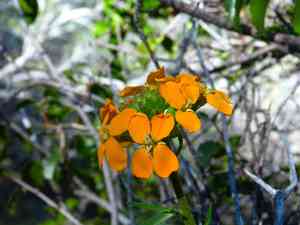
Western wallflower (Erysimum capitatum)
Also known as: Prairie rocket, Alpine wallflower
Erysimum capitatum, commonly known as Western Wallflower, is a North American native species. It typically grows on walls, fences, rocky terrains, and clay-rich soils. This plant is also excellent for attracting pollinators such as bees.
In This Article
Attributes of Western wallflower
Lifespan
Perennial, Biennial
Plant Type
Herb
Plant Height
61 cm to 1.2 m
Spread
30 cm
Leaf Color
Green
Flower Size
2.5 cm
Flower Color
Yellow Orange
Images of Western wallflower
Quickly Identify Western wallflower
1
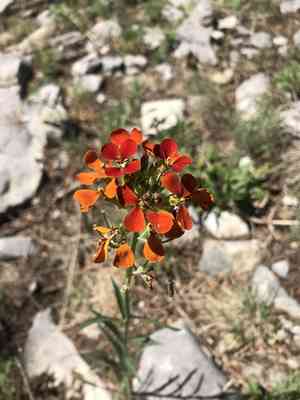
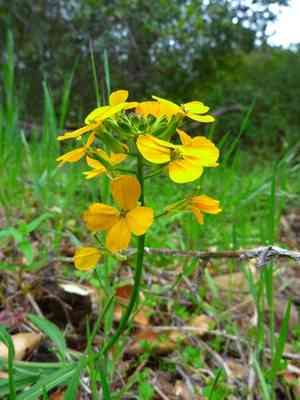
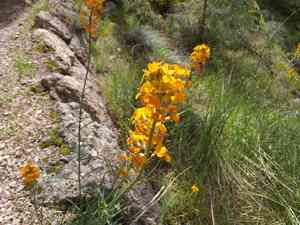
Erysimum capitatum can be identified by its bright yellow to orange flowers, which are clustered at the top of a long, unbranched stem. The leaves are lance-shaped and may have a slight toothed margin.
Scientific Classification of Western wallflower
Phylum
Vascular plants
Class
Dicotyledons
Order
Brassicales
Family
Cruciferae
Genus
Wallflower
Species
Western wallflower
Planting and Growing of Western wallflower
Care Difficulty
Easy
Watering Schedule
Every 4 days
Sunlight Requirements
Full sun
Sunshine Duration
4-8 hours
Ideal Temperature
55-75℉
Soil Type
Potting Mix, Peat Mix
Soil pH
6.5-7.5
Fertilizer Type
Balanced
Pruning Season
Spring, Summer
Pruning Area
Branches, Leaves
Pruning Frequency
Once a year
Repotting Season
Spring
Pot Type
Ceramic, Plastic
 How to Water Western wallflower?
When watering Erysimum capitatum, it is essential to give the plant around 250ml of water per session. This is based on the principle that the soil needs to be kept moist but not soggy, allowing the plant to thrive without sitting in water, which can lead to root rot.
What are the symptoms of an underwatered Western wallflower?
›
What should I do if my Western wallflower is not getting enough water?
›
What are the symptoms of an overwatered Western wallflower?
›
How to save an overwatered Western wallflower?
›
 What Are the Sunlight Requirements for Western wallflower?
For optimal health, Erysimum capitatum should be placed in an area receiving full sun to partial sun. Ideal lighting conditions ensure proper bloom and vigorous, healthy foliage.
More About Sunlight Requirements Techniques→
How much direct sunlight does it need?
›
What if the plant doesn't receive enough sunlight?
›
How can I maximize sunlight exposure?
›
 What Is the Ideal Temperature Range for Western wallflower?
Erysimum capitatum thrives best in temperatures between 55°F and 75°F. This range encourages optimal growth and flowering. Maintaining these temperatures will help ensure the plant develops strong roots and vibrant blooms.
 What Soil is Best for Western wallflower?
Erysimum capitatum thrives best in well-drained soils, which prevents waterlogging and root rot. Well-drained soil ensures that the roots receive the necessary oxygen and nutrients, leading to healthier plant growth. This plant prefers moderately fertile soils, which means that the soil should have enough nutrients to sustain growth but not so much as to cause excessive leaf growth over flowering. Balanced fertility supports vibrant blooms. Erysimum capitatum can be sensitive to high soil salinity, which can impair water uptake and nutrient absorption. Ensuring low-salinity conditions helps in maintaining the plant's vigor and flower production.
 How to Fertilize Western wallflower?
It's crucial to understand that Erysimum capitatum doesn't require heavy feeding. A balanced liquid fertilizer, diluted to half strength, should be applied sparingly. For solid fertilizers, a general-purpose granular mix will suffice if applied correctly.
 How to Prune Western wallflower?
One effective way to prune Erysimum capitatum is by removing spent flower heads. This allows the plant to focus energy on producing new blooms rather than seed production, encouraging more vibrant flowering throughout its growth season. Cut back slender, leggy stems to maintain the bushy appearance of the plant. Trim back excessive growth to encourage sturdier stem development and to prevent the plant from toppling under the weight of its own blossoms. Shape Erysimum capitatum into a pleasing form by trimming lateral stems. This promotes a compact habit, ideal for garden aesthetics, and encourages healthier airflow through the foliage, reducing fungal pressures.
More About Pruning Techniques→
 How to Propagate Western wallflower plant?
1
Collect seeds from mature Erysimum capitatum plants in early spring when the seed pods have dried out. Dry the seeds thoroughly before storage or planting to ensure high germination rates.
2
Take 4-6 inch cuttings from healthy stems during early spring. Remove the leaves from the lower half, and dip the cut end in rooting hormone to enhance root development.
3
Sow seeds about 1/4 inch deep in seed trays with moist soil. For cuttings, plant them in a well-draining substrate, ensuring that at least one leaf node is covered by the medium.
 How to Repot Western wallflower plant?
1
Erysimum capitatum shows signs for repotting when its roots start to emerge from the drainage holes, indicating it has outgrown its current home. Additionally, if growth slows or the plant seems cramped, it's a cue that repotting is necessary. The best time is during the growth phases, capturing the plant's active period.
2
Select a pot that is one size larger than the current one, ensuring it has adequate drainage holes. This helps prevent waterlogging, promoting healthy root development. The pot material, whether ceramic or plastic, should be compatible with your watering habits and local climate conditions.
3
The soil for Erysimum capitatum needs to be well-draining and sandy, replicating its natural habitat to prevent root rot. A mix of potting soil with sand or perlite ensures that excess water drains efficiently, supporting the plant's growth and vitality.
Toxicity
Ingestion
WARNING
The judgment on toxicity and danger is for reference only. We DO NOT GUARANTEE any accuracy of such judgment. Therefore, you SHALL NOT rely on such judgment. It is IMPORTANT TO SEEK PROFESSIONAL ADVICE in advance when necessary.
Learn More About Western wallflower Diseases
Anthracnose
Bacterial Leaf Spot
Bacterial Soft Rot
Clubroot
Crown Gall
Cyst Nematode
Damping-off
Downy Mildew
Drought Stress
Fusarium Wilt
Gray Mold
Leaf Spot
Mosaic
Nutrient Deficiency
Nutrient Toxicity
Powdery Mildew
Root Rot
Root-knot Nematode
Rusts
Sooty Mold
Spider Mites
Temperature Stress
Thrips Damage
White Mold



