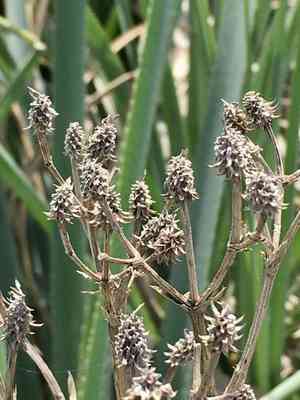
Giant sea holly (Eryngium pandanifolium)
Also known as: Giant Sea Holly, Pandan-Leaf Sea Holly
Giant sea holly, with its sword-like leaves reminiscent of the pandanus, boasts a robust architecture that thrives in sunny, well-drained sites. Its striking flowerheads, encased in spiky bracts, radiate a metallic blue to greenish hue, attracting attention in any garden setting. This hardy perennial adapts well to dry conditions, leveraging its distinctive foliage to create a dramatic visual impact.
In This Article
Attributes of Giant sea holly
Lifespan
Perennial
Plant Type
Herb
Plant Height
50 cm
Spread
50 cm
Leaf Color
Blue Green
Flower Size
2 to 3 centimeters
Flower Color
Purple Brown Gray Silver
Images of Giant sea holly
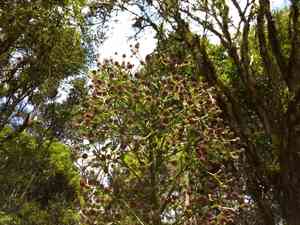
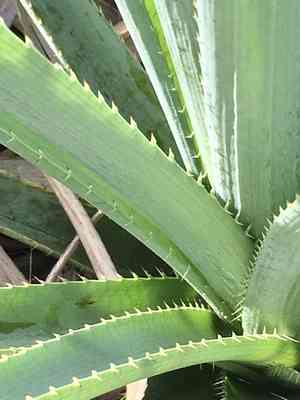
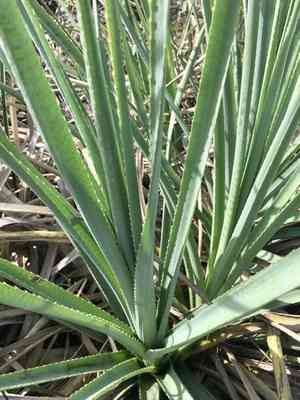
Quickly Identify Giant sea holly
1
To identify Eryngium pandanifolium, look for its long, sword-shaped leaves with serrated edges and tall, spiky flower stalks that bear numerous small, globular flowers. The leaves are tough and leathery, typically growing in a rosette form.
Scientific Classification of Giant sea holly
Phylum
Vascular plants
Class
Dicotyledons
Order
Apiales
Family
Umbellifers
Genus
Eryngos
Species
Giant sea holly
Planting and Growing of Giant sea holly
Care Difficulty
Moderate
Watering Schedule
Every 2 days
Sunlight Requirements
Full sun
Sunshine Duration
6-10 hours
Ideal Temperature
60-77℉
Soil Type
Potting Mix, Peat Mix
Soil pH
6.5-7.5
Fertilizer Type
Balanced
Pruning Season
Spring, Summer
Pruning Area
Leaves, Branches
Pruning Frequency
2 times a year
Repotting Season
Spring
Pot Type
Plastic, Ceramic
 How to Water Giant sea holly?
Eryngium pandanifolium enjoys a generous drink, but it doesn't like to sit in waterlogged soil. When watering, ensure that the top few inches of soil are fully moistened but the water drains quickly to prevent root rot.
What are the symptoms of an underwatered Giant sea holly?
›
What should I do if my Giant sea holly is not getting enough water?
›
What are the symptoms of an overwatered Giant sea holly?
›
How to save an overwatered Giant sea holly?
›
 What Are the Sunlight Requirements for Giant sea holly?
Ideally, Eryngium pandanifolium should be placed in an area receiving full to partial sun. This ensures efficient photosynthesis, promoting lush foliage and stronger blooms, contributing to a visually pleasing and healthy plant.
What is the best location for Eryngium pandanifolium?
›
How can I enhance the lighting conditions for Eryngium pandanifolium?
›
What are the benefits of providing optimal lighting to Eryngium pandanifolium?
›
 What Is the Ideal Temperature Range for Giant sea holly?
Eryngium pandanifolium thrives best in temperatures ranging from 60°F to 77°F. This temperature range mimics their native environment and supports optimal growth and flowering. Consistent temperatures within this range help maintain healthy foliage and promote robust flowering. Deviations can impact plant health, causing stress and leading to weaker growth or reduced flowering.
 What Soil is Best for Giant sea holly?
Eryngium pandanifolium thrives best in well-draining soil as it prevents root rot and fungal diseases. Proper drainage ensures that the roots get the oxygen they need, promoting vigorous growth and resilience against pest issues. This plant prefers soil with moderate fertility. Too much organic matter can lead to excessive foliage at the expense of flowering, while moderate nutrients ensure balanced growth and vibrant bloom presence. A pH range of 6.5 to 7.5 is ideal. Soil in this range allows the plant to uptake essential nutrients efficiently, resulting in robust health and visually striking foliage.
 How to Fertilize Giant sea holly?
For Eryngium pandanifolium, it is crucial to apply fertilizers moderately to avoid nutrient overload. Liquid fertilizers should be diluted to half the strength recommended for general purpose houseplants, and applied evenly around the base of the plant. A general guideline is to use approximately 100-150 ml of diluted liquid fertilizer per application.
 How to Prune Giant sea holly?
Always use sharp pruning shears to make clean cuts, minimizing plant damage. Sterilize your tools before use to prevent the spread of diseases between plants. The ideal time to conduct pruning is during the warmer months of spring and early summer. This is when the plant is actively growing, allowing it to recover quickly from any cuts.
More About Pruning Techniques→
 How to Propagate Giant sea holly plant?
1
Collect mature seeds from dried flower heads in the late autumn. Ensure seeds are fully developed and dry them properly before storage or sowing.
2
Select non-flowering, healthy stems and cut them into sections of about 10-15 cm. Ensure each cutting has several nodes and remove the lower leaves.
3
In early spring, dig up the plant and gently separate the roots into smaller sections, ensuring each has sufficient roots and shoots for regrowth.
 How to Repot Giant sea holly plant?
1
Eryngium pandanifolium shows it's time for repotting when you notice roots growing out of the drainage holes, slow growth or compacted soil. These signs indicate the plant needs more space or a fresh nutrient supply, making spring or early summer ideal times as the plant is in active growth.
2
Select a pot that is one size larger than the current one with adequate drainage holes. The benefit of this is it provides space for roots to expand without overwhelming the plant, promoting healthy development and preventing waterlogging.
3
Use a well-draining loamy soil mix, ideally with some organic matter to retain just enough moisture for this semi-aquatic plant. This helps to avoid root rot while ensuring the plant gets sufficient nutrients for robust growth and resilience.
Learn More About Giant sea holly Diseases
Anthracnose
Bacterial Leaf Spot
Bacterial Soft Rot
Chemical Injury
Damping-off
Downy Mildew
Drought Stress
Fusarium Wilt
Gray Mold
Leaf Spot
Mosaic
Nutrient Deficiency
Nutrient Toxicity
Powdery Mildew
Root Rot
Root-knot Nematode
Rusts
Sooty Mold
Spider Mites
Temperature Stress
Thrips Damage
White Mold



