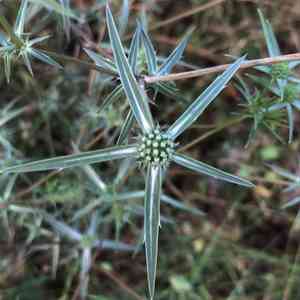
Field eryngo (Eryngium creticum)
Also known as: Syrian eryngo, Small-headed eryngo
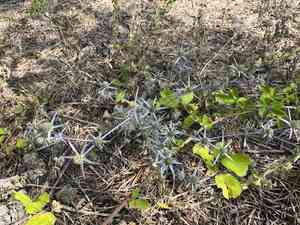
Field eryngo (Eryngium creticum) is a resilient plant that thrives in sunny environments. Renowned for its spiky bracts that surround striking blue to purple flowers, this sea holly stands out. Before the blooms appear, the flower buds resemble small, greenish pineapples. The plant itself can look like a cluster of spiky, tangled foliage, giving it a somewhat untamed appearance.
In This Article
Attributes of Field eryngo
Lifespan
Perennial
Plant Type
Herb
Plant Height
60 cm
Spread
30-50 cm
Leaf Color
Blue-green
Flower Size
2.5 cm
Flower Color
Purple Blue
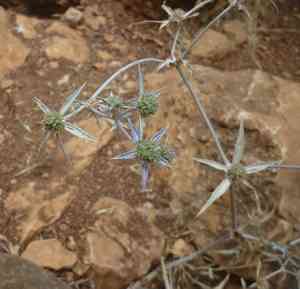
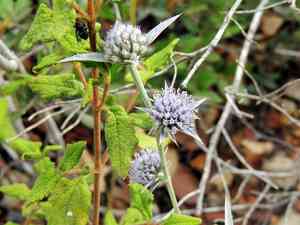
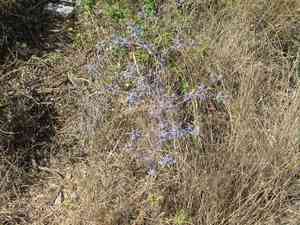
Images of Field eryngo
Quickly Identify Field eryngo
1
Eryngium creticum can be identified by its spiny, blue-green leaves and its distinctive blue or lavender thistle-like flower heads. The stems are often branched and can have a silvery sheen.
Scientific Classification of Field eryngo
Phylum
Vascular plants
Class
Dicotyledons
Order
Apiales
Family
Umbellifers
Genus
Eryngos
Species
Field eryngo
Planting and Growing of Field eryngo
Care Difficulty
Easy
Watering Schedule
Every 3 days
Sunlight Requirements
Full sun
Sunshine Duration
6-10 hours
Ideal Temperature
60-75℉
Soil Type
Potting Mix, Peat Mix
Soil pH
6.5-7.5
Fertilizer Type
Balanced
Pruning Season
Spring, Summer
Pruning Area
Branches, Leaves
Pruning Frequency
2 times a year
Repotting Season
Spring
Pot Type
Plastic, Ceramic
 How to Water Field eryngo?
When watering Eryngium creticum, aim for about 500 milliliters each time. This quantity ensures that the water reaches the root zone without leaving excessive waterlogged soil. It's important to maintain even soil moisture, letting the top inch dry out between waterings to mimic their natural growing conditions in well-drained soils.
What are the symptoms of an underwatered Field eryngo?
›
What should I do if my Field eryngo is not getting enough water?
›
What are the symptoms of an overwatered Field eryngo?
›
How to save an overwatered Field eryngo?
›
 What Are the Sunlight Requirements for Field eryngo?
Eryngium creticum thrives best in environments with full to partial sun, ideally soaking up 6 to 8 hours of light each day. Such exposure optimally supports its photosynthetic activity and blooming potential.
How to provide the best lighting?
›
What are the methods to ensure sufficient light?
›
What benefits does ideal light provide?
›
 What Is the Ideal Temperature Range for Field eryngo?
The ideal temperature range for Eryngium creticum is between 60°F and 75°F. This range provides optimal conditions for growth, ensuring that the plant can carry out its metabolic processes efficiently. Maintaining this range helps in maximizing photosynthesis and promoting vibrant growth.
 What Soil is Best for Field eryngo?
Eryngium creticum thrives in well-drained soil, which prevents water-logging and root rot. This type of soil ensures that the roots receive the oxygen they require while reducing the risk of fungal infections, thereby promoting healthy growth. A soil rich in organic matter will provide Eryngium creticum with the necessary nutrients for vigorous growth. This enhances the plant's overall health, resulting in lush foliage and vibrant flowers. While Eryngium creticum needs well-drained soil, it also benefits from soils that retain some moisture. This balance ensures that the plant remains hydrated during dry spells, which is critical for sustained growth and flowering.
 How to Fertilize Field eryngo?
Eryngium creticum requires moderate fertilization. For liquid fertilizers, dilute them to half the recommended strength to avoid nutrient burn. Apply around 200ml per plant during the growing season to ensure optimal growth without overwhelming the plant.
 How to Prune Field eryngo?
Begin by identifying any dead, diseased, or damaged stems. These should be the first to go as they can draw energy away from healthy growth and could harbor pests or diseases. Following the removal of dead stems, focus on shaping the plant. Aim for a nice, rounded form while making sure not to overcrowd the center. This allows sunlight to reach the inner parts of the plant. Once Eryngium creticum has bloomed, trim back the flower stalks to encourage more blooms. Cut these stalks to just above a leaf node to stimulate new growth. To prevent the spread of disease, always disinfect your pruning tools before and after use. A simple solution of one part bleach to ten parts water works effectively.
More About Pruning Techniques→
 How to Propagate Field eryngo plant?
1
Use well-draining soil rich in organic matter. Loosen the soil to improve aeration and ensure good root development. A mixture of potting soil and sand can enhance drainage.
2
Scatter seeds evenly over the surface of seed trays or directly in pre-prepared garden beds. Lightly cover with a fine layer of soil and water gently to avoid dislodging seeds.
3
Select healthy stems for cuttings, ideally with several nodes. Cut at a 45-degree angle just below a node. Remove lower leaves and dip the cut end in rooting hormone before planting.
 How to Repot Field eryngo plant?
1
Eryngium creticum should be repotted when you observe growth slowing down significantly or roots emerging through the drainage holes. Another signal is the appearance of a dense root ball when you slightly lift the plant out of its current pot. These signals suggest that the roots need more space to grow and access nutrients.
2
Select a pot that is 1-2 inches wider in diameter than the current one, offering enough room for growth while avoiding excessive space. A pot with proper drainage holes is essential to prevent water stagnation, which can lead to root rot. The material of the pot should also suit your environment, such as terracotta for its breathability or plastic for its lightweight nature.
3
Opt for well-drained sandy loam soil, which facilitates adequate air circulation around the roots and prevents waterlogging. Such soil is beneficial for Eryngium creticum as it mimics its natural habitat, ensuring healthy root growth and preventing potential fungal problems caused by excessive moisture.
Learn More About Field eryngo Diseases
Anthracnose
Bacterial Leaf Spot
Bacterial Soft Rot
Bacterial Wilt
Black Spot
Chemical Injury
Crown Gall
Cyst Nematode
Damping-off
Downy Mildew
Drought Stress
Fusarium Wilt
Gray Mold
Leaf Spot
Mosaic
Nutrient Deficiency
Nutrient Toxicity
Powdery Mildew
Root Rot
Root-knot Nematode
Rusts
Sooty Mold
Spider Mites
Temperature Stress
Thrips Damage
White Mold



