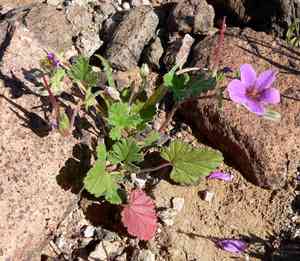
Texas stork's bill (Erodium texanum)
Also known as: Texas filaree
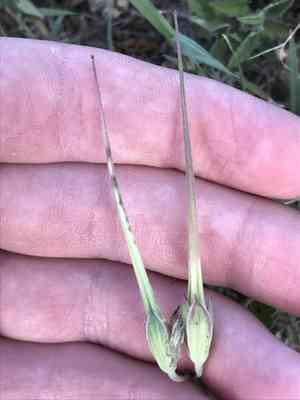
Often accompanying Texas bluebonnets, the Texas stork's bill is a common sight along roadsides, forming a vibrant floral display in spring. Found in California, Texas, and Oklahoma, this wildflower gets its name from its fruit, which looks like a stork's bill.
In This Article
Attributes of Texas stork's bill
Lifespan
Annual, Biennial
Plant Type
Herb
Plant Height
51 cm
Spread
38 cm
Leaf Color
Green
Flower Size
2.5 cm
Flower Color
Purple Red
Images of Texas stork's bill
Quickly Identify Texas stork's bill
1
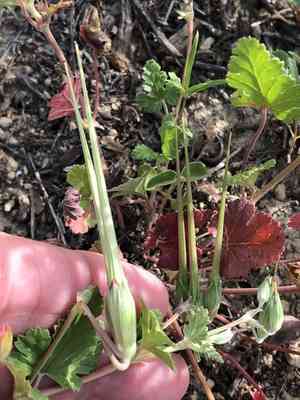
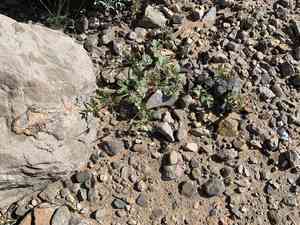
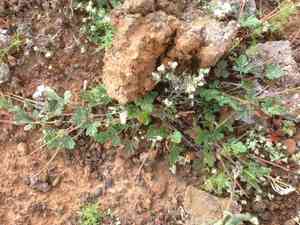
Identifying Erodium texanum involves looking for its small, deeply-lobed leaves, and distinctive pink to purple flowers with five petals. The plant often has a low-growing, spreading habit and is noted for its long, beak-like seed capsules.
Scientific Classification of Texas stork's bill
Phylum
Vascular plants
Class
Dicotyledons
Order
Geraniales
Family
Geranium
Genus
Filarees
Species
Texas stork's bill
Planting and Growing of Texas stork's bill
Care Difficulty
Easy
Watering Schedule
Every 2 days
Sunlight Requirements
Full sun
Sunshine Duration
6-10 hours
Ideal Temperature
75-85℉
Soil Type
Potting Mix, Peat Mix
Soil pH
6.5-7.5
Fertilizer Type
Balanced
Pruning Season
Spring, Summer
Pruning Area
Branches, Leaves
Pruning Frequency
2 times a year
Repotting Season
Spring
Pot Type
Plastic, Terracotta
 How to Water Texas stork's bill?
For Erodium texanum, it’s important to water thoroughly yet sparingly to mimic its natural desert habitat. When watering, ensure the soil is moistened to a depth of at least 5 inches without being waterlogged. A good rule of thumb is using approximately 250 milliliters of water per session, allowing the soil to dry out completely before the next watering.
What are the symptoms of an underwatered Texas stork's bill?
›
What should I do if my Texas stork's bill is not getting enough water?
›
What are the symptoms of an overwatered Texas stork's bill?
›
How to save an overwatered Texas stork's bill?
›
 What Are the Sunlight Requirements for Texas stork's bill?
Erodium texanum performs best with full sun to partial sun exposure, promoting effective photosynthesis and robust flowering. Sunlight fuels its growth cycles, producing healthier, vibrant plants.
More About Sunlight Requirements Techniques→
What is Erodium texanum's light preference?
›
How can you ensure Erodium texanum gets ideal lighting?
›
What benefits will ideal light conditions bring to Erodium texanum?
›
 What Is the Ideal Temperature Range for Texas stork's bill?
The ideal temperature range for cultivating Erodium texanum is between 75°F and 85°F. Within this range, the plant thrives, exhibiting vigorous growth and vibrant blooms. Adequate warmth promotes efficient photosynthesis and a strong metabolic rate, essential for robust plant health.
 What Soil is Best for Texas stork's bill?
Erodium texanum thrives in well-drained soil, mitigating the risks of root rot and other moisture-related issues. This type of soil ensures adequate oxygen reaches the roots, allowing the plant to flourish with robust growth and health. A sandy texture provides quick drainage and enhances root zone aeration, crucial for Erodium texanum's development. This encourages deep root penetration, beneficial in anchoring the plant and accessing nutrients. While Erodium texanum does not demand overly rich soil, a moderate nutrient profile supports necessary growth processes. This balance prevents nutrient leaching, ensuring that the plant remains vigorous and resilient in varying conditions.
 How to Fertilize Texas stork's bill?
For Erodium texanum, it's crucial to find the right balance in fertilizing to ensure healthy growth without overfeeding. Use a quarter-strength liquid fertilizer for safe growth support. The plant doesn't demand heavy feeding, but a consistent approach ensures continual vitality.
 How to Prune Texas stork's bill?
Start by removing any dead or damaged leaves and stems. This not only improves the plant's appearance but also allows it to focus resources on new growth. Always cut at a 45-degree angle just above a healthy leaf node to encourage branching. To maintain a compact and attractive shape, trim back overstretched or leggy stems. Regular shaping will help the plant develop a dense, bushy appearance. Be cautious not to remove more than a third of the plant at any one time to avoid stress.
More About Pruning Techniques→
 How to Propagate Texas stork's bill plant?
1
Fill the seed tray with sterilized potting mix, leaving a small space at the top. Gently press the soil to eliminate air pockets. This creates a stable bed for the seeds, ensuring good contact with the soil.
2
Scatter Erodium texanum seeds evenly across the surface of the potting mix, then cover them with a thin layer of additional potting mix. Lightly water the tray to moisten the soil, which supports seed germination.
3
Place the trays in a location with bright, indirect sunlight and consistent temperatures between 65 to 75°F (18 to 24°C). This provides the optimal environment for seedlings to thrive.
 How to Repot Texas stork's bill plant?
1
Repot your Erodium texanum when you notice roots coming out from the drainage holes or the plant appears top-heavy and the growth seems stunted. This usually indicates that the plant is pot-bound and requires more space to thrive. Spring and early summer are ideal times for repotting as the plant is in active growth and can easily recover from any disturbance.
2
Select a pot that is no more than two inches wider in diameter than the current pot. This ensures the plant has enough room to grow without overwhelming it with too much soil, which can lead to water retention issues. Using a pot with adequate drainage holes is crucial to prevent root rot and maintain healthy growth.
3
Opt for a well-draining sandy soil mix, which mimics the plant's natural arid habitat. A mix containing components like perlite, coarse sand, and minimal organic matter will provide excellent aeration and prevent waterlogging, crucial for the plant's roots to remain healthy and active.



