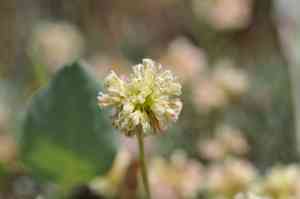
Douglas' buckwheat (Eriogonum douglasii)
Also known as: Sunflower flat buckwheat
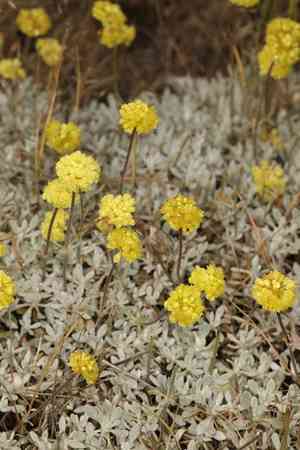
Douglas' buckwheat (Eriogonum douglasii) is a resilient perennial found in western North America, well-suited to arid environments. It has a clumping growth pattern with woody stems that bear clusters of small, typically white to pink flowers in umbel-like arrangements. The plant's predominantly basal leaves are spoon-shaped to oblanceolate, aiding in water retention. It thrives in nutrient-poor, well-drained soils.
In This Article
Attributes of Douglas' buckwheat
Lifespan
Perennial
Plant Type
Herb
Plant Height
2.5 cm to 30 cm
Spread
Typically around 30 cm
Leaf Color
Silvery-green
Flower Size
Less than 1 cm
Flower Color
Pink or white
Images of Douglas' buckwheat
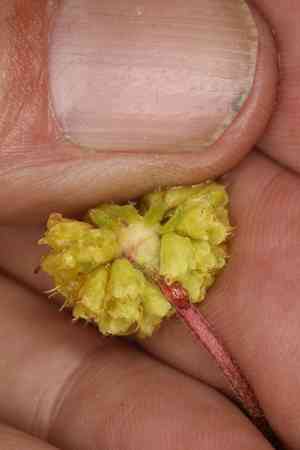
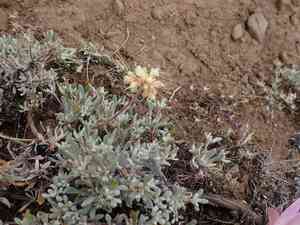
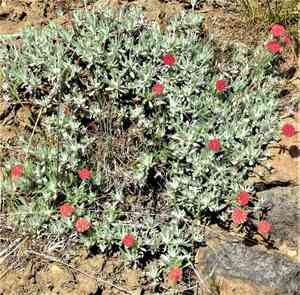
Quickly Identify Douglas' buckwheat
1
Identification can be done by observing the plant\'s low growing, cushion-like structure, its silvery-green leaves, and its small, clustered pink or white flowers.
Scientific Classification of Douglas' buckwheat
Phylum
Vascular plants
Class
Dicotyledons
Order
Caryophyllales
Family
Buckwheat
Genus
Wild Buckwheat
Species
Douglas' buckwheat
Planting and Growing of Douglas' buckwheat
Care Difficulty
Easy
Watering Schedule
Every 2 days
Sunlight Requirements
Full sun
Sunshine Duration
4-8 hours
Ideal Temperature
60-75℉
Soil Type
Potting Mix, Peat Mix
Soil pH
6.5-7.5
Fertilizer Type
Balanced
Pruning Season
Spring, Summer
Pruning Area
Branches, Leaves
Pruning Frequency
2 times a year
Repotting Season
Spring
Pot Type
Plastic, Ceramic
 How to Water Douglas' buckwheat?
When watering Eriogonum douglasii, aim for about 250 ml per session. Ensure that the water seeps down to the root zone without creating a waterlogged condition. It's important that the soil is well-drained, allowing excess water to escape. The goal is consistent moisture without saturation.
What are the symptoms of an underwatered Douglas' buckwheat?
›
What should I do if my Douglas' buckwheat is not getting enough water?
›
What are the symptoms of an overwatered Douglas' buckwheat?
›
How to save an overwatered Douglas' buckwheat?
›
 What Are the Sunlight Requirements for Douglas' buckwheat?
Eriogonum douglasii thrives with full sun exposure for at least 6 hours a day. This light range promotes robust growth, ample flowering, and enhances the plant's overall resilience.
Ideal sunlight exposure
›
Adjusting light exposure
›
Benefits of ideal light
›
 What Is the Ideal Temperature Range for Douglas' buckwheat?
Eriogonum douglasii thrives in temperate climates where the temperature is consistently between 60 to 75°F. This range provides the optimal conditions for photosynthesis and nutrient absorption, promoting healthy growth and vibrant blooms.
 What Soil is Best for Douglas' buckwheat?
Eriogonum douglasii thrives in well-draining soil. Ensuring proper drainage prevents root rot and allows roots to access necessary oxygen and nutrients efficiently, enhancing plant health. This plant requires soil with moderate nutrient levels. While it can tolerate poorer soils, a balanced nutrient profile can promote better blooming and foliage development, thus ensuring vibrant growth. Adequate soil aeration is crucial for the plant's root health. Well-aerated soil facilitates better water absorption and root expansion, promoting robust plant structure and resistance to environmental stress.
 How to Fertilize Douglas' buckwheat?
When fertilizing Eriogonum douglasii, it's crucial to use a balanced approach. For liquid fertilizers, use about half strength of the manufacturer’s recommendation to prevent over-fertilization, approximately 1/4 teaspoon per gallon of water should suffice. For slow-release, a tablespoon sprinkled evenly around the base of the plant is ample.
 How to Prune Douglas' buckwheat?
Before you begin pruning Eriogonum douglasii, ensure you have sharp, clean pruning shears. Disinfect them to prevent disease spread. It's essential to wear gloves as the plant might cause skin irritation. Identify dead or diseased stems and remove them first. Start by examining the plant for dead or crossing branches. Cut them back to a healthy joint. For aesthetic shaping, prune back no more than one-third of the plant to maintain its natural form. Focus on cutting just above a leaf node to encourage new growth.
More About Pruning Techniques→
 How to Propagate Douglas' buckwheat plant?
1
Start by filling the seed tray with a moist seedling soil mix. Ensure the soil is evenly moistened but not waterlogged. Lightly press down the soil to remove any air pockets and create a smooth surface for sowing the seeds.
2
Scatter the Eriogonum douglasii seeds evenly across the prepared soil surface. Cover them lightly with a thin layer of soil, about 1/8 inch deep. Do not bury the seeds too deep, as they require light for germination.
3
After sowing, mist the soil surface with water to settle the seeds. Place the seed tray in a warm, bright location. Keep the soil consistently moist but avoid overwatering, which can lead to fungal disease development.
 How to Repot Douglas' buckwheat plant?
1
Look for signs like roots emerging from drainage holes, slowed growth, or soil that dries out too quickly. These indicate it's time to repot Eriogonum douglasii, ensuring it has space to thrive.
2
Opt for a pot that is just one size larger than the current one. A well-sized pot promotes healthy root growth and prevents waterlogging, which is crucial for this drought-tolerant plant.
3
Use a well-draining, sandy mix. This soil type mimics the plant's natural habitat and prevents root rot by allowing excess water to escape quickly, fostering a healthy environment.



