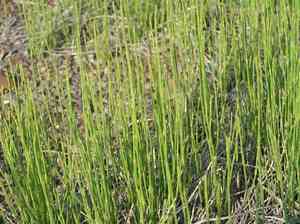
Branched scouringrush (Equisetum ramosissimum)
Also known as: Giant horsetail, Transvaal horsetail
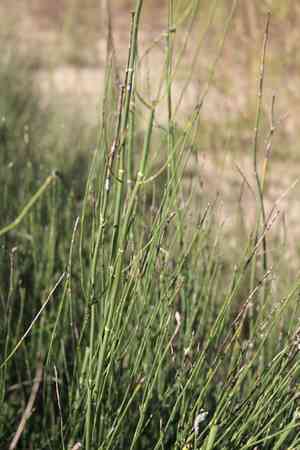
The plant in question is Equisetum ramosissimum, commonly called branched scouringrush. It is indigenous to Asia, Europe, Africa, and various Pacific Islands, and has been introduced to certain regions in the United States. This plant lacks leaves, and its stems are embedded with silica crystals, which give them a rough, sandpaper-like texture useful for scouring and smoothing surfaces.
In This Article
Attributes of Branched scouringrush
Lifespan
Perennial
Plant Type
Herb
Plant Height
50 cm
Spread
Typically, horsetails do not form a crown
Leaf Color
Leaves are reduced to small scales at the joints of the stems, typically dark green
Flower Size
Does not produce flowers
Flower Color
Yellow Green Brown
Images of Branched scouringrush
Quickly Identify Branched scouringrush
1
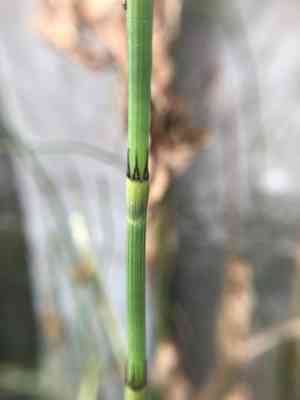
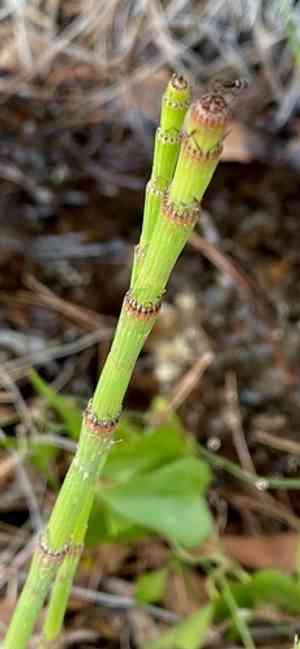
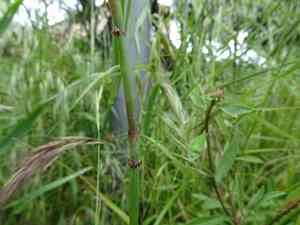
Identification of Equisetum ramosissimum can be done by observing its jointed, hollow stems that are segmented and have a rough texture. The plant also has numerous whorls of small stem-like branches at each node.
Scientific Classification of Branched scouringrush
Phylum
Vascular plants
Class
Equisetopsida
Order
Equisetales
Family
Horsetail
Genus
Horsetails
Species
Branched scouringrush
Planting and Growing of Branched scouringrush
Care Difficulty
Easy
Watering Schedule
Every 3 days
Sunlight Requirements
Partial sun
Sunshine Duration
6-10 hours
Ideal Temperature
60-75℉
Soil Type
Potting Mix, Peat Mix
Soil pH
6.5-7.5
Fertilizer Type
Balanced
Pruning Season
Spring, Summer
Pruning Area
Branches, Leaves
Pruning Frequency
2 times a year
Repotting Season
Spring
Pot Type
Plastic, Terracotta
 How to Water Branched scouringrush?
For Equisetum ramosissimum, each watering session should involve soaking the soil thoroughly with about 250 milliliters of water. This ensures the roots are adequately hydrated without waterlogging. The principle here is to water until the soil is moist but not soggy, allowing any excess water to drain away to prevent root rot.
What are the symptoms of an underwatered Branched scouringrush?
›
What should I do if my Branched scouringrush is not getting enough water?
›
What are the symptoms of an overwatered Branched scouringrush?
›
How to save an overwatered Branched scouringrush?
›
 What Are the Sunlight Requirements for Branched scouringrush?
Equisetum ramosissimum thrives in partial sun conditions. A balance allows the plant to undergo photosynthesis efficiently, promoting lush and healthy growth without the risk of overheating or dehydration.
Question 1: What is the optimal lighting setup?
›
Question 2: How can one achieve ideal lighting?
›
Question 3: What are the benefits of proper lighting?
›
 What Is the Ideal Temperature Range for Branched scouringrush?
The ideal temperature range of 60 to 75°F provides the optimal conditions for the growth and development of Equisetum ramosissimum. Within this range, the plant can efficiently perform photosynthesis, maintain cellular functions, and avoid stress that can occur at higher or lower temperatures.
 What Soil is Best for Branched scouringrush?
Equisetum ramosissimum thrives in well-aerated soils which ensure that roots receive adequate oxygen. This prevents root rot and promotes the plant’s vigorous growth, particularly in sandy or loamy substrates. While this species can withstand drier conditions than many relatives, it benefits from soil with good moisture retention. This is especially crucial during periods with high temperatures, making sandy loam an excellent choice due to its balanced moisture profile. Equisetum ramosissimum does not demand a nutrient-rich soil but appreciates a well-balanced mineral composition to sustain its rigid stem structure. Loamy soil provides a good nutrient balance without the need for excessive fertilization.
 How to Fertilize Branched scouringrush?
For Equisetum ramosissimum, the amount of fertilizer should be moderate. Use a diluted liquid fertilizer at half strength, approximately ¼ to ½ of the recommended dose on the label. Slow-release fertilizers should be applied sparingly, with a quantity that is one-third of what is typical for common foliage plants.
 How to Prune Branched scouringrush?
Before you begin pruning, make sure to clean your secateurs or shears with a sterilizing solution. This prevents the spread of disease and ensures a clean cut, reducing the chance of harming the plant. Look for older or damaged stems that appear weak or have very few leaves. It's essential to target these parts to rejuvenate the plant and make room for new growth. Smaller, younger stems can be left to continue developing. When cutting, do so at a slight angle just above a node (the part where leaves or smaller stems branch off). Avoid tearing or crushing the stems to minimize damage. Clean cuts heal faster and reduce susceptibility to pests or diseases. Properly dispose of all the removed plant materials. Leaving them nearby can encourage pest infestation. Either compost the trimmings if they appear healthy or discard them in a waste container if they're diseased.
More About Pruning Techniques→
 How to Propagate Branched scouringrush plant?
1
Identify healthy parent plants and choose a location with the right conditions for growth. Ensure the area is well-drained and has adequate light, avoiding overly shaded or waterlogged areas.
2
Carefully dig around the plant to expose the rhizomes, then use a sharp knife or shears to cut sections. Each section should have a good amount of roots and at least one growing shoot to ensure successful propagation.
3
Replant the divided sections into prepared soil, bury them to the same depth as the original plants, and space them adequately to allow for growth. Water thoroughly after planting to help them establish in the new location.
 How to Repot Branched scouringrush plant?
1
You should consider repotting Equisetum ramosissimum when you observe roots circling the container's edges or a decline in growth, indicating root crowding. Additionally, if water does not seem to permeate the soil effectively, this is another sign. Ideally, perform this task during the Spring or early Summer for the best results.
2
Choose a pot that is one size larger than the current one to provide ample space for future root growth. Ensure the pot has several drainage holes to prevent waterlogging, which can lead to root rot in Equisetum ramosissimum. A terracotta pot works well as it allows better air circulation.
3
Selecting the right soil is crucial. A sandy, well-drained soil mix replicates the plant's natural habitat and provides necessary aeration and drainage. This helps prevent root rotting and promotes optimal growth. Mixing in perlite can further enhance drainage capabilities.
Toxicity
ingestion
WARNING
The judgment on toxicity and danger is for reference only. We DO NOT GUARANTEE any accuracy of such judgment. Therefore, you SHALL NOT rely on such judgment. It is IMPORTANT TO SEEK PROFESSIONAL ADVICE in advance when necessary.



