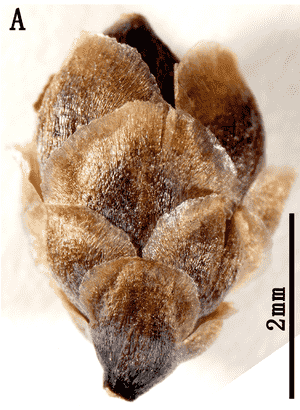
California jointfir (Ephedra californica)
Also known as: Mormon Tea, Desert Tea, Jointfir
The California jointfir (Ephedra californica) is well-suited to arid desert environments due to several key adaptations. Unlike many plants, it has tiny, scale-like leaves that reduce water loss. Its green, jointed stems perform photosynthesis, eliminating the need for large leaves. The plant also produces small, yellow cones for reproduction, which are less water-dependent. Additionally, its extensive root system reaches deep underground to tap into scarce water reserves, ensuring its survival in dry conditions.
In This Article
Attributes of California jointfir
Lifespan
Perennial
Plant Type
Shrub
Plant Height
30 cm to 91 cm
Spread
1 to 1.5 meters (3 to 5 feet)
Leaf Color
Green (though leaves are very small and scale-like)
Flower Size
Less than 1 cm (small and inconspicuous)
Flower Color
Yellow-green
Images of California jointfir
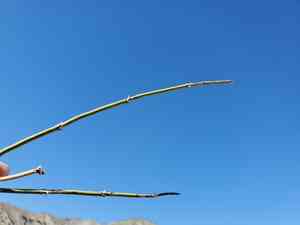
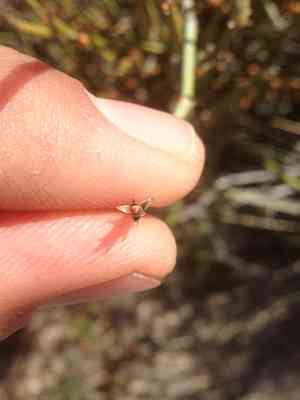
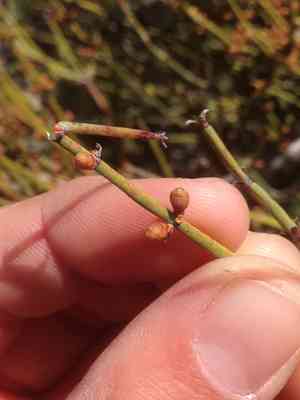
Quickly Identify California jointfir
1
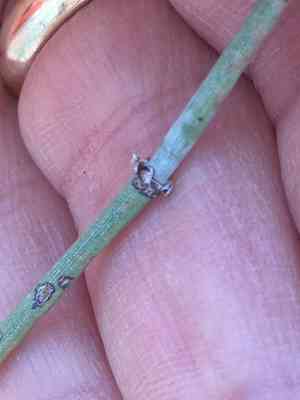
Ephedra californica can be identified by its leafless jointed stems, small scale-like leaves, and tiny yellow-green flowers that emerge in clusters. It often grows in dry, rocky soils of desert landscapes.
Scientific Classification of California jointfir
Phylum
Vascular plants
Class
Gnetophytes
Order
Ephedrales
Family
Mormon-tea
Genus
Joint-pines
Species
California jointfir
Planting and Growing of California jointfir
Care Difficulty
Moderate
Watering Schedule
Every 2 days
Sunlight Requirements
Full sun
Sunshine Duration
4-8 hours
Ideal Temperature
60-75℉
Soil Type
Potting Mix, Peat Mix
Soil pH
6.5-7.5
Fertilizer Type
Balanced
Pruning Season
Spring, Summer
Pruning Area
Branches, Leaves
Pruning Frequency
2 times a year
Repotting Season
Spring
Pot Type
Plastic, Ceramic
 How to Water California jointfir?
When watering Ephedra californica, the focus should be on allowing water to deeply saturate the root zone, reaching about 250 ml each time. This approach encourages a robust root system by stimulating roots to grow deeper where moisture levels remain more consistent.
What are the symptoms of an underwatered California jointfir?
›
What should I do if my California jointfir is not getting enough water?
›
What are the symptoms of an overwatered California jointfir?
›
How to save an overwatered California jointfir?
›
 What Are the Sunlight Requirements for California jointfir?
Ephedra californica flourishes in full sun conditions. Providing this ensures maximum health benefits, including improved growth, more vibrant foliage, and increased resistance to common plant stressors.
What is the ideal location for Ephedra californica?
›
How can I ensure Ephedra californica receives optimal sunlight indoors?
›
What are the benefits of providing Ephedra californica with its ideal sunlight conditions?
›
 What Is the Ideal Temperature Range for California jointfir?
The ideal temperature range for growing Ephedra californica is between 60°F and 75°F. Within this range, the plant experiences optimal growth, with balanced cellular activities and efficient nutrient uptake. Providing consistent temperatures within this range is crucial for maintaining the plant's health and ensuring robust growth over time.
 What Soil is Best for California jointfir?
Ephedra californica thrives in soils that provide excellent drainage. Ensuring that water can easily pass through prevents root rot and provides the arid conditions in which this desert shrub naturally excels. This plant does not require highly fertile soils but benefits from moderate nutrient content that supports its growth. Avoid overly rich soils, which can lead to excessive growth that the root system cannot support. Ephedra californica prefers soils with low organic matter, which mimics its natural habitat. A low organic content helps in maintaining the desired dryness and prevents excessive water retention.
 How to Fertilize California jointfir?
For Ephedra californica, the amount of fertilizer should be judiciously applied. Generally, use only a dilute liquid fertilizer solution to avoid nutrient burn. For liquid fertilizer, a 1/4 strength dilution every month is recommended. For slow-release granular fertilizers, apply according to the package instructions but at half the recommended rate, evenly distributing it around the base of the plant.
 How to Prune California jointfir?
Begin your pruning session by removing any dead or unhealthy branches. This not only improves the appearance but also prevents potential diseases from spreading. Use clean cuts close to the base of the branch. Shape the plant into a balanced, aesthetically pleasing form. Trim branches that disrupt the natural shape, focusing on maintaining a rounded or elongated outline suitable for its environment. Remove any branches that are crossing or overcrowding. Opening up the interior of the shrub allows for better air circulation and light penetration, crucial for plant health and growth.
More About Pruning Techniques→
 How to Propagate California jointfir plant?
1
Collect viable seeds from mature Ephedra californica plants in late autumn when the cones have ripened. Ensure the seeds are dry and not damaged. Store in a cool, dry place until planting time in early spring.
2
Select healthy branches from the parent plant during early spring. Cut just below a node using sterilized pruning shears. Remove any leaves from the lower third of the cutting before planting it in a prepared propagation tray.
3
Plant seeds or cuttings in a well-draining soil mix. Water lightly after planting to avoid over-saturating, which can lead to rot. Maintain consistent moisture by misting the soil surface and covering with a humidity dome if necessary.
 How to Repot California jointfir plant?
1
Ephedra californica shows signs of needing repotting when its roots start to burst out from drainage holes or coil densely against the pot's edge. Growth may become stunted, indicating the plant's need for more room to thrive.
2
Choose a pot slightly larger than the current one with good drainage holes. A clay pot is preferable as it allows for air exchange, helping to prevent root rot by absorbing excess moisture from the soil.
3
Select a well-draining sandy soil mix resembling its natural desert habitat. This ensures that water does not linger around the roots, which is beneficial to mimic its native arid conditions.
Toxicity
ingestion
WARNING
The judgment on toxicity and danger is for reference only. We DO NOT GUARANTEE any accuracy of such judgment. Therefore, you SHALL NOT rely on such judgment. It is IMPORTANT TO SEEK PROFESSIONAL ADVICE in advance when necessary.
Learn More About California jointfir Diseases
Anthracnose
Bacterial Leaf Spot
Bacterial Soft Rot
Bacterial Wilt
Chemical Injury
Crown Gall
Cyst Nematode
Damping-off
Drought Stress
Fusarium Wilt
Gray Mold
Leaf Spot
Mosaic
Nutrient Deficiency
Nutrient Toxicity
Powdery Mildew
Root Rot
Root-knot Nematode
Rusts
Sooty Mold
Spider Mites
Temperature Stress
Thrips Damage
White Mold



