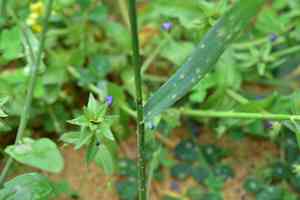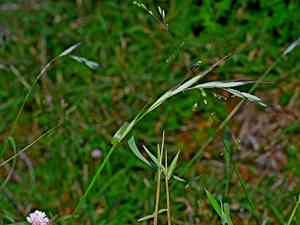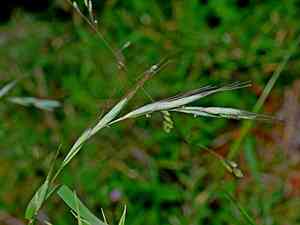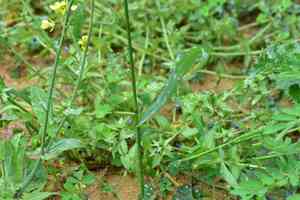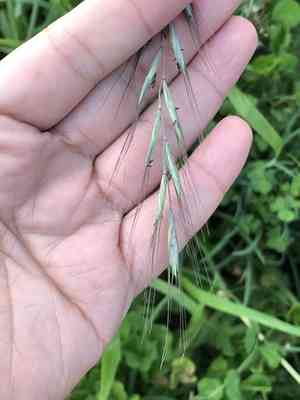
Wheatgrass(Elymus tsukushiensis)

Wheatgrass (Elymus tsukushiensis)

Also known as: Japanese Elymus, Tsukushi Grass

Ears typically emerge in early summer, appearing slightly flat and elongated with upward-facing, well-developed buds. Spikes, which lack a consistent pattern, are arranged on these ears. The plant's stalk grows slightly sideways at the base, eventually reaching a height of 40 to 100 cm. Leaves are green, 20 to 30 cm long, and 5 to 10 mm wide, emerging from stem nodes and lacking shine.

The plant flowers from spring to summer, with ears rising from the stem's tip in a bow-like fashion. The inflorescence is spike-like, featuring small spikelets along the stem. These spikelets, measuring 1.5 to 2.5 cm, are slightly flat and elongated, containing 5-10 florets. They are typically green and white with a powdered look, often displaying a purple hue. The terminal cocoon, extending 1.5 to 3 cm, is also usually purple, growing smoothly toward the ear's tip and remaining straight when dried.

Attributes of Wheatgrass

Lifespan
Perennial
Plant Type
Grass
Plant Height
25 cm to 1 m
Spread
Not applicable
Leaf Color
Green, turning to brownish
Flower Size
1.5 cm to 2.5 cm
Flower Color
White Green

ForwardPlant - Identify plants with a snap

Identify and diagnose plants, get toxicity alerts, and explore safety guides for all types of fungi.

Try for Free

Images of Wheatgrass

Wheatgrass(Elymus tsukushiensis)

Quickly Identify Wheatgrass

1
Elymus tsukushiensis can be identified by its tall, upright stems, narrow leaves, and spike-like flower clusters. The leaves are typically green, but can turn brownish as they mature.

Scientific Classification of Wheatgrass

Phylum
Vascular plants
Class
Monocotyledons
Order
Poales
Family
Grass
Genus
Couch grasses
Species
Wheatgrass

Planting and Growing of Wheatgrass

Care Difficulty
Easy
Watering Schedule
Every 2 days
Sunlight Requirements
Full sun
Sunshine Duration
6-12 hours
Ideal Temperature
50-77℉
Soil Type
Potting Mix, Peat Mix
Soil pH
6.5-7.5
Fertilizer Type
Balanced
Pruning Season
Spring, Summer
Pruning Area
Branches, Leaves
Pruning Frequency
2 times a year
Repotting Season
Spring
Pot Type
Plastic, Terracotta

water icon How to Water Wheatgrass?

Elymus tsukushiensis prefers a moderate watering amount, ensuring that the soil is evenly moist but not waterlogged. Water with around 300 ml should suffice, allowing the water to penetrate deeply into the root zone while excess moisture should freely drain away. Always allow the top inch of soil to dry out before watering again to prevent root rot.
What are the symptoms of an underwatered Wheatgrass?
What should I do if my Wheatgrass is not getting enough water?
What are the symptoms of an overwatered Wheatgrass?
How to save an overwatered Wheatgrass?

sunlight icon What Are the Sunlight Requirements for Wheatgrass?

Sunlight Requirements: Full sun, Partial sun
Duration of light: 4-6 hours outdoors
Partial to full sun exposure facilitates optimal growth, promoting lush foliage, increased resilience, and vibrant coloration, enhancing the overall vitality of Elymus tsukushiensis.
What is the best environment for Elymus tsukushiensis?
How can I achieve optimal sunlight levels for this plant?
What are the benefits of ideal lighting for Elymus tsukushiensis?

temperature icon What Is the Ideal Temperature Range for Wheatgrass?

Ideal Temperature: 50 ~ 77℉
Elymus tsukushiensis thrives best in temperatures ranging between 50°F and 77°F. These temperatures provide optimal conditions for photosynthesis, respiration, and nutrient uptake, ensuring the plant's growth and development. Consistency in this temperature range reduces stress on the plant, promoting a robust root system and healthy foliage. This range mimics the plant's natural habitat, offering a balanced thermal environment that encourages healthy metabolic processes.

soil icon What Soil is Best for Wheatgrass?

Soil type: Loam, Sandy soil
Soil PH: 6.5 ~ 7.5
Elymus tsukushiensis thrives in well-drained soils, which prevent waterlogged conditions and root rot. Amending soil to improve drainage can dramatically enhance the plant's growth and vigor. This grass prefers soil of moderate fertility. Overly nutrient-rich conditions may lead to excessive foliar growth at the expense of root development, while moderate fertility supports balanced growth. A healthy amount of organic matter in the soil helps retain moisture and provides nutrients, promoting the overall health and resilience of Elymus tsukushiensis against pests and diseases.

fertilize icon How to Fertilize Wheatgrass?

Fertilizer type: Balanced
For Elymus tsukushiensis, the recommended fertilizer amount depends primarily on the growth stage and the nutrient requirements of the soil. Generally, apply about 1 ounce per square yard of a balanced fertilizer, focusing on a formulation like 10-10-10. Be careful to adjust according to soil tests and environmental conditions, ensuring not to over-fertilize, which could lead to nutrient runoff and other ecosystem damage.

prune icon How to Prune Wheatgrass?

Pruning Time: Spring, Summer, Autumn
Look for older, discolored, or less vigorous stems in your Elymus tsukushiensis and target these for pruning to allow space and resources for younger, healthier growth. Make clean cuts at a 45-degree angle, roughly ¼ inch above a node or bud to encourage outward growth which promotes a fuller appearance. Trim away any dead or yellowing leaves regularly to keep the plant tidy and focused on healthy leaf production. Do not remove more than one-third of the plant during a single cutting session, as over-pruning can induce stress and stunt overall growth. More About Pruning Techniques

propagate icon How to Propagate Wheatgrass plant?

Propagate Time: Spring, Early spring
1
To propagate Elymus tsukushiensis from seeds, collect seeds after they have matured in the late summer. Ensure the seeds are dry before storing them for the winter.
2
Sow the collected seeds in early spring in a seed-starting tray filled with a well-draining potting mix. Cover lightly with soil and provide consistent moisture.
3
For division propagation, dig out the entire plant in spring when new growth begins. Carefully separate the roots into smaller sections with at least a few shoots each.

repot icon How to Repot Wheatgrass plant?

Repotting frequency: Every 2-3 years
1
Repot Elymus tsukushiensis when you see roots crowding the pot's drainage holes or the plant begins to outgrow its current container. These signs typically signal the need for more space and nutrients, necessary for its healthy growth.
2
Select a pot that is 1-2 inches larger in diameter than the current one. This ensures the plant has ample space to grow and reduces the risk of the roots becoming waterlogged, thus promoting a healthy environment.
3
Choose well-draining loamy soil to provide adequate drainage and nutrient retention. This combination supports the plant's root system and prevents root rot by allowing excess water to escape efficiently.

ForwardPlant - Identify plants with a snap

Find the best spots for them to optimize their health, simply using your phone.

Try for Free