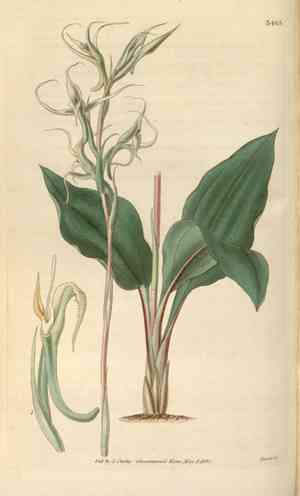
Longclaw orchid (Eltroplectris calcarata)
Also known as: Spurred Neottia
The longclaw orchid, Eltroplectris calcarata, is a terrestrial orchid species found in Florida, the Bahamas, the Cayman Islands, Cuba, Hispaniola, Jamaica, Puerto Rico, the Windward Islands, Trinidad, Suriname, Venezuela, Colombia, Peru, Brazil, and Paraguay.
In This Article
Attributes of Longclaw orchid
Lifespan
Perennial
Plant Type
Herb
Plant Height
30-50 cm
Spread
N/A
Leaf Color
Green
Flower Size
2-3 cm
Flower Color
White with purple markings
Images of Longclaw orchid
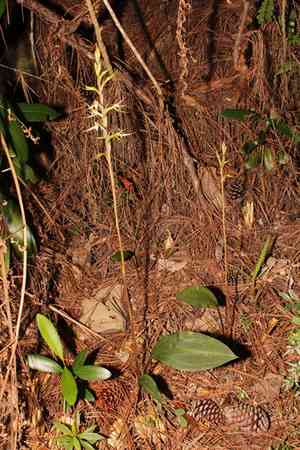
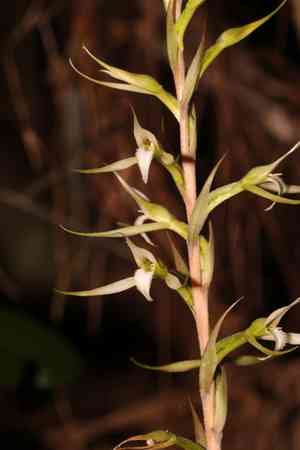
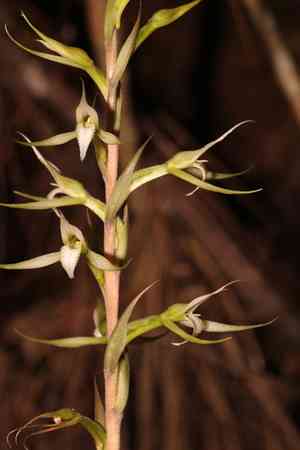
Quickly Identify Longclaw orchid
1
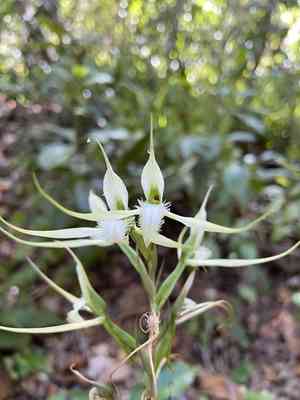
Identifying Eltroplectris calcarata involves looking for its distinctive spurred flowers and its lanceolate leaves. The flowers are usually white with purple markings.
Scientific Classification of Longclaw orchid
Phylum
Vascular plants
Class
Monocotyledons
Order
Asparagales
Family
Orchid
Genus
Eltroplectris
Species
Longclaw orchid
Planting and Growing of Longclaw orchid
Care Difficulty
Hard
Watering Schedule
Every 2 days
Sunlight Requirements
Partial sun
Sunshine Duration
4-8 hours
Ideal Temperature
65-75℉
Soil Type
Potting Mix, Peat Mix
Soil pH
6.5-7.5
Fertilizer Type
Balanced
Pruning Season
Spring, Summer
Pruning Area
Branches, Leaves
Pruning Frequency
2 times a year
Repotting Season
Spring
Pot Type
Plastic, Ceramic
 How to Water Longclaw orchid?
Eltroplectris calcarata prefers a moderate watering regime. Water the plant just enough to keep the soil slightly moist but never soggy. Aim for around 200 milliliters per session, ensuring that excess water can drain away to prevent root rot.
What are the symptoms of an underwatered Longclaw orchid?
›
What should I do if my Longclaw orchid is not getting enough water?
›
What are the symptoms of an overwatered Longclaw orchid?
›
How to save an overwatered Longclaw orchid?
›
 What Are the Sunlight Requirements for Longclaw orchid?
The ideal light range for Eltroplectris calcarata is partial sun, providing between four to six hours of dappled light. Such an environment supports healthy growth and aids in vibrant flowering.
What is the ideal lighting environment for Eltroplectris calcarata?
›
How can I achieve these ideal lighting conditions?
›
What benefits does Eltroplectris calcarata gain from ideal lighting?
›
 What Is the Ideal Temperature Range for Longclaw orchid?
Maintaining an ideal temperature range between 65°F and 75°F ensures optimal growth and health for Eltroplectris calcarata. This range provides a stable environment facilitating proper metabolic and physiological functions, contributing to vigour, flower production, and overall plant vitality.
 What Soil is Best for Longclaw orchid?
Eltroplectris calcarata thrives in well-drained soils as it prevents root rot and encourages healthy root development. This characteristic allows excess water to escape easily, promoting optimal growth conditions. While not overly demanding, this orchid benefits from soil with moderate nutrient content. Nutrients are vital for its growth and flowering process, ensuring the plant remains vibrant and healthy. Good soil aeration is crucial for Eltroplectris calcarata as it allows roots to breathe and supports healthy microbial activity. Proper aeration improves root oxygenation, essential for sustaining robust growth.
 How to Fertilize Longclaw orchid?
Eltroplectris calcarata requires a balanced amount of nutrients for optimal growth. For liquid fertilizers, use about 1/4 strength of a standard orchid fertilizer. For slow-release fertilizers, mix a small quantity—about a tablespoon—into the top layer of soil, ensuring it does not directly touch the roots.
 How to Prune Longclaw orchid?
Before beginning your pruning, identify the old and dead growth on the Eltroplectris calcarata. These can be spotted as discolored or shriveled stems and leaves. Clearing these out will help the plant focus its energy on new growth and bloom more vibrantly. When removing old growth, make sure to make clean cuts at the base of each stem or leaf. This practice helps minimize stress on the plant and promotes a faster healing process, leading to a healthier plant overall.
More About Pruning Techniques→
 How to Propagate Longclaw orchid plant?
1
Before sowing, it's recommended to treat the seeds to promote germination. Scarifying the seed coat, soaking them in warm water, or using a germination-enhancing solution can help initiate the growth process.
2
Disperse the seeds evenly across the prepared seedling tray or potting mix surface. Cover them with a light layer of the medium, sufficient to protect but still allowing light penetration as required for germination.
3
Once sown, maintain a humid environment to facilitate seedling development. Use a humidity dome or misting spray and ensure the area remains warm, mimicking the natural, moist conditions.
 How to Repot Longclaw orchid plant?
1
Look for signs such as roots protruding from the drainage holes, the plant becoming top-heavy, or a decline in flower production. These are indicators that it's time to consider repotting Eltroplectris calcarata to give the roots more space to grow.
2
Choose a pot that is only slightly larger than the current one, preferably made of clay for better aeration. The pot should have adequate drainage holes to prevent waterlogging, ensuring the roots remain healthy and dry.
3
Opt for a well-draining orchid mix composed of materials like bark, perlite, and charcoal. This mix ensures good air circulation around the roots and helps retain just the right amount of moisture, vital for the health of Eltroplectris calcarata.
Learn More About Longclaw orchid Diseases
Anthracnose
Bacterial Leaf Spot
Bacterial Soft Rot
Bacterial Wilt
Black Spot
Chemical Injury
Crown Gall
Cyst Nematode
Damping-off
Downy Mildew
Drought Stress
Fusarium Wilt
Gray Mold
Leaf Curl
Leaf Spot
Mosaic
Nutrient Deficiency
Nutrient Toxicity
Powdery Mildew
Root Rot
Root-knot Nematode
Rusts
Sooty Mold
Spider Mites
Temperature Stress
Thrips Damage
White Mold



